I am not a great nor vociferous reader of books; I spend far more time reading newspapers and magazines and internet articles.
And when I do read books, I'm fairly predictable, as I've read virtually the entire oeuvres of page-turning novelists Harlan Coben and Lee Child--and always look forward to their newest efforts. (I've also read multiple works of other authors, most recently Jonathan Tropper.)
But I think I've read enough good books of various ills and writers to cobble together a list of 11 that I would recommend to almost anyone.
I will keep it to one title per author, but especially in the case of Coben, Child, Tropper and also Michael Lewis and others, you may well enjoy almost anything they have written.
This is not a ranked list nor a "Best Books" survey; just a smattering of books I've found worthwhile. All should be readily findable at most public libraries, in paperback and in e-book form.
1. Six Years - Harlan Coben
2. A Farewell to Arms - Ernest Hemingway
3. Flash Boys - Michael Lewis
4. Echo Burning - Lee Child
5. The Book of Joe - Jonathan Tropper
6. The Cuckoo's Calling - Robert Galbraith (aka JK Rowling)
7. Predator Nation - Charles H. Ferguson
8. The Art Forger - B.A. Shapiro
9. Joyland - Stephen King
10. Griftopia - Matt Taibbi
11. Trust Your Eyes - Linwood Barclay
And a few more
Basket Case - Carl Hiaasen
Finishing the Hat and Look I Finished a Hat - Stephen Sondheim
Born to Run - Bruce Springsteen (being released 9/27/16)
Showing posts with label Books. Show all posts
Thursday, August 11, 2016
Saturday, August 16, 2014
With Incisive, Insightful 'Flash Boys,' Michael Lewis Deftly Decodes the Dubious Blur of High-Frequency Trading -- Book Review
Book Review
Flash Boys
by Michael Lewis
Now in hardcover and on Kindle
@@@@1/2
Truth be told, I'm not really a great reader.
Flash Boys
by Michael Lewis
Now in hardcover and on Kindle
@@@@1/2
Truth be told, I'm not really a great reader.
I love the concept of reading and enjoy the knowledge that comes from it. I admire those who are literate and wish I was more so.
Every day, I read some combination of newspaper, magazine and Internet articles, and am always in the midst of one book or another.
But I'm lucky to finish one per month, and that average is largely abetted by my predilection for page turners I might complete in a week, such as by Harlan Coben, Lee Child, Linwood Barclay or John Grisham (though not so much the latter anymore).
I've read everything by Dan Brown, the late Stieg Larsson and--as I recently posted--I've enjoyed both of the mysteries J.K. Rowling has written under the pen name Robert Galbraith.
So it's not that I don't ever read, nor have I ever knowingly had problems with comprehension, reading speed, vision, vocabulary, ADHD or other obvious hindrances.
But even with time on my hands, and now the ease of reading on a Kindle or my iPhone, as an acute act reading books ranks below writing blog posts, watching movies & TV, attending theater, concerts & ballgames, mindlessly surfing the Internet and much else, perhaps just outranking cooking and walking on my treadmill.
It isn't just that when I do read I usually devour user-friendly thrillers, whereas several close friends and family members read much more substantive works of literature, or that they're likely to double, triple or quadruple my rate of about one book per month, if that. The truth is that while I would like to read, say, Infinite Jest--by the late David Foster Wallace and regarded as one of the best books of the 21st century--I gave up just a few pages into the 1104-page novel and perceived that it would take me a full year you even if I stuck with it.
Not to mention that my condo is strewn with biographies--on Lou Gehrig, Paul Newman, John Lennon, Ray Davies, Arthur Miller, Miles Davis, Natalie Wood, Stephen Sondheim, Sandy Koufax, Neil Young, Abraham Lincoln, Frank Lloyd Wright, Mozart and many more--that I really want to read...but only in theory.
So while it might not sound all that impressive to say I read a 272-page book in 10 days, especially when you consider that it was a non-fiction work covering the technology involved in high-frequency trading (HFT) of stocks, allegations of chicanery even many on Wall Street didn't understand, minutia about why differences in milliseconds and microseconds make billions of dollars of difference, the ruse of "dark pool arbitrage" and how a small group of traders tried to take a more ethical stand, this should connote how masterful a writer Michael Lewis is.
I have previously read his Moneyball, The Blind Side, Boomerang and The Big Short, the latter being an amazingly comprehensible chronicling of the byzantine malfeasance behind the financial crash of 2008.
More so than anything else--though I also derived great value from the writings of Matt Taibbi, Paul Krugman, Joseph Stiglitz, Charles Ferguson (plus his splendid Inside Job documentary) and others--The Big Short helped me grasp the truths behind the subprime mortgage scandal, better understand such Machiavellian concepts as collateralized debt obligations (CDO) and credit default swaps (CDS) and glean the complicity among mortgage brokers, Wall Street investment banks and credit ratings agencies.
In Flash Boys, Lewis' sledgehammer is a bit more sly, his targets more oblique, the consequences of the chicanery he chronicles less obvious.
It's not the call to arms The Big Short should have been, if only it had one-tenth the mainstream penetration of your average reality TV show or summertime cineplex tripe.
But Lewis' writing is just as deft, if not more so, in making esoteric concepts not only understandable but truly enjoyable reading. And though the reader will have to connect more dots beyond the book to recognize the import and feel the ire of stock market machinations that seemingly only a select few would innately care about, Michael Lewis continues to not only be a master of his craft, but a seemingly rare and remarkable crusader for fairness. (Though he, and the book, also has a fair share of critics.)
Unlike The Big Short, Flash Boys isn't a book that I insist everyone read--not reflecting its quality, but in deference to the dense subject matter--yet anyone who invests money in the stock market definitely should.
And while in tackling complicated material with a colloquial finesse--largely through capsules of the characters who would come together to start a supposedly more principled stock exchange--Lewis does wander relatively deep into the woods of HFT technology, there are many points he makes that should have great resonance to anyone.
In the book's introduction, Lewis explains this, which I must admit I didn't know:
With the caveat that high frequency traders have supposedly taken issue with some of Lewis' claims and assertions, and the book includes no interviews with any current HFT practitioners, Lewis makes a strong case about how--having maneuvered to attain speed-of-trade advantages measured in microseconds (a millionth of a second)--high frequency traders have made billions of dollars gaming the system for no benefit beyond their own.
Without risking a thing.
Let's say you tell your stock broker you want to buy 1,000 shares of Proctor & Gamble at the $80.00 share price the broker quotes. The broker punches that into his computer and relays back that the buy went through at $80.01.
This may not seem like a big deal; on an $80,000 purchase, you're paying $10 more. But in the scenarios Lewis explains much more astutely than I ever can, the .01 jump wasn't due to other legitimate investors buying or selling P&G. It's because HFT traders were able to see the buy was ordered at $80.00, blazed through the electronic pipeline to the exchanges, bought up all 1,000 available shares and sold them back (essentially to you) for $80.01, before even your broker had a clue what was happening.
This cost you $10 and made the HFT firm $10, which millions of times over results in billions of dollars in profits. And unlike you, who could see P&G stock drop, say 10 points, while it's in your holdings, the HFT guys are taking absolutely no risk. They get "into the market" only as a consequence of the buy & sell orders that are already made, and then "jump the trade."
Because (again, per my understanding) HFT trades and those made in dark pools of large investment bands--a dark pool being a bank's private stock exchange, in which they have vast holdings of stock and make trades among their own customers, without going through the NYSE or other exchanges--aren't subject to the type of financial statements and disclosures one might expect, just how much money is made through high frequency trading and shady dark pool practices isn't exactly known, at least per Lewis.
But it certainly seems to be many billions. At least.
So sure, there are a whole lot of injustices in life and you'd go goofy thinking about even a few of them. But there are people mining coal, forging steel, building cars, fighting fires, teaching kids, driving buses, etc., etc., struggling to make a subsistent living and others reaping millions, perhaps billions, simply because their fiber optic connection to the "stock market" is a few millionths of a second faster than someone else's.
As Lewis conveys, HFT firms virtually never lose money, nor do they typically hold any stock at the end of each day. As they aren't actually "investors," they have no stake in the game, but they are making fortunes off of it. In essence, per Lewis, they are scalpers, except unlike ticket scalpers, they run no risk of losing their shirts if the ticket market is flooded; buyers (or sellers) are guaranteed before HFT types invade the market.
Anyway, I am trying not to reveal too much that Lewis does, because Flash Boys is certainly worth your while, but I felt the need to expound on why the subject matter is important and compelling.
Even if you think you don't care.
And even if you really don't, Michael Lewis is such a gifted writer of non-fiction that his latest work--like his others--is a really good, insightful and informative read, nonetheless.
I have previously read his Moneyball, The Blind Side, Boomerang and The Big Short, the latter being an amazingly comprehensible chronicling of the byzantine malfeasance behind the financial crash of 2008.
More so than anything else--though I also derived great value from the writings of Matt Taibbi, Paul Krugman, Joseph Stiglitz, Charles Ferguson (plus his splendid Inside Job documentary) and others--The Big Short helped me grasp the truths behind the subprime mortgage scandal, better understand such Machiavellian concepts as collateralized debt obligations (CDO) and credit default swaps (CDS) and glean the complicity among mortgage brokers, Wall Street investment banks and credit ratings agencies.
In Flash Boys, Lewis' sledgehammer is a bit more sly, his targets more oblique, the consequences of the chicanery he chronicles less obvious.
It's not the call to arms The Big Short should have been, if only it had one-tenth the mainstream penetration of your average reality TV show or summertime cineplex tripe.
But Lewis' writing is just as deft, if not more so, in making esoteric concepts not only understandable but truly enjoyable reading. And though the reader will have to connect more dots beyond the book to recognize the import and feel the ire of stock market machinations that seemingly only a select few would innately care about, Michael Lewis continues to not only be a master of his craft, but a seemingly rare and remarkable crusader for fairness. (Though he, and the book, also has a fair share of critics.)
Unlike The Big Short, Flash Boys isn't a book that I insist everyone read--not reflecting its quality, but in deference to the dense subject matter--yet anyone who invests money in the stock market definitely should.
And while in tackling complicated material with a colloquial finesse--largely through capsules of the characters who would come together to start a supposedly more principled stock exchange--Lewis does wander relatively deep into the woods of HFT technology, there are many points he makes that should have great resonance to anyone.
In the book's introduction, Lewis explains this, which I must admit I didn't know:
"Over the past decasde, the financial markets have changed too rapidly for our mental picture of them to remain true to life. ... Since about 2007, there have been no thick-necked guys in color-coded jacket standing in the trading pits; or, if they are, they're pointless. ... The U.S. stock market now trades inside black boxes, in heavily guarded buildings in New Jersey and Chicago."In short (unless I've misunderstood something), stock trades are now made entirely through electronic means and can be done so through several entities beyond the the New York Stock Exchange (NYSE) and Nasdaq.
With the caveat that high frequency traders have supposedly taken issue with some of Lewis' claims and assertions, and the book includes no interviews with any current HFT practitioners, Lewis makes a strong case about how--having maneuvered to attain speed-of-trade advantages measured in microseconds (a millionth of a second)--high frequency traders have made billions of dollars gaming the system for no benefit beyond their own.
Without risking a thing.
Let's say you tell your stock broker you want to buy 1,000 shares of Proctor & Gamble at the $80.00 share price the broker quotes. The broker punches that into his computer and relays back that the buy went through at $80.01.
This may not seem like a big deal; on an $80,000 purchase, you're paying $10 more. But in the scenarios Lewis explains much more astutely than I ever can, the .01 jump wasn't due to other legitimate investors buying or selling P&G. It's because HFT traders were able to see the buy was ordered at $80.00, blazed through the electronic pipeline to the exchanges, bought up all 1,000 available shares and sold them back (essentially to you) for $80.01, before even your broker had a clue what was happening.
This cost you $10 and made the HFT firm $10, which millions of times over results in billions of dollars in profits. And unlike you, who could see P&G stock drop, say 10 points, while it's in your holdings, the HFT guys are taking absolutely no risk. They get "into the market" only as a consequence of the buy & sell orders that are already made, and then "jump the trade."
Because (again, per my understanding) HFT trades and those made in dark pools of large investment bands--a dark pool being a bank's private stock exchange, in which they have vast holdings of stock and make trades among their own customers, without going through the NYSE or other exchanges--aren't subject to the type of financial statements and disclosures one might expect, just how much money is made through high frequency trading and shady dark pool practices isn't exactly known, at least per Lewis.
But it certainly seems to be many billions. At least.
So sure, there are a whole lot of injustices in life and you'd go goofy thinking about even a few of them. But there are people mining coal, forging steel, building cars, fighting fires, teaching kids, driving buses, etc., etc., struggling to make a subsistent living and others reaping millions, perhaps billions, simply because their fiber optic connection to the "stock market" is a few millionths of a second faster than someone else's.
As Lewis conveys, HFT firms virtually never lose money, nor do they typically hold any stock at the end of each day. As they aren't actually "investors," they have no stake in the game, but they are making fortunes off of it. In essence, per Lewis, they are scalpers, except unlike ticket scalpers, they run no risk of losing their shirts if the ticket market is flooded; buyers (or sellers) are guaranteed before HFT types invade the market.
Anyway, I am trying not to reveal too much that Lewis does, because Flash Boys is certainly worth your while, but I felt the need to expound on why the subject matter is important and compelling.
Even if you think you don't care.
And even if you really don't, Michael Lewis is such a gifted writer of non-fiction that his latest work--like his others--is a really good, insightful and informative read, nonetheless.
Tuesday, August 06, 2013
Shrewd Observations, Sly Thrills Make for an Appealing Trip to 'Joyland' -- Book Review
Joyland
a novel by Stephen King
new but available in paperback
@@@@
I've actually read only one other of his books--2011's masterful 11/22/63 (my review)--and haven't even seen that many of the movies based on them, at least not recently.
So though I know he is a terrific writer whose oeuvre extends well-beyond the horror genre, I can't comment on how Joyland--part supernatural suspense novel, part coming-of-age story--compares to works such as Carrie, The Shining, It, Misery and Dolores Claiborne.
At just 288 pages, Joyland is an enjoyable read--well-worth $7.32 for the paperback (published by Hard Case Crime) on Amazon, though mine was borrowed from a friend--and though seemingly quite different from the 880-page 11/22/63 (and conceivably some of King's aforementioned classics), in one key sense it was rather similar:
It takes a good while to get where it's going, but the journey winds up being just as--if not more--fulfilling than the destination.
Per its title, 11/22/63 revolves around the John F. Kennedy assassination, but in being a tale of a man who finds a way to go back in time--and does so with hopes of changing history--the first 500 or so pages are largely about a 21st century adult acclimating to life in the late-50s, early-60s, with King providing many enlightening insights about how times have changed, and how they haven't. Only in the latter part of the book do events in Dallas acutely come into play.
This isn't all that different from Joyland, which is narrated as a present-day recollection about events occurring in 1973. With my sense of it being a thriller exacerbated by the Hard Case Crime imprint, it is ostensibly a fictional murder mystery regarding a death that had previously taken place in a North Carolina amusement park called Joyland. But the bulk of the book is devoted to detailing the experiences and emotions of its protagonist, a 21-year-old college student from New Hampshire named Devin Jones, who spends the summer of '73 working at Joyland.
King deftly puts the reader in the head of Jones as he experiences love, loss, friendship, "carny" life, valiant moments, wearing a key Joyland costume and, ultimately, engaging in a bit of crime-solving.
Thus, Joyland was not the rapid-fire page turner I was expecting--and in depth, not the equal of 11/22/63--but nonetheless rather satisfying as both a socio-cultural time capsule and, albeit a bit more subtly, as a suspense thriller. (Though as a reader review on Amazon points out, there is a flaw in the writing as things begin to unravel; ask me after you read the book.)
But whether or not you're well-versed in Stephen King, Joyland should provide plenty of pleasure as a end-of-summer paperback, one that notably--and aptly, given its regaling of an earlier time--isn't available electronically.
At just 288 pages, Joyland is an enjoyable read--well-worth $7.32 for the paperback (published by Hard Case Crime) on Amazon, though mine was borrowed from a friend--and though seemingly quite different from the 880-page 11/22/63 (and conceivably some of King's aforementioned classics), in one key sense it was rather similar:
It takes a good while to get where it's going, but the journey winds up being just as--if not more--fulfilling than the destination.
Per its title, 11/22/63 revolves around the John F. Kennedy assassination, but in being a tale of a man who finds a way to go back in time--and does so with hopes of changing history--the first 500 or so pages are largely about a 21st century adult acclimating to life in the late-50s, early-60s, with King providing many enlightening insights about how times have changed, and how they haven't. Only in the latter part of the book do events in Dallas acutely come into play.
This isn't all that different from Joyland, which is narrated as a present-day recollection about events occurring in 1973. With my sense of it being a thriller exacerbated by the Hard Case Crime imprint, it is ostensibly a fictional murder mystery regarding a death that had previously taken place in a North Carolina amusement park called Joyland. But the bulk of the book is devoted to detailing the experiences and emotions of its protagonist, a 21-year-old college student from New Hampshire named Devin Jones, who spends the summer of '73 working at Joyland.
King deftly puts the reader in the head of Jones as he experiences love, loss, friendship, "carny" life, valiant moments, wearing a key Joyland costume and, ultimately, engaging in a bit of crime-solving.
Thus, Joyland was not the rapid-fire page turner I was expecting--and in depth, not the equal of 11/22/63--but nonetheless rather satisfying as both a socio-cultural time capsule and, albeit a bit more subtly, as a suspense thriller. (Though as a reader review on Amazon points out, there is a flaw in the writing as things begin to unravel; ask me after you read the book.)
But whether or not you're well-versed in Stephen King, Joyland should provide plenty of pleasure as a end-of-summer paperback, one that notably--and aptly, given its regaling of an earlier time--isn't available electronically.
Labels:
Book Reviews,
Books,
Joyland Review,
Stephen King Joyland
Saturday, July 13, 2013
Dan Brown's 'Inferno' Isn't Bad, but Doesn't Truly Catch Fire -- Book Review
Book Review
Brown also weaves in an ethical debate of sorts about population control, and likely perils if the current birthrate isn't stemmed.
Inferno
by Dan Brown
@@@1/2
I admittedly don't read enough--of anything, but especially great literature--to be a reliable arbiter of what makes a truly exemplary novel.
For me, a good book is any that I'm able to get through from start to finish. Which primarily means thrillers from the likes of Harlan Coben, Lee Child and Linwood Barclay.
This isn't to say that the myriad started-and-stopped biographies strewn around my condo aren't good, nor that never having made much headway with The Corrections or Infinite Jest should be taken as a critical assessment of those acclaimed tomes.
But given my penchant for mysteries and thrillers, whenever one has gone beyond bestseller to become a ubiquitous part of the popular zeitgeist, I've been compelled to read along.
Of course, this has only happened three times in my recollection, with John Grisham's The Firm (which inspired me to read most of his works until recently), Stieg Larsson's The Girl With the Dragon Tattoo (I read both sequels as well) and Dan Brown's The Da Vinci Code.
Although the latter was one of the rather rare novels I've bought in hardcover, I didn't read it on its first wave of popularity but after there were stories regaling how popular it was.
I enjoyed it. Whether it was as good as all the hoopla that came to surround it, who knows, but it was a pretty strong thriller, and as a world traveler I appreciated all the art and history Dan Brown wove in.
I subsequently read and liked Brown's Angels & Demons, which centers around the same character as Da Vinci Code (Robert Langdon) and may even be better, as well as the much awaited Da Vinci follow-up, 2009's The Lost Symbol.
I also enjoyed the author's two non-Langdon novels, Digital Fortress and Deception Point, which are both satisfying thrillers.
Which brings me to Inferno, Brown's latest novel--also featuring Robert Langdon, an art historian and symbologist--one that I wasn't aware was on its way until I saw a thousand copies at Barnes & Noble.
Particularly as I was going on a trip, during which a good thriller can be good company, I opted to download the Kindle version of Inferno, which I could read on my iPhone.
Although I didn't begin reading it until my journey home, over the last couple weeks I have been flipping its virtual pages with continue interest if not rapt fervor. As referenced above, just by virtue of getting through its 465 pages, I'd call Inferno a decent read, but I think it's the weakest of Brown's efforts to date.
If you've read and enjoyed Da Vinci Code / Angels & Demons / The Lost Symbol, there's no reason to avoid this one, though waiting for it to become available at your local library (even in digital form) or in paperback should suffice. If you haven't read any of the others, it shouldn't hamper your understanding or enjoyment, but this isn't where I'd start with Brown's oeuvre.
Though the suspense in Inferno, which leans on Dante's epic poem as a primary point of reference (don't worry if you've never read it; I haven't), is somewhat soft--without wanting to give anything away, Langdon finding himself in a precarious situation but escaping unscathed seems to endlessly reoccur--his overt use of setting and artistic landmarks remain fun.
As Langdon and his primary cohort in this one, a woman named Sienna Brooks, traipse through Florence in search of clues pertaining to Dante's Inferno and a modern-day threat to mankind, I frequently found myself accessing Wikipedia and Google Images to learn more about the places and artworks mentioned.
I'll leave the specifics unstated, but after beginning in Florence the action moves to two other historic cities, which furthered the art, architecture and history lesson.
Brown also weaves in an ethical debate of sorts about population control, and likely perils if the current birthrate isn't stemmed.
So there is a good deal of value in Inferno, and in Brown as an author. But as opposed to, as I recall, Angels & Demons and The Da Vinci Code, which are first-rate thrillers and travelogues--though the movie versions are lame--Inferno kindled my interest, but never truly set me ablaze.
Labels:
Book Reviews,
Books,
Inferno Dan Brown,
Inferno Florence,
Inferno Review
Friday, January 20, 2012
Book Reviews: '11/22/63' Kindles New Interest; a mixed bag from page-turning faves Child, Grisham and Barclay
11/22/63
by Stephen King
@@@@1/2
Quite substantial in its own right, this book had personal significance on a number of levels, and I'm not even referencing its content. Although the man had written 48 previous novels, virtually all best sellers, published over the past 38 years, 11/22/63 is the first book by Stephen King I've ever read. At 849 pages, it may well be the longest book I've ever read, at least recently or that I can readily recall. And it is the first book I've ever read, in full or anywhere near it, in electronic form. I got through it on a Kindle--and occasionally on my iPhone Kindle app--in a little over 2 weeks.
Though King's work in itself is wonderful, I do believe there is much correlation among the points above. While I was intrigued from the moment I saw the recent release in hardcover, the girth of it was not only a bit intimidating, but meant I couldn't readily take it on a plane, train or elsewhere I might have a realistic chance of delving into it. Thus the Kindle, and the app, proved ideal. I doubt I would have read 11/22/63 yet, or perhaps ever, in analog form (even if such is still my preference). And I enjoyed it tremendously.
Ostensibly, the story is about a modern day high school teacher who is shown a way to travel back in time--but only to a specific date in 1958--and does so to position himself to stop the JFK assassination. This was enough of a thumbnail description to make me want to read the book, but 11/22/63 actually succeeds due to its breadth and intelligence far beyond Kennedy, Oswald, Dallas and conspiracy theories. I don't want to divulge very much about the storyline, for that discovery is much of the fun, but what keeps the protagonist occupied between 1958 and titular date is just as compelling as King's twist on the events of that fateful day. And along the way, King provides plenty of shrewd insight about modern times versus what things were like in the relatively recent past.
Any great book winds up being about so much more than its in-a-nutshell synopsis, and that is certainly the case here. In other words, never judge a book by the cover. Even if you read it on a Kindle.
The Affair
by Lee Child
@@@@
All of Lee Child's 16 novels revolve around a nomadic and imposing ex-military cop named Jack Reacher, who utilizes both brains and brawn to get himself and others out of difficult situations and/or to right wrongs. While these books clearly fall into the thriller/page-turner category, and I've enjoyed them all on that level, Child does a good job of imbuing them, through Reacher's deductive processes, with keen insight regarding a variety of situations, large and small.
Now out in hardcover, The Affair is Child's latest book, but its story goes back to 1997 to chronicle an episode that would lead to Reacher becoming ex-military. So as an avid Reacherian, I enjoyed it as a bit of flash-backstory. But as usual with works from this series, it reads like a rollercoaster, so there's nothing to stop anyone from starting here. In fact, it might well make sense as the first Reacher novel for the uninitiated to explore.
Though I have a hard time recalling which Reacher novel is which at this point, I don't think The Affair stands among the very best of them. But it's a fun and exciting read, especially if you know Reacher, yet even if you don't. The story involves Reacher arriving in a small town with a military base to explore how a local woman wound up dead, and I have to admit that per a good thriller, the twists and turns kept me guessing. (You can read the first three chapters of The Affair for free on Child's website)
The Litigators
by John Grisham
@@
With seemingly all of his books going instantly to the top of the New York Times best seller list, John Grisham stands clearly as one of the world's most successful authors. Though even early on, with huge hits like The Firm, A Time To Kill (which he actually wrote first) and The Pelican Brief, he seemed to take knocks from some corners for not being a great literary writer, just a popular one. But I was an unabashed fan and had no problem citing him as one of my favorites.
At his best, his legal thrillers were not only great page-turners, but served to offer a good deal of societal observation and commentary. I recall The Runaway Jury informing me about class-action lawsuits and corporate malfeasance (in that case, regarding big tobacco) well before movies such as The Insider and Erin Brockovich traipsed similar ground.
Though I think I've read at least 15 of his novels, plus a non-fiction work called The Innocent Man, at some point I became less passionate about Grisham's books. Perhaps it was just me--though apparently not--but his thrillers somehow seemed less thrilling. So when his latest, The Litigators, seemed to be heralded as a return to form, I grabbed it eagerly when I saw it available on the Skokie Public Library's Bookmobile.
Unfortunately, I was tremendously disappointed. Grisham's tale of two ambulance-chasing Chicago lawyers who, in conjunction with a young refugee from a large firm, undertake a class-action lawsuit of dubious merit, is a rather tepid affair. I got through it in just a few days, but more because I wanted to be done with it than due to caring about the outcome. None of Grisham's characters were particularly likable, adding to the tedium, though perhaps this was his intent. I have no innate affinity for the legal profession, but the author's condescension towards its practitioners--of many stripes--came across as rather ugly. At some points, he seemed to take an almost absurdly farcical tone--a la Carl Hiaasen or Tim Dorsey--but while failing to make its case on many levels, The Litigators also wasn't a winning work of humor.
To be fair, toward the end the book got a bit better and I almost cared about the conclusion. But not enough to make having gotten there worthwhile.
The Accident
by Linwood Barclay
@@@1/2
A few years ago, my friend Dave turned me onto the works of Linwood Barclay due to my enjoyment of a similar author, Harlan Coben. Though Coben also has a series of mysteries with the same central characters, his "stand-alone" books (Tell No One, Gone For Good, etc.) and Barclay's thrillers typically take place in New Jersey, New York or nearby--in this case Connecticut--and involve a protagonist searching for a missing or dead family member or significant other (or trying to solve a related mystery).
I tend to prefer Coben due to his ability to bring more extemporaneous humor and insight to his thrillers, but Barclay does good work in a similar vein. The Accident, which involves a woman dying in a car accident under mysterious circumstances, a string of subsequent deaths among her acquaintances and her husband's attempts to unravel what happened, is no exception.
It's a quality page-turner and I was rather surprised by the ending, even if the thrill-ride acceleration throughout didn't quite equal Barclay's Never Look Away, Fear the Worst, No Time for Goodbye or Too Close to Home. This one came out in hardcover in August, so should be available at your local library a bit sooner than the titles above, and is certainly worth "checking out."
by Stephen King
@@@@1/2
Quite substantial in its own right, this book had personal significance on a number of levels, and I'm not even referencing its content. Although the man had written 48 previous novels, virtually all best sellers, published over the past 38 years, 11/22/63 is the first book by Stephen King I've ever read. At 849 pages, it may well be the longest book I've ever read, at least recently or that I can readily recall. And it is the first book I've ever read, in full or anywhere near it, in electronic form. I got through it on a Kindle--and occasionally on my iPhone Kindle app--in a little over 2 weeks.
Though King's work in itself is wonderful, I do believe there is much correlation among the points above. While I was intrigued from the moment I saw the recent release in hardcover, the girth of it was not only a bit intimidating, but meant I couldn't readily take it on a plane, train or elsewhere I might have a realistic chance of delving into it. Thus the Kindle, and the app, proved ideal. I doubt I would have read 11/22/63 yet, or perhaps ever, in analog form (even if such is still my preference). And I enjoyed it tremendously.
Ostensibly, the story is about a modern day high school teacher who is shown a way to travel back in time--but only to a specific date in 1958--and does so to position himself to stop the JFK assassination. This was enough of a thumbnail description to make me want to read the book, but 11/22/63 actually succeeds due to its breadth and intelligence far beyond Kennedy, Oswald, Dallas and conspiracy theories. I don't want to divulge very much about the storyline, for that discovery is much of the fun, but what keeps the protagonist occupied between 1958 and titular date is just as compelling as King's twist on the events of that fateful day. And along the way, King provides plenty of shrewd insight about modern times versus what things were like in the relatively recent past.
Any great book winds up being about so much more than its in-a-nutshell synopsis, and that is certainly the case here. In other words, never judge a book by the cover. Even if you read it on a Kindle.
The Affair
by Lee Child
@@@@
All of Lee Child's 16 novels revolve around a nomadic and imposing ex-military cop named Jack Reacher, who utilizes both brains and brawn to get himself and others out of difficult situations and/or to right wrongs. While these books clearly fall into the thriller/page-turner category, and I've enjoyed them all on that level, Child does a good job of imbuing them, through Reacher's deductive processes, with keen insight regarding a variety of situations, large and small.
Now out in hardcover, The Affair is Child's latest book, but its story goes back to 1997 to chronicle an episode that would lead to Reacher becoming ex-military. So as an avid Reacherian, I enjoyed it as a bit of flash-backstory. But as usual with works from this series, it reads like a rollercoaster, so there's nothing to stop anyone from starting here. In fact, it might well make sense as the first Reacher novel for the uninitiated to explore.
Though I have a hard time recalling which Reacher novel is which at this point, I don't think The Affair stands among the very best of them. But it's a fun and exciting read, especially if you know Reacher, yet even if you don't. The story involves Reacher arriving in a small town with a military base to explore how a local woman wound up dead, and I have to admit that per a good thriller, the twists and turns kept me guessing. (You can read the first three chapters of The Affair for free on Child's website)
The Litigators
by John Grisham
@@
With seemingly all of his books going instantly to the top of the New York Times best seller list, John Grisham stands clearly as one of the world's most successful authors. Though even early on, with huge hits like The Firm, A Time To Kill (which he actually wrote first) and The Pelican Brief, he seemed to take knocks from some corners for not being a great literary writer, just a popular one. But I was an unabashed fan and had no problem citing him as one of my favorites.
At his best, his legal thrillers were not only great page-turners, but served to offer a good deal of societal observation and commentary. I recall The Runaway Jury informing me about class-action lawsuits and corporate malfeasance (in that case, regarding big tobacco) well before movies such as The Insider and Erin Brockovich traipsed similar ground.
Though I think I've read at least 15 of his novels, plus a non-fiction work called The Innocent Man, at some point I became less passionate about Grisham's books. Perhaps it was just me--though apparently not--but his thrillers somehow seemed less thrilling. So when his latest, The Litigators, seemed to be heralded as a return to form, I grabbed it eagerly when I saw it available on the Skokie Public Library's Bookmobile.
Unfortunately, I was tremendously disappointed. Grisham's tale of two ambulance-chasing Chicago lawyers who, in conjunction with a young refugee from a large firm, undertake a class-action lawsuit of dubious merit, is a rather tepid affair. I got through it in just a few days, but more because I wanted to be done with it than due to caring about the outcome. None of Grisham's characters were particularly likable, adding to the tedium, though perhaps this was his intent. I have no innate affinity for the legal profession, but the author's condescension towards its practitioners--of many stripes--came across as rather ugly. At some points, he seemed to take an almost absurdly farcical tone--a la Carl Hiaasen or Tim Dorsey--but while failing to make its case on many levels, The Litigators also wasn't a winning work of humor.
To be fair, toward the end the book got a bit better and I almost cared about the conclusion. But not enough to make having gotten there worthwhile.
The Accident
by Linwood Barclay
@@@1/2
A few years ago, my friend Dave turned me onto the works of Linwood Barclay due to my enjoyment of a similar author, Harlan Coben. Though Coben also has a series of mysteries with the same central characters, his "stand-alone" books (Tell No One, Gone For Good, etc.) and Barclay's thrillers typically take place in New Jersey, New York or nearby--in this case Connecticut--and involve a protagonist searching for a missing or dead family member or significant other (or trying to solve a related mystery).
I tend to prefer Coben due to his ability to bring more extemporaneous humor and insight to his thrillers, but Barclay does good work in a similar vein. The Accident, which involves a woman dying in a car accident under mysterious circumstances, a string of subsequent deaths among her acquaintances and her husband's attempts to unravel what happened, is no exception.
It's a quality page-turner and I was rather surprised by the ending, even if the thrill-ride acceleration throughout didn't quite equal Barclay's Never Look Away, Fear the Worst, No Time for Goodbye or Too Close to Home. This one came out in hardcover in August, so should be available at your local library a bit sooner than the titles above, and is certainly worth "checking out."
Labels:
Book Reviews,
Books,
John Grisham,
Lee Child,
Linwood Barclay,
Stephen King
Monday, June 13, 2011
Thursday, November 18, 2010
A Big 'Thumbs Up' for Roger Ebert (and his new book: The Great Movies III)
I can't remember the last time I paid full price for a new hardcover book. And to do so for a book from which I can easily read virtually the entire contents online for free may seem especially foolish and unnecessary, particularly for someone without a regular job.
But such is my eminent esteem for Roger Ebert that when I saw that he would be signing copies of his new collection of film essays, The Great Movies III--I already own volumes I & II, despite being able to access the essays on his great website--at the Barnes & Noble in Old Orchard in Skokie on Thursday night, I made a point of going. And as buying the book there for $30 was the only choice if I wanted him to sign it (even though it's available for about a third less on Barnes & Noble's website), well, pony up I did.
And even though I had Roger personalize my copy--thereby ruining any possible re-sale or auction value--I feel absolutely no compunction about doing so.
Because not only do I so greatly admire Roger and cherish having a tome of movie essays autographed by him, but especially as I have evolved in my exploration of film (which you can read about here), Ebert and his writing have greatly expanded my understanding and appreciation. Just today, I watched a beautiful 1974 German film by Rainer Werner Fassbinder called Ali: Fear Eats the Soul and followed it by reading Ebert's piece on it in The Great Movies I (and available here, although just because you can get something for free doesn't mean it's not worth buying).
This past April, for the first time, I attended one day of Roger's annual Ebertfest--comprised of overlooked films he favors--in Champaign-Urbana. You can read my recap here, in which I also tried to articulate why my fondness for Roger Ebert goes far beyond his role as movie critic, especially as he has battled thyroid cancer which has robbed him of his ability to speak and, as he had repeatedly joked, his "good looks."
As I mentioned to a Northwestern journalism grad student who was at the signing and interviewed me--as well as to the lady in line next to me, up to the point that Roger himself interrupted and shook my hand as he made his way to the book signing table--without his voice Ebert now speaks louder than ever. Going far beyond reviewing the latest movies, he writes at length about myriad topics through his online journal and in frequent Facebook and Twitter posts.
I absolutely loved when he shared this photograph on Facebook a few weeks ago, just because he came across something he liked, and agree with most of his well-reasoned, left-leaning political/societal commentary. I think it's cool that Roger Ebert was born on the exact same day as Paul McCartney--June 18, 1942--and in addition to being a huge Beatles fan, like me, he's also an ardent admirer of Howard Stern, of whom he tweeted on Monday: "Howard Stern is the best interviewer in the business. He asks everyone what you really want to know."
Aside from liking what Roger writes, writes about, what he cherishes, the courage he has demonstrated and the views he espouses, Ebert also means a lot to me simply by being one of the last remaining vestiges of an era of Chicago--and local media icons--gone by.
From Ebert's longtime TV partner, Gene Siskel, who passed away in 1999, to people like late longtime newspaper columnist Mike Royko and sports anchor Tim Weigel, even Steve Dahl who is off the air in radio limbo-land, most of the local media stars who kind of defined Chicago when I was growing up have passed--or at least moved--on. And, not only as a consequence of the Internet age, there doesn't seem to be stalwarts of quite the same ilk to have taken their place.
When I was about 14, I wrote to Ebert and Siskel requesting an autographed photo and received back the one at right (I did likewise for Steve & Garry (Meier), Weigel and a few others). As you can see, I've kept it in pretty good condition after all these years. And though I expect to put The Great Movies III to much greater use, I will likewise cherish having Roger Ebert's John Hancock on it. For as I've hopefully expressed amidst this rambling, it symbolizes a lot more than the signature of America's most famous movie critic.
But such is my eminent esteem for Roger Ebert that when I saw that he would be signing copies of his new collection of film essays, The Great Movies III--I already own volumes I & II, despite being able to access the essays on his great website--at the Barnes & Noble in Old Orchard in Skokie on Thursday night, I made a point of going. And as buying the book there for $30 was the only choice if I wanted him to sign it (even though it's available for about a third less on Barnes & Noble's website), well, pony up I did.
And even though I had Roger personalize my copy--thereby ruining any possible re-sale or auction value--I feel absolutely no compunction about doing so.
Because not only do I so greatly admire Roger and cherish having a tome of movie essays autographed by him, but especially as I have evolved in my exploration of film (which you can read about here), Ebert and his writing have greatly expanded my understanding and appreciation. Just today, I watched a beautiful 1974 German film by Rainer Werner Fassbinder called Ali: Fear Eats the Soul and followed it by reading Ebert's piece on it in The Great Movies I (and available here, although just because you can get something for free doesn't mean it's not worth buying).
This past April, for the first time, I attended one day of Roger's annual Ebertfest--comprised of overlooked films he favors--in Champaign-Urbana. You can read my recap here, in which I also tried to articulate why my fondness for Roger Ebert goes far beyond his role as movie critic, especially as he has battled thyroid cancer which has robbed him of his ability to speak and, as he had repeatedly joked, his "good looks."
As I mentioned to a Northwestern journalism grad student who was at the signing and interviewed me--as well as to the lady in line next to me, up to the point that Roger himself interrupted and shook my hand as he made his way to the book signing table--without his voice Ebert now speaks louder than ever. Going far beyond reviewing the latest movies, he writes at length about myriad topics through his online journal and in frequent Facebook and Twitter posts.
I absolutely loved when he shared this photograph on Facebook a few weeks ago, just because he came across something he liked, and agree with most of his well-reasoned, left-leaning political/societal commentary. I think it's cool that Roger Ebert was born on the exact same day as Paul McCartney--June 18, 1942--and in addition to being a huge Beatles fan, like me, he's also an ardent admirer of Howard Stern, of whom he tweeted on Monday: "Howard Stern is the best interviewer in the business. He asks everyone what you really want to know."
Aside from liking what Roger writes, writes about, what he cherishes, the courage he has demonstrated and the views he espouses, Ebert also means a lot to me simply by being one of the last remaining vestiges of an era of Chicago--and local media icons--gone by.
From Ebert's longtime TV partner, Gene Siskel, who passed away in 1999, to people like late longtime newspaper columnist Mike Royko and sports anchor Tim Weigel, even Steve Dahl who is off the air in radio limbo-land, most of the local media stars who kind of defined Chicago when I was growing up have passed--or at least moved--on. And, not only as a consequence of the Internet age, there doesn't seem to be stalwarts of quite the same ilk to have taken their place. When I was about 14, I wrote to Ebert and Siskel requesting an autographed photo and received back the one at right (I did likewise for Steve & Garry (Meier), Weigel and a few others). As you can see, I've kept it in pretty good condition after all these years. And though I expect to put The Great Movies III to much greater use, I will likewise cherish having Roger Ebert's John Hancock on it. For as I've hopefully expressed amidst this rambling, it symbolizes a lot more than the signature of America's most famous movie critic.
Labels:
Book signing,
Books,
Great Movies,
Heroes,
Roger Ebert
Tuesday, July 13, 2010
Newest Reacher Novel an Empty Thrill Ride; Lisa Gardner Cop Combo Satisfies
Book Review (other books reviewed below in same post)
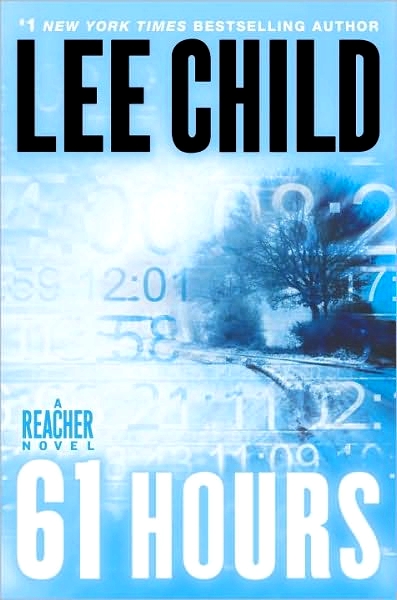
61 Hours: A Reacher Novel
by Lee Child
@@@1/2
Lee Child is my second favorite author of what I'll call "fast fiction," meaning mysteries, suspense novels and other books that are enjoyable page turners rather than great literature. But fast fiction is my favorite type of reading and behind only Harlan Coben, I'll put Lee Child's output--all featuring the main character of Jack Reacher--above John Grisham, Dan Brown, Carl Hiaassen as my silver medalist in this category.
Having read all 14 of Child's Reacher stories, I know that I liked some better than others, but can't recall specifics that readily distinguish one from another. None took more than a few days to read, so I would heartily recommend any of them if you need a great quick read on an airplane, beach, etc.
Given that the latest, 61 Hours is still in hardcover, is far from the best book of the Reacher series and ends in a cliffhanger to be continued in Worth Dying For (due out in October), I would not recommend that this is the one you start with, especially if you can't get it from your local library just yet (I waited about 3 months on the Reserve List at the Skokie Public Library).
Still, as Jack Reacher is a good bit like another mortal superhero named Jack, that being Mr. Bauer of TV's '24,'--about which I said that even at its worst it never made me not want to watch--I would say that if you have read and liked other Lee Child's books, there is no need to pointedly avoid 61 Hours. The action moves fast and you find yourself wanting to see what happens next. It definitely counts as a decent thriller.
But even in comparison with other Reacher novels, or even fast fiction in general, the plot line, characterizations and twists in this one seem particularly slight and subpar, as the nomadic Reacher happens to land in a small South Dakota town that has a secret meth lab run by a Mexican drug lord. As far-fetched as this setup might sound, it's not the problem so much as the fact that I had one of the main wrongdoers pegged about 200 pages before the supposedly super-keen Reacher and kept waiting for the obvious to reveal itself. And while Reacher's typical need to fall in bed with an attractive woman in each book a la James Bond is somewhat frivolous, 61 Hours suffers from the lack of a counterpart for Reacher, except for a long-distance interaction that may develop in the sequel.
So go ahead and read 61 Hours if you already like Child/Reacher, but don't expect it to be awesome, and probably skip it in favor of any of the first 10 works in the series if you don't yet know Jack.
---
Book Reviews
Alone
by Lisa Gardner
@@@@
Hide
by Lisa Gardner
@@@@
I'd never read anything by Lisa Gardner, who seemingly started as a romance writer but subsequently moved into the thriller space, until I picked up paperback versions of Alone and Hide at the recent Little City Used Book Sale. Originally published in 2005 and 2007, respectively, the two books both feature the same two main crime-fighting characters, though Hide works as a sequel to Alone more so due to the crimes depicted and similarities of the victims involved. Both books worked well as satisfying suspense thrillers, with Alone being a bit more engaging throughout--as state trooper Bobby Dodge struggles to prove, not in the least to himself, that he was justified in killing the supposedly abusive husband of a beautiful woman with a tortured past. But though Hide was slower to get rolling, its twists in the end made it just as good if not better, as Dodge and detective D.D. Warren are on the trail of a serial killer who may or may not be connected to events that surfaced in Alone.
A bit strangely, while I felt that the two Gardner books were of higher quality than the latest by Child, I still look forward to reading the next Reacher installment much more so than another book by Gardner. But if you're looking for something to pass the time, you won't go wrong with Alone and Hide.
Labels:
Book Reviews,
Books,
Jack Reacher,
Lee Child,
Libraries
Tuesday, June 08, 2010
Enjoying A Newfound Thrill
Book Review
Speaking of cheap thrills, this weekend I intend to buy a few second-hand page turners at the Little City Used Book Sale, taking place in the parking lot at Old Orchard shopping mall. The sale is there all week, but the last weekend offers the best bargains (albeit with the most depleted selection). A great cause and a chance to pick up some good reads for next to nothing.
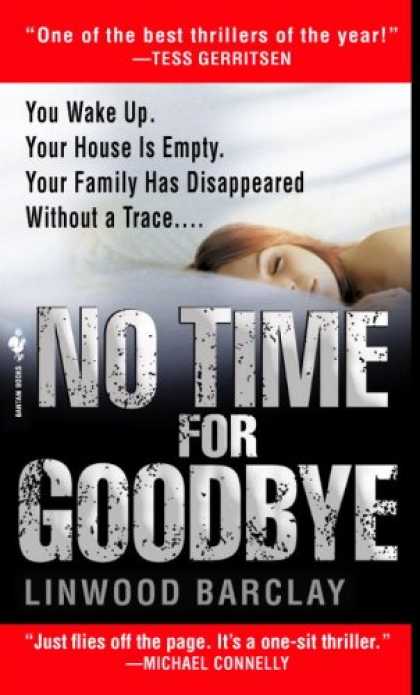
No Time For Goodbye
by Linwood Barclay
@@@@
Linwood Barclay--and particularly his 2008 thriller, No Time For Goodbye--was recommended to me based on my penchant for Harlan Coben, a best-selling writer of thrillers in a similar vein. In fact, Coben's "Caught" was the last book I read & reviewed, and this made for a good follow-up.
It certainly fit the bill of a captivating page-turner, as I got through it in a few days and couldn't readily put it down once I got about 200 pages in. The comparisons to Coben, whose entire oeuvre I've devoured, are certainly apt, as No Time For Goodbye concerns itself with a family crisis akin to many of Coben's stories.
I can't speak too much about Barclay based on one book, but rather than revolving around international espionage or more worldly matters, Coben's thrillers deal much more with individual dramas and things like missing family members. Which matches the plotline Barclay develops here, regarding a woman who is still trying to figure out why her parents and brothers disappeared one night 25 years ago, never to be heard from again nor found dead.
Though it took awhile to really start percolating and wasn't quite as good as much of Coben's best work--Barclay doesn't seem to have the same wit nor Coben's sly knack for beyond-the-story societal insights--No Time For Goodbye involves an intriguing mystery with many twists and once it gets going, it spellbinds like a top-notch thriller should.
I don't yet perceive that Barclay is a writer who I will be inspired to explore in sum, like Coben and Lee Child, but I won't hesitate to check out something else by him next time I'm looking for a cheap thrill. And I fully recommend No Time For Goodbye to anyone looking for a good summer thriller.
---
It certainly fit the bill of a captivating page-turner, as I got through it in a few days and couldn't readily put it down once I got about 200 pages in. The comparisons to Coben, whose entire oeuvre I've devoured, are certainly apt, as No Time For Goodbye concerns itself with a family crisis akin to many of Coben's stories.
I can't speak too much about Barclay based on one book, but rather than revolving around international espionage or more worldly matters, Coben's thrillers deal much more with individual dramas and things like missing family members. Which matches the plotline Barclay develops here, regarding a woman who is still trying to figure out why her parents and brothers disappeared one night 25 years ago, never to be heard from again nor found dead.
Though it took awhile to really start percolating and wasn't quite as good as much of Coben's best work--Barclay doesn't seem to have the same wit nor Coben's sly knack for beyond-the-story societal insights--No Time For Goodbye involves an intriguing mystery with many twists and once it gets going, it spellbinds like a top-notch thriller should.
I don't yet perceive that Barclay is a writer who I will be inspired to explore in sum, like Coben and Lee Child, but I won't hesitate to check out something else by him next time I'm looking for a cheap thrill. And I fully recommend No Time For Goodbye to anyone looking for a good summer thriller.
---
Speaking of cheap thrills, this weekend I intend to buy a few second-hand page turners at the Little City Used Book Sale, taking place in the parking lot at Old Orchard shopping mall. The sale is there all week, but the last weekend offers the best bargains (albeit with the most depleted selection). A great cause and a chance to pick up some good reads for next to nothing.
Labels:
Book Reviews,
Books,
Linwood Barclay,
Mystery,
No Time For Goodbye
Thursday, May 27, 2010
You Can't Judge A Book By Its Lover
Book Reviews
The Man From Beijing
by Henning Mankell
@@1/2
Although Henning Mankell has been writing best-selling crime novels for nearly 15 years, I hadn't heard of him until this past February, when Entertainment Weekly gave his new book--The Man From Beijing--a short but glowing review, in which the reviewer states, "This is hands down the best thriller I've read in five years."
So I put it on reserve with the Skokie Public Library, and when my turn came, I was very excited to read it.
But as it turns out, it wasn't even the best thriller I've read this month.
Despite the title, the book mostly takes place in Mankell's native Sweden, where a brutal massacre has wiped out a small village.
Over the past year, I've read and enjoyed all three books in the Millennium series (The Girl With the Dragon Tattoo, etc.), by the late Stieg Larsson, another Swedish crime fiction writer whose works weave throughout his homeland. This was another reason I was optimistic about the new book by Mankell, who in the past has centered his novel around an inspector named Kurt Wallander, but wrote The Man From Beijing as a stand-alone novel.
But whereas Larsson's books constantly made me want to read the next page, discover the conclusion and tackle another of his thrillers, 50 pages into The Man From Beijing, I realized I was reading only to reach the end, not because I was anxious to learn what would happen next. The small-village massacre becomes linked to happenings in the American West from over 130 years prior, leads to dozens of non-thrilling pages about modern China and is ultimately relegated to the background of a story that meanders a whole lot.
And while it seems that Mankell was aiming for a book with considerably more consequence than your average page-turner, it didn't ever approach great literature or enlighten like a non-fiction take on some of the same matters might have. So basically I was left with a thriller that didn't thrill.
Though Mankell appears to be a well-regarded author, the Amazon reader reviews more closely approximate my take on The Man From Beijing than Entertainment Weekly's. Almost a third of the Amazon reviews give it 1 or 2 stars out of 5, so perhaps my @@1/2 is a bit generous if anything.
I'm sorry I wasted a full two weeks getting through it, especially because a few days in, the Skokie Public Library let me know that another thriller I had on reserve was ready for me. Fortunately, after finishing The Man From Beijing, I was able to read the book below in just 4 days, and liked it much better.
---

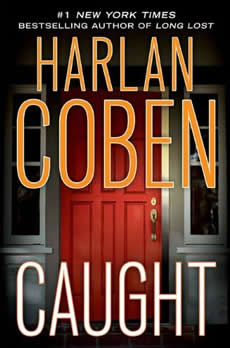
Caught
by Harlan Coben
@@@@
I have now read all 17 of Coben's books currently in print (his first two novels no longer are) and each has taken me about a week or less to finish.
While his books--split between his Myron Bolitar mysteries and stand-alone thrillers--are not works of high art, they are stay-up-all-night page turners, filled with more than a bit of humor and shrewd societal insight.
His latest hardcover, Caught, is no exception. While probably not his best book, not quite meriting the 5 stars that 96 of 151 reviewers on Amazon have bestowed and without nearly the complexity of The Man From Beijing, it is a whiz-bang thriller that is extremely enjoyable to read.
Far more so than the Mankell book.
Although I had pegged some of the surprises in Caught before I got to them, I won't reveal much here. But it starts with a man getting caught, as part of a TV show sting, in the home of a teenage girl he had contacted over the internet. Not all is as it seems and the newswoman from the show becomes the central character in a proverbial roller coaster ride across all 388 fast-moving pages.
Although Caught is a stand-alone novel, not a caper involving the Myron Bolitar character, Coben does utilize characters from past books, which adds to the fun for those of us who know his North Jersey oeuvre.
But even as your first foray into Coben, you should find Caught quite satisfying, although you also wouldn't go wrong starting with his earlier stand-alones like Tell No One and Gone For Good.
Along with Lee Child, whose works all revolve around a character named Jack Reacher, Coben is my favorite thriller writer, and I've yet to be disappointed.
If you likewise love a good page-turner, perhaps it's about time you 'Caught' on.
The Man From Beijing
by Henning Mankell
@@1/2
Although Henning Mankell has been writing best-selling crime novels for nearly 15 years, I hadn't heard of him until this past February, when Entertainment Weekly gave his new book--The Man From Beijing--a short but glowing review, in which the reviewer states, "This is hands down the best thriller I've read in five years."
So I put it on reserve with the Skokie Public Library, and when my turn came, I was very excited to read it.
But as it turns out, it wasn't even the best thriller I've read this month.
Despite the title, the book mostly takes place in Mankell's native Sweden, where a brutal massacre has wiped out a small village.
Over the past year, I've read and enjoyed all three books in the Millennium series (The Girl With the Dragon Tattoo, etc.), by the late Stieg Larsson, another Swedish crime fiction writer whose works weave throughout his homeland. This was another reason I was optimistic about the new book by Mankell, who in the past has centered his novel around an inspector named Kurt Wallander, but wrote The Man From Beijing as a stand-alone novel.
But whereas Larsson's books constantly made me want to read the next page, discover the conclusion and tackle another of his thrillers, 50 pages into The Man From Beijing, I realized I was reading only to reach the end, not because I was anxious to learn what would happen next. The small-village massacre becomes linked to happenings in the American West from over 130 years prior, leads to dozens of non-thrilling pages about modern China and is ultimately relegated to the background of a story that meanders a whole lot.
And while it seems that Mankell was aiming for a book with considerably more consequence than your average page-turner, it didn't ever approach great literature or enlighten like a non-fiction take on some of the same matters might have. So basically I was left with a thriller that didn't thrill.
Though Mankell appears to be a well-regarded author, the Amazon reader reviews more closely approximate my take on The Man From Beijing than Entertainment Weekly's. Almost a third of the Amazon reviews give it 1 or 2 stars out of 5, so perhaps my @@1/2 is a bit generous if anything.
I'm sorry I wasted a full two weeks getting through it, especially because a few days in, the Skokie Public Library let me know that another thriller I had on reserve was ready for me. Fortunately, after finishing The Man From Beijing, I was able to read the book below in just 4 days, and liked it much better.
---

Caught
by Harlan Coben
@@@@
I have now read all 17 of Coben's books currently in print (his first two novels no longer are) and each has taken me about a week or less to finish.
While his books--split between his Myron Bolitar mysteries and stand-alone thrillers--are not works of high art, they are stay-up-all-night page turners, filled with more than a bit of humor and shrewd societal insight.
His latest hardcover, Caught, is no exception. While probably not his best book, not quite meriting the 5 stars that 96 of 151 reviewers on Amazon have bestowed and without nearly the complexity of The Man From Beijing, it is a whiz-bang thriller that is extremely enjoyable to read.
Far more so than the Mankell book.
Although I had pegged some of the surprises in Caught before I got to them, I won't reveal much here. But it starts with a man getting caught, as part of a TV show sting, in the home of a teenage girl he had contacted over the internet. Not all is as it seems and the newswoman from the show becomes the central character in a proverbial roller coaster ride across all 388 fast-moving pages.
Although Caught is a stand-alone novel, not a caper involving the Myron Bolitar character, Coben does utilize characters from past books, which adds to the fun for those of us who know his North Jersey oeuvre.
But even as your first foray into Coben, you should find Caught quite satisfying, although you also wouldn't go wrong starting with his earlier stand-alones like Tell No One and Gone For Good.
Along with Lee Child, whose works all revolve around a character named Jack Reacher, Coben is my favorite thriller writer, and I've yet to be disappointed.
If you likewise love a good page-turner, perhaps it's about time you 'Caught' on.
Labels:
Book Reviews,
Books,
Harlan Coben,
Henning Mankell,
Libraries
Subscribe to:
Posts (Atom)