Showing posts with label R.E.M.. Show all posts

Friday, September 23, 2011

It's the End of the World as We Know It and I Feel Sad ... and Appreciative ... and Fine -- A Tribute to R.E.M.

"It's easier to leave than to be left behind"
-- R.E.M., "Leaving New York" (2004)

"A wise man once said--'the skill in attending a party is knowing when it's time to leave.'"
-- Michael Stipe, as part of Wednesday's online announcement of R.E.M.'s retirement

Twenty years after becoming international megastars with the success of Out Of Time, R.E.M. is.

That album, featuring the hit "Losing My Religion," came 11 years after the band's formation in Athens, Georgia, and followed a r.e.m.arkable 6-album (plus an EP and rarities collection) run in the '80s when they almost singlebandedly defined the genre of "college rock."

In doing so, they helped inspire the next generation of great bands, including Nirvana, Pearl Jam and Radiohead, and along with '80s peers like U2, The Cure and Depeche Mode, begat the explosion of "alternative rock" in the '90s. After Out of Time came the album many--but not I--cite as the groups's artistic apex, 1992's Automatic for the People. But as pontificated by many of the critics and pundits who weighed in after Michael Stipe, Peter Buck and Mike Mills "decided to call it a day as a band," R.E.M.'s creative prowess sank sharply after drummer Bill Berry left in 1997.

While I concur that their subsequent albums were generally lesser, and their songwriting not nearly as inventive as during their ascent, I take umbrage with opinions such as the one that Miles Raymer shared on the Chicago Reader blog espousing that "1997 would have been a fine place for the band to end." This implication that--in reference to Stipe's quote above--R.E.M. stayed at the party way past propriety, seems to be a common thread in several articles I've perused. In this piece on his own blog, Jim DeRogatis describes the band's post-Automatic years as a "sad decline toward corporate nostalgia act" while ruing "the potential the group once held but ultimately betrayed."

As an avid fan of R.E.M. since 1986--yes, I should have caught on 2-3 years sooner--yet one who didn't exactly gush over this year's Collapse Into Now album, I find suggestions that the band sold out, milked it into mediocrity or foolhardily carried on without Berry to be unduly harsh.  

Of the 9 times I saw the band live in concert, 6 were since 1999, and even as someone who can tend to be critical and nitpicky--as many of my reviews here will attest--I have never been disappointed. Each of the shows I caught were excellent or even better, and I've never perceived that the band members were going through the motions or somehow cheating me.

Also, given the relative dearth of new musical acts that have excited me and/or shown any staying power--especially in a rock vein--mediocre R.E.M. has still been more welcome in my world than much else out there. Some of their releases have been better than others--2008's Accelerate is a truly fine album even if not quite among their very best--but even a relative dog like 2004's Around the Sun has superior songcraft than most of what passes for modern rock. While I wasn't wowed by Collapse Into Now, I'd still rather listen to it than more heralded albums by Fleet Foxes, Bon Iver or Mumford & Sons (and those are bands I somewhat like).

But even if we want to stipulate that the legendary band has been running on fumes since 1997, I don't really get the reasoning that suggests they should have walked away. Sure, artists should always aspire to greatness,  but even if they less frequently achieved it, I never got the sense that Michael, Peter and Mike were dogging it. Maybe they didn't correctly gauge just how vital Berry's drumming, input and influence were to their earlier brilliance and consistency, or maybe they just slowed down a bit as they aged, but I really don't think they were being disingenuous or deceitful. The concerts I saw over last decade cost no more than $75 per ticket, less than a third of what peers like U2 and Madonna were commanding for the best seats. And it's not like Michael, Peter & Mike ever forced anyone to buy their latest album or to attend a show.
In a world where millions are unemployed, underemployed, underpaid or just unhappy in their worklife, why do we condemn artists and athletes for continuing to do what they love--for considerable recompense and adulation--even if they may never be as great as they once were?
If Brett Favre still wants to play football and can find a team to pay him, if Francis Ford Coppola still wishes to direct movies and can get them produced (even with his own money), if U2 and the Rolling Stones and Paul McCartney and Bruce Springsteen want to play old hits to packed stadiums, why is this cause for such consternation? Jim DeRogatis may never be as good a rock critic as he was with the Sun-Times or write another book as good as Let It Blurt, but does this mean he should shut down his blog and stop writing books if the will and demand are still there?

Believe me, there are plenty of bands and other creative artists I once really liked for awhile and subsequently stopped caring about--the Goo Goo Dolls are but one example--but I would never suggest they cease to exist. Vote with your obliviousness, but to condemn anyone for continuing to do what they enjoy just seems awful sanctimonious.

On this note, just today Steve Van Zandt was quoted as saying that Bruce Springsteen and the surviving E Street Band members would soon discuss how to carry on after the death of Clarence Clemons. I'm sure many so-called pundits are already sharpening their sabers to rebuke any upcoming tour (and the Machiavellian motives behind it), but as Stevie very simply explained, they will still play music until the end because "that's what we do."

And call me a fanatic, but I still enjoyed what R.E.M. did. To the point that when I heard they had called it quits, I felt chagrin that they wouldn't be touring again and thus I wouldn't have another chance to see the act that ranks third among my all-time favorite artists of popular music.

Perhaps R.E.M. isn't quite going out on top, but it's close enough for rock 'n roll, and that's good enough for me.

Thanks guys.
---

Below are YouTube videos of 20 of my favorite R.E.M. songs (beginning with a compilation video that you can let run sequentially through all the songs, set roughly in chronological order).

And I've now posted 11 additional videos of favorite latter-day R.E.M. songs, in this piece on Booth Reviews.


Continue viewing the post below if you want to see each of the 20 videos of my favorite R.E.M. songs.

Monday, March 14, 2011

Though Still Quite Worthwhile For Fans, 'Collapse Into Now' Falls Well Short of Band's R.E.M.arkable Then

Album Review

R.E.M.
Collapse Into Now
@@@1/2

I believe R.E.M. belong in the very upper echelon of best rock bands ever (as you can see here), with their recorded output having been a greater part of the equation than live performances.

So although the erstwhile Athens, Georgia group's 15th studio album, Collapse Into Now, undoubtedly ranks among the bottom third of their remarkable discography, I highly doubt there will be 10 other albums released in 2011 that I care about, listen to or like as much.

Although there is too much proof to the contrary to argue that R.E.M.'s creative brilliance hasn't subsided sharply--whether causally or coindentally--since drummer Bill Berry left the band in 1997, Peter Buck, Michael Stipe and Mike Mills are still putting out high quality music 30 years after the release of their first single, "Radio Free Europe." Not only has R.E.M.'s quantity of new material outdistanced contemporaries like U2, The Cure and Depeche Mode over the last decade, so too has their quality in sum.

And while Collapse Into Now fails to truly compete with R.E.M.'s best albums, I genuinely like it better than The King of Limbs, the latest release from Radiohead (even though I gave both records @@@1/2; see my review of King of Limbs).

So in comparison with nearly everyone but themselves, R.E.M. circa 2011 remain quite worthy of your bandwidth, and there is no reason why longtime fans shouldn't purchase and enjoy Collapse Into Now. Although in harkening to the past, the album seems to echo New Adventures In Hi-Fi (the band's last album with Berry) far more than their truly adventurous early discs--in truth, the latest album by The Decemberists, The King Is Dead, on which Buck plays guitar, sounds more like early R.E.M. than anything here--new songs like "Discoverer," "All The Best," "It Happened Today" (featuring a guest appearance by Eddie Vedder) and especially, "Mine Smell Like Honey," should resonate with the faithful.

But were I asked to put together a 20-song "Best of R.E.M." playlist, only the last song above would even merit consideration, and not necessarily make the cut. This is, of course, a testament to the band's past greatness, but doesn't suggest that the uninitiated start with the latest album nor that those who fell off the R.E.M. bandwagon years ago will hear 'Collapse' as a return to glory (although 2008's Accelerate was the band's best post-Berry release, and though the new one isn't quite as good, it's close).

In listening to not only the new album several times, but many of the ones I love--Murmur, Reckoning, Fables of the Reconstruction, Life's Rich Pageant, Document, Out of Time--it seems that what's been left behind is the unbridled sense of "let's try anything." While Stipe's rich vocals always provided a unifying element, even before he began enunciating, there is true stylistic divergence between "Begin The Begin," "Fall On Me," "The Flowers of Guatemala," "What If We Give It Away," "Swan Swan H," and much of what came before or since--and all those songs were all on the same album (1986's Life's Rich Pageant).

While none of the songs on Collapse Into Now are bad, and that's a greater achievement than it may seem, neither do any of them brim with the brilliant originality of "It's The End of the World As We Know It (And I Feel Fine)," "Losing My Religion," "Man on the Moon," or "What's The Frequency, Kenneth?" Given that Mills-sung songs like "(Don't Go Back To) Rockville," "Superman" and "Texarkana" used to shake things up a bit, it's strange that he hasn't contributed lead vocals for several albums.

The college kids of Chronic Town are now graying fifty-somethings, and although Buck/Mills/Stipe remain professionals who take their craft seriously, they seem to have lost some of the playfulness that took their collective (along with Berry) sonic imaginations to levels few others have ever reached.

Of course, despite my long treatise the other day on how songwriting singers  named Paul (but not only) seem to suffer when they leave bands to go solo, maybe the reality is really that even musical geniuses (together or apart) only have a finite amount of sheer ingenuity in them. For whatever combination of factors may be to blame, most rock songwriters' best work has come before the age of 35, even if they remain active far beyond.

With Collapse Into Now, R.E.M. has nothing to apologize for--except perhaps their decision not to tour behind the album--but anyone hoping that Accelerate would push them into a higher gear, one being both R.E.M.iniscent of the past and, not coincidentally, nothing like anything they've ever done before, should just enjoy the 'Now' while R.E.M.aining grateful for all that was "then."

Friday, August 06, 2010

My 100 All-Time Favorite Artists of Popular Music - 2010 Edition

In honor of Lollapalooza weekend in Chicago--although I'm not attending this year's fest, due to being too old & fat to enjoy standing in a field all day, let alone three, and a scarcity of acts that interest me--I thought it would be a good time to update my list of 100 favorite popular music (mostly rock) artists, which I first compiled and published five years ago.

Although without too many wholesale changes, there are a number of acts that either newly made or fell off the top 100, and others that bounced around within it. Beyond asking myself at each berth, "Do I like "x" better than the artist below," there was no scientific methodology, but I did try to consider each artist's recorded output, their merits as a live act (where applicable), how often I tend to listen to them and the depth & duration of my affinity.

As such, the rankings are based on my personal fondness more than my critical regard for one's originality, impact, influence or other barometers of artistic merit. In other words, although I know Bob Dylan (#30) is "greater" than Rush (#19), I don't "like" him better. On stature alone, Elvis Presley, Chuck Berry, Stevie Wonder and Bob Marley clearly belong, and I enjoy all four and others of their ilk, but none have been mainstays in the "soundtrack of my life" to the extent of the 100 who made the cut.

Keep in mind that I've seen more than 200 different artists as concert headliners and have nearly 1,400 artists in my iTunes library, so I like far more than the 100 listed here. And as this is meant as an "all-time" list, although  I've been listening heavily of late to stellar new releases from The Len Price 3, The Arcade Fire and LCD Soundsystem, among others, I couldn't allow myself to be too myopic in my selections.

Finally, one thing that I had some trouble being consistent about was in how to consider solo acts who were previously in bands. I like the individual post-Beatles output of John, Paul & George enough to give them their own slots, as well as that of Paul Weller outside The Jam, but though I've enjoyed Ray Davies' solo recordings & concert appearances, I didn't cite him beyond The Kinks. I included Bob Mould/Husker Du/Sugar as a single entry, and likewise Eric Clapton/Cream/Derek & the Dominoes, but listed Ozzy Osbourne, not Black Sabbath (despite liking his output in both forms). Neither Steve Winwood nor Traffic (or Blind Faith) made the cut, but perhaps should have if considered in sum, yet I combined Velvet Underground & Lou Reed. And my penchant for Neil Young includes his work in CSNY, Buffalo Springfield and more so with Crazy Horse than without, but he's only included individually.

Oh, well, life is full of inconsistencies and so is my list. But here it is, as of August 6, 2010:

1. Bruce Springsteen
2. The Beatles
3. R.E.M.
4. Nirvana
5. Led Zeppelin
6. The Rolling Stones
7. U2
8. The Kinks
9. The Who
10. The Jam
11. Pearl Jam
12. The Clash
13. The Smashing Pumpkins
14. AC/DC
15. The Ramones
16. David Bowie
17. Radiohead
18. Cheap Trick
19. Rush
20. Tom Petty & the Heartbreakers
21. Midnight Oil
22. Stereophonics
23. Foo Fighters
24. Dinosaur Jr.
25. Green Day
26. Jimi Hendrix
27. The Replacements
28. Van Halen
29. Bob Seger
30. Bob Dylan
31. Pink Floyd
32. Elvis Costello
33. Queen
34. Talking Heads
35. The Police
36. Aerosmith
37. Neil Young
38. John Lennon
39. Creedence Clearwater Revival
40. Johnny Cash
41. Guns 'n' Roses
42. Alejandro Escovedo
43. Husker Du/Bob Mould/Sugar
44. The Wildhearts
45. The Killers
46. Paul McCartney
47. Steely Dan
48. Simon & Garfunkel
49. Elton John
50. Eric Clapton/Cream/Derek & the Dominoes
51. The Cure
52. Billy Joel
53. The Zombies
54. Metallica
55. The Flaming Lips
56. Peter Gabriel
57. Warren Zevon
58. Blur
59. Sex Pistols
60. Garbage
61. Soundgarden
62. Paul Weller
63. Van Morrison
64. The Waterboys
65. The Doors
66. Maximo Park
67. The Pretenders
68. Velvet Underground/Lou Reed
69. The Cars
70. BoDeans
71. Wilco
72. Nine Inch Nails
73. Depeche Mode
74. Liz Phair
75. John Mellencamp
76. Stevie Ray Vaughan
77. Prince
78. Dire Straits
79. Fleetwood Mac
80. The Byrds
81. The Beach Boys
82. George Harrison
83. The Move
84. Ash
85. The Pixies
86. Buddy Guy
87. The Smoking Popes
88. Def Leppard
89. Ozzy Osbourne
90. Blondie
91. The White Stripes
92. Buddy Holly
93. Coldplay
94. The Smiths
95. Beck
96. Eagles
97. Jackson Browne
98. Social Distortion
99. Boston
100. Material Issue

Top 3 Almosts: Supertramp, Love & Graham Parker

Dropouts from the 2005 list: Elvis Presley, Jason & the Scorchers, ZZ Top, Red Hot Chili Peppers, Santana, Bad Religion, The Wallflowers, The Darkness, Counting Crows, Jane's Addiction, Love and Graham Parker

Thursday, July 29, 2010

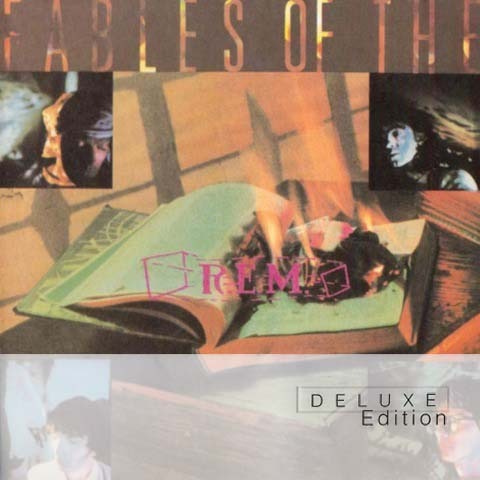
A Fabled Reconstruction

Album Reissue Review

R.E.M.
Fables of the Reconstruction
25th Anniversary Digital Remaster
@@@@@

I don't relish buying the same thing twice, especially at a time when money isn't exactly rolling in. Although I now own a Blu-Ray player and have appreciated the far superior quality Blu-Ray discs offer over standard DVDs, the improvement will likely never be enough to compel me to replace the hundreds of DVDs I already own, especially as another even-more-advanced technology is likely always just around the corner. And having bought numerous new release DVDs over the years, it always has rankled me when an "enhanced version" with additional features (such as director commentary, deleted scenes, etc.) comes out just a matter of months after I have been pushed to buy the original version.

But in moderation, I have found it worthwhile and justifiable to invest in "newly remastered," often deluxe (i.e. extra songs, spiffy packaging) reissued versions of some of my favorite albums, usually released in commemoration of a milestone anniversary of the original release. I have done so for Springsteen's "Born To Run," "Who's Next," U2's "The Joshua Tree," the Stones' "Exile on Main Street," R.E.M.'s "Reckoning" and a handful of Beatles' albums.

In all cases, I had owned the original CD for more than 20 years, dating back to the just about the introduction of CDs, when, despite promotional claims, they did not really sound significantly better than LPs and could very much become scratched (although at the time, my music collection had already transitioned from records to cassettes, which were inferior to CDs). And whether because of the original recording, mixing and/or mastering of the music or the methodology for transferring records to CDs, the sonic quality of many early CDs was especially poor (I have a nice, but not high-end stereo system, do not consider myself an "audiophile" and now do most of my listening via mp3s).

For all the albums cited above, hearing the newly remastered versions--even if only in mp3 form--has been a treat, as the music I have long loved now sounds even better. But still, more than 90% of the joy in listening to the upgraded versions is in the brilliance of the original music. Modern engineers can make all kinds of sonic improvements, but they can't write Baba O'Riley, Backstreets or A Day in the Life.

Having recently downloaded the newly remastered, 25th anniversary edition of R.E.M.'s third album, Fables of the Reconstruction, I can hyperbolically say that I have never heard an album reissue that has so greatly enhanced the pleasure of hearing its source material.

Not that 'Fables' wasn't good to begin with; I have always found there to be much magnificence in the moody collection of tracks that the then still-nascent Athens, GA band struggled to record in London (from Wikipedia: The band members found the sessions unexpectedly difficult, and were miserable due to the cold winter weather and poor food; the situation brought the band to the verge of break-up.) But when the the gloominess of the music sounded even more so given the muddled production, among R.E.M.'s amazing first five albums (Murmur, Reckoning, Fables, Life's Rich Pageant and Document), their third album has long ranked a clear fifth, in terms of the frequency of my listening, my opinion and that of reviewers (such as AllMusic.com). 

While the songs themselves are still quite dark, the remastering that eliminated hiss, added clarity & volume and brought Michael Stipe's murky vocals a bit more to the fore, has made listening to them a whole lot brighter. To the point that I now find Fables to be very much the equal of any of their first five albums, all of which rank among my favorite albums by anyone (several of their subsequent albums are also quite worthwhile).

Unlike the reissues of Murmur and Reckoning (I only own the latter), the second disc of the Fables anniversary package does not include an R.E.M. concert from the period, but rather demo versions of the songs that made the album, plus two that were on subsequent releases and one--Throw Those Trolls Away--heretofore unreleased. These don't excite me much and thus I only chose to download the remastered 11-song album and not splurge ($26.98) on the full physical package.

As such, I imagine the CD version might sound even better than the downloads, but as I was apt to just import it to iTunes and then put it on my iPhone, even in digital form I'm extremely enamored with how well Fables has been reconstructed. Its abundant merits should now be a whole lot clearer to just about anyone.

In addition to hearing snippets of all the songs through the Amazon product page, there is also a customer video that includes several full songs.