Saturday, November 20, 2010

Love, Success, Happiness Sadly Subvert Miranda Lambert's Rebel Soul: Concert Review

Concert Review

Miranda Lambert
with Eric Church and Josh Kelley
CMT on Tour
November 19, 2010
NIU Convocation Center, DeKalb, IL
@@@

A few years ago, after reading a feature story referencing Miranda Lambert as "sort of a one-woman Dixie Chicks"--an act I came to like and admire after their going rogue and remaining defiant resulted in  excommunication from the country music establishment--I discovered Lambert's excellent 2007 album, Crazy Ex-Girlfriend.

Whether best described as hard-rocking angry-girl country or countrified angry-girl rock (think Alanis Morissette or Liz Phair with fire & brimstone and a penchant for shotguns), Crazy Ex-Girlfriend is an extremely engaging album bristling with rancor, wit and great riffs, and I'd count it as one of my favorites by a newish artist in any genre over the last several years.

Although I've never been drawn in by too much "new country," Lambert fit in perfectly with my appreciation for anything fresh, edgy and created with obvious passion & integrity. And while I might politically be at odds with the gun-totin' persona percolating through songs like "Gunpowder & Lead" (this is a good live clip from 2007) and "Crazy Ex-Girlfriend," I appreciated the cleverness of her craftswomanship, which along with spunky verve, is also clearly apparent on her first album, Kerosene.

I really would've liked to have seen Lambert live around that time, performing tunes from her first two albums, but the only time I noticed her coming through Chicago was for a birthday show at Joe's Bar in November 2008. Full of rock & roll cover songs and appearances by family members and her boyfriend (now fiance), singer Blake Shelton, the concert further impressed me but left my hoping to see her play a full set of her own songs.

In late 2009, Miranda Lambert released her third album, Revolution to much critical acclaim. But while I too had great expectations, it didn't capture me like either of her first two albums did. Although there is certainly some quality writing and hard-rocking riffs, even the ballads aren't as quirky and distinctive as on "Crazy Ex-Girlfriend." Revolution is a good album, but in my humble opinion--and that of AllMusic.com--not a great one.

So, of course, it has become the most decorated album in country music this year, recently winning "Album of the Year" honors at the CMA Awards, where Lambert also earned "Female Vocalist of the Year."

And while for whatever reason, Lambert has avoided a full-fledged headlining gig of late in Chicago, I noticed that last night she was slated to perform at my alma mater, Northern Illinois University in DeKalb.

So happy for an excuse to head out to NIU, I stopped by the school's Career Services Center, Art Museum and Student Center, saw the stark memorial to the 2008 student massacre and grabbed a great gyros at Tom & Jerry's--a favored old haunt in downtown DeKalb--before heading to the show at the relatively recent Convocation Center. Although the show was nearly full, I was able to get a decent seat in person, therefore avoiding about $14 in Ticketmaster fees on a $25 ticket.

The "Convo," as it seems to be called, is certainly a step up from the high school gymnasiumish Chick Evans Fieldhouse, where NIU played its basketball games when I was a student, where I saw R.E.M. as a college freshman and where my graduation ceremony was held. But, and I know I haven't made much in the way of alumni contributions, it would have been nice if NIU had opted for something better than the cheapest possible, least comfortable folding-plastic seats imaginable. Luckily I was on an aisle so I didn't have to squeeze my fat ass between two others.

The crowd looked to be a good bit heavier in locals (plenty of cowboy hats) and, as later revealed, Chicagoans--some from Joe's Bar, to which Lambert gave a shout-out as her favorite place in the world to play--than students. (Campus itself seemed extremely sleepy, which I recall was often the case on Fridays.) But I thought I was in for a good night when the first song I heard on the arena's pre-show PA was Bruce Springsteen's, "Badlands" followed by music by Alejandro Escovedo, John Mellencamp, R.E.M., Outkast's "Hey Ya,' "In the Midnight Hour" and some twangy country songs.

Although I have no way of knowing if the mix tape was culled by Lambert, I hoped it presaged a show that was a fun mix of country, rock and disparate influences. And after first opener Josh Kelley delivered an innocuous 20-minute set, the arena raged with Iron Maiden's "Run to the Hills" prior to second opener Eric Church coming onstage to a heavy metal guitar solo.

Despite paying homage to metal, Church--who I saw once before opening for Bob Seger--delivered a 50-minute set that, while seemingly crowd pleasing, to me with ripe with the cliches that are while I largely don't like modern country music. Song after song was an overt ode to things Church loves--America, beer, Jack Daniels, Jesus, the flag, NASCAR, his boots, even the great Merle Haggard--without seemingly offering any insight or introspection. Yecch.

Photo by Fred Blocher, Kansas City Star
All the more reason why I was hoping that Lambert would save the night and justify my country-fried expedition. And taking the stage after Steve Earle's "The Revolution Starts Now" blasted through the arena, Lambert started off great with a trio of songs from her trio of albums, including an ass-kicking version of "Kerosene."

But disappointingly, she soon settled into a fully-scripted arena show, focusing predominantly on muted love songs from Revolution. Along the way, she talked about her big night at the CMAs, showed off her engagement ring as she cooed about Shelton, proclaimed that she was a "longtime member of the NRA" and delivered a slick, soul-less rendition of Rick Derringer's "Rock & Roll Hoochie Koo."

"Gunpowder & Lead" sounded great at the end of her main set, but even that didn't seem to bristle like I hoped (or like the roadside bar rendition I linked to above). She omitted "Crazy Ex-Girlfriend," anything other than the title track from Kerosene and much else to remind me why I was so looking forward to seeing her. And though she was perfectly cheery and adequately gracious--and played just enough good songs to qualify the show as such--she seems to have smoothed out her rough edges to the precipice of dullness.

As Lambert repeatedly reminded the crowd, she just turned 27 last week. While she is an extremely talented woman, writing most of her own songs, based on what I saw last night I hope her best days aren't already behind her. If you like mainstream, plaintive country music within the realms and norms of the Nashville establishment, the Texas-bred Lambert is still well above average in that vein. But even if she only ever seemed like a rogue outsider, raging with pistol-and-innuendo-packing vitriol, it appears that as she has achieved professional success and personal happiness, her art is suffering for it.

Thursday, November 18, 2010

A Big 'Thumbs Up' for Roger Ebert (and his new book: The Great Movies III)

I can't remember the last time I paid full price for a new hardcover book. And to do so for a book from which I can easily read virtually the entire contents online for free may seem especially foolish and unnecessary, particularly for someone without a regular job.

But such is my eminent esteem for Roger Ebert that when I saw that he would be signing copies of his new collection of film essays, The Great Movies III--I already own volumes I & II, despite being able to access the essays on his great website--at the Barnes & Noble in Old Orchard in Skokie on Thursday night, I made a point of going. And as buying the book there for $30 was the only choice if I wanted him to sign it (even though it's available for about a third less on Barnes & Noble's website), well, pony up I did.

And even though I had Roger personalize my copy--thereby ruining any possible re-sale or auction value--I feel absolutely no compunction about doing so.

Because not only do I so greatly admire Roger and cherish having a tome of movie essays autographed by him, but especially as I have evolved in my exploration of film (which you can read about here), Ebert and his writing have greatly expanded my understanding and appreciation. Just today, I watched a beautiful 1974 German film by Rainer Werner Fassbinder called Ali: Fear Eats the Soul and followed it by reading Ebert's piece on it in The Great Movies I (and available here, although just because you can get something for free doesn't mean it's not worth buying).

This past April, for the first time, I attended one day of Roger's annual Ebertfest--comprised of overlooked films he favors--in Champaign-Urbana. You can read my recap here, in which I also tried to articulate why my fondness for Roger Ebert goes far beyond his role as movie critic, especially as he has battled thyroid cancer which has robbed him of his ability to speak and, as he had repeatedly joked, his "good looks."

As I mentioned to a Northwestern journalism grad student who was at the signing and interviewed me--as well as to the lady in line next to me, up to the point that Roger himself interrupted and shook my hand as he made his way to the book signing table--without his voice Ebert now speaks louder than ever. Going far beyond reviewing the latest movies, he writes at length about myriad topics through his online journal and in frequent Facebook and Twitter posts.

I absolutely loved when he shared this photograph on Facebook a few weeks ago, just because he came across something he liked, and agree with most of his well-reasoned, left-leaning political/societal commentary. I think it's cool that Roger Ebert was born on the exact same day as Paul McCartney--June 18, 1942--and in addition to being a huge Beatles fan, like me, he's also an ardent admirer of Howard Stern, of whom he tweeted on Monday: "Howard Stern is the best interviewer in the business. He asks everyone what you really want to know."

Aside from liking what Roger writes, writes about, what he cherishes, the courage he has demonstrated and the views he espouses, Ebert also means a lot to me simply by being one of the last remaining vestiges of an era of Chicago--and local media icons--gone by.

From Ebert's longtime TV partner, Gene Siskel, who passed away in 1999, to people like late longtime newspaper columnist Mike Royko and sports anchor Tim Weigel, even Steve Dahl who is off the air in radio limbo-land, most of the local media stars who kind of defined Chicago when I was growing up have passed--or at least moved--on. And, not only as a consequence of the Internet age, there doesn't seem to be stalwarts of quite the same ilk to have taken their place.

When I was about 14, I wrote to Ebert and Siskel requesting an autographed photo and received back the one at right (I did likewise for Steve & Garry (Meier), Weigel and a few others). As you can see, I've kept it in pretty good condition after all these years. And though I expect to put The Great Movies III to much greater use, I will likewise cherish having Roger Ebert's John Hancock on it. For as I've hopefully expressed amidst this rambling, it symbolizes a lot more than the signature of America's most famous movie critic.

Tuesday, November 16, 2010

Get Ready To Flip! 'Once Upun A Time' returns laughter quite a smile (or: Wanna buy my new calendar of pun cartoons?)

(Note: To skip the backstory below and simply see & order calendars, visit OnceUpunATime.com)

Once upun a time, or more precisely, one score and no years ago, I was an aspiring screenwriter working as a bank teller in Encino, California.

To fill some downtime when there were no customers, I started drawing--more like barely sketching--cartoons featuring puns that came to mind. I'm not sure if it was the absolute first, but a very early one was of Oliver Twist as a world-conquering imperialist asking, "Please sir, may I have Samoa?"

As you can see by clicking here, it wasn't exactly a work of high art. But it inspired me to draw many more pun cartoons and compile them into a calendar--it helped that I was working nights at Kinko's--that I gave to family and friends for the holidays heading into 1991.

Although my illustration skills never reached much beyond rudimentary, I refined some of my production values in creating another weekly calendar for 1992 and went on to make a Once Upun A Time calendar for all the remaining years of the '90s, comprising more than 400 original cartoons.

The calendars seemed to be highly appreciated and complimented by friends, relatives and co-workers who received them (typically 60-100 per year were given out). At various points, I sent copies to Tribune Media Services--after the retirement of Gary Larson's The Far Side--and Recycled Paper Products, but despite being told several times that "you should sell these," I never found a way to do so. And except for an occasional cartoon for a greeting card--another favorite pursuit as you can see here, but using a different type of punnery if at all--I put aside this hobby before the new millennium rolled around.

Until a flood in my condo basement washed away my surplus copies in late 2007, I occasionally shared some of my old calendars with new friends. One of these was my friend Amy who I had met in 2006 when we both lived in Glen Ellyn and worked on some political campaigns together. But honestly, I had forgotten I had ever given her back copies.

Cut to late August of this year. Out of the blue I received a call from Bob Peickert, a mutual friend of both Amy and me, who said that Amy--in the midst of clearing out clutter so she could put her home up for sale (if you want a house in Glen Ellyn, IL, leave a comment and I'll connect you with Amy)--had shown him my calendars and he absolutely loved them. And even better, that he wanted to produce and market them to clients of his Minuteman Press print shop in Glendale Heights, IL.

We had a meeting and it sounded great to me. So I spent the next month drawing a batch of new cartoons just to make it feel somewhat fresh to me; though I certainly could have culled enough decent old cartoons that most people have never seen and the few who did long ago forgot, I still wanted the new edition to have a mix of old and new punography.

Weekly page sample; click to enlarge
In addition to a pun calendar in the style of the weekly desktop planners that I had previously done--with 52 black & white cartoons for 2011 (most years don't begin on Sunday and end on Saturday, so 53 images are more typical); the cover is basically the same as on the monthly version shown at top--Bob asked me to put together a monthly version in color, as many business clients prefer distributing calendars that clients and associates can hang on a wall.

So I added color to some of my favorite cartoons and--with the help of Bob and the staff at his shop, which is handling all orders--I am pleased to re-introduce Once Upun A Time to the world in both Weekly and Monthly editions for 2011. Now available for purchase and sure to make great holiday gifts and/or imprinted business giveaways.

Monthly sample; click to enlarge
Individual copies of each version are just $10--cheaper than most of my mass marketed competition found in bookstores--and drop to as low as $5 per piece for commercial customers ordering in bulk (logo imprinting on the cover is included free on all orders of 25+ calendars).

Please visit OnceUpunATime.com to see some additional examples and place an order. Or you can just call Bob's Minuteman Press shop at (630) 871-6393.

(If you have suggestions for other avenues to sell my pun calendars online or offline, please be in touch.)

Thanks for indulging this self-serving sales pitch and remember to...

Have Plenty of Pun in the Year Ahead!


Once Upun A Time, all cartoons and calendars are the exclusive intellectual property of Seth Arkin. Please do not reproduce without written permission. ©2010. All Rights Reserved.

Saturday, November 13, 2010

By Focusing Spotlight on Brian Jones, Stones Musical 'Aftermath' Provides Tremendous Satisfaction: Theater Review

Theater Review

Aftermath
a new musical play by Ronan Marra
featuring songs by the Rolling Stones
Signal Theatre Ensemble, Chicago
Thru December 12, 2010 (unless extended)
@@@@1/2

If Keith Richards is to be believed--and it seems his recent comments are already being contradicted--The Rolling Stones will record and tour in 2011. If it happens, it will mean--somewhat astonishingly--that Keith, Mick Jagger and Charlie Watts will still be working together 49 years after the band's formation in 1962.

With current second guitarist Ron Wood having joined in 1975 and original bassist Bill Wyman having put in 30 years before retiring in 1992, it's easy to consider guitarist Brian Jones--an original member who was dismissed and soon after died in 1969--a footnote to musical history. But the still ongoing story of the Stones could never have been written without him, and not just because he was the one who chose their name.

As Ronan Marra writes in the program notes of Aftermath--a new work he wrote and directs for Chicago's Signal Ensemble Theatre, of which he is co-founder and co-artistic director--coming across a magazine article on Jones decades after his death was eye-opening.
 
"To me and anyone else I knew the leaders of The Rolling Stones had always been Mick Jagger and Keith Richards. To find out the band wasn’t even founded by these two legends was definitely news to someone who considered themselves a pretty serious rock fan. ... This article initiated my fascination with Jones. I came to learn that he was not only the band’s lead guitarist, but was also the one responsible for bringing many non-traditional instruments to their rock/R&B landscape."

Years later, Marra was inspired to write Aftermath, which Signal initially produced and staged in May; after a sold-out monthlong run--likely spurred by this glowing review from the Chicago Tribune's Chris Jones and much other praise--the show has now been remounted. And is again entirely sold out. 

Fortunately, acting quickly after Chris Jones mentioned the show's revival, I was able to buy one of the last remaining tickets and went on Thursday night. Living up to the hype, Aftermath is one of the best pieces of theater I've seen this year. (Though it may seem pointless to write or read a rave review about a show for which no tickets remain, there is a waiting list for each show that you can get on an hour before curtain--I was told they try to be accommodating as possible--and the possibility also exists that Aftermath will get extended past its slated December 12 closing date; it would seem kind of silly if it isn't.)

And while it may be a bit tricky for any producer to take Aftermath to New York, given that the Stones have yet to officially endorse the show which features live renditions of about 5-6 of their songs (and even one by the Beatles), this is clearly a work that deserves an even wider audience.

Given the recent glut of "songbook" musicals using old rock songs, relatively few of which have been good or successful, the thought of a Rolling Stones musical might sound a bit garish. But although Aftermath features the talented cast performing late '60s Rolling Stones songs live on stage, it feels less like a musical akin to Mamma Mia--in which ABBA songs narrate the story--than simply a biographical drama with Stones songs as accoutrement. The program--actually a mock "backstage pass" that Signal cleverly substitutes for both ticket and program--calls Aftermath "a new play by Ronan Marra," rather than a musical.

Not to get too bogged down on this point, but it seems that a play with live music is technically "a musical." But even compared to stellar songbook stage affairs like Jersey Boys and Million Dollar Quartet, where the songs simply accompany biography rather than move the story along, Aftermath seems to avoid gathering musical moss, or gloss, by doing away with any dancing (other than Mick's gyrations) or over-the-top production numbers.

I realize that I'm probably not doing a very good job in describing why Aftermath is so good, and in a way, it's a show that is a lot better than the sum of its parts. The biography was interesting, but not all that revelatory beyond what one can learn on Wikipedia (although I'm glad it inspired me to do so). The Stones songs are great, but only a handful are played in the 90-minute show, and not only are just of few of those--Paint It Black, Sympathy for the Devil, Satisfaction--particularly well-known, singer/actor Nick Vidal looks a lot like Mick but doesn't really sound like him vocally. And the rest of the actors/musicians--even Aaron Snook who is excellent as Jones--aren't exactly spitting images of the other Stones.

All "Stones" imagery in the theater substitutes the actors' pix.
Yet, it all works. Wonderfully. Perhaps because the show is--much like the Stones--a bit scruffy and unkempt.

In staying focused on Jones during period from 1966-69--only slightly touching on his death, which many still believe was a murder--Aftermath strikes an incredibly engaging, entertaining and enlightening balance between biographic theatrical drama and a showcase for some of the greatest rock music ever made. 

And for just $20 if you're lucky enough to get one, it's not only the hottest ticket in town, but one of the best.

Friday, November 12, 2010

Hey, Hey, My, My: Celebrating Birthday #65 For Neil "May He Always Be" Young

AP Photo/Tony Avelar
On November 12, 1945, Neil Percival Young was born in Toronto, Ontario, Canada.

By the time he was 20, he had met both Stephen Stills and Joni Mitchell, written "Sugar Mountain" and toured Canada as a solo artist.

Subsequently, he formed Buffalo Springfield with Stills, recorded solo and with Crazy Horse as his backing band, and added himself onto Crosby, Stills, Nash & Young.

Ever since he has hopscotched across modalities while creating some of the best rock music ever made (even if Rolling Stone has tended to overrate many of his later albums). In doing so, he has inspired countless bands, most notably Pearl Jam, and has raised millions for the Bridge School--the Northern California facility that assists children with severe physical impairments and complex communication needs--through his annual star-studded Bridge School Concerts. He also helped start FarmAid and continues to perform in their yearly benefit shows.

And the man who sang "and I'm getting old" when he was looking for a heart of gold in his late 20s doesn't seem to be slowing down much at 65. Even through a life that has seen band mates die, two of his children stricken with cerebral palsy, another battling epilepsy like he has and just yesterday, a fire that destroyed a warehouse with much of his memorabilia, rather than burning out or fading away, Neil has remained quite Young indeed.

While a Southern Man might not have needed him around, as Lynryd Skynyrd jested in "Sweet Home Alabama," I for one, am glad he's still "Rockin' In The Free World."

So as I say Happy Birthday #65 to Neil Young, here are some great videos I found on YouTube from throughout his amazing career. (Note: The last video is a compilation of all the others that runs continuously; easier for those who just want to hear the music.)


This is a compilation cycling through all the above videos.

Thursday, November 11, 2010

A Last Glimpse of the Eye and other iPhonetographs

OK, so having a camera on my phone isn't exactly news, or even new. But whereas the picture capability was convenient on cell phones past, in many ways it was a mirage. For the image quality was so lousy, you could barely define the result as a photograph, especially for someone who appreciates the virtue of SLR photography.

Nowadays, the photographic quality from my iPhone 4 still isn't quite as good as I might have hoped. Even when not lugging around my first-gen Digital Rebel, I still generally prefer my 6mp Canon point-and-shoot to what I get from the iPhone.

But the other day, I was walking around downtown Chicago before a meeting and took the pictures below with my iPhone. While not high art, I'm pretty pleased with the quality, especially as I've done no cropping and virtually no image enhancement (just a touch of lightening on a couple pix).

---

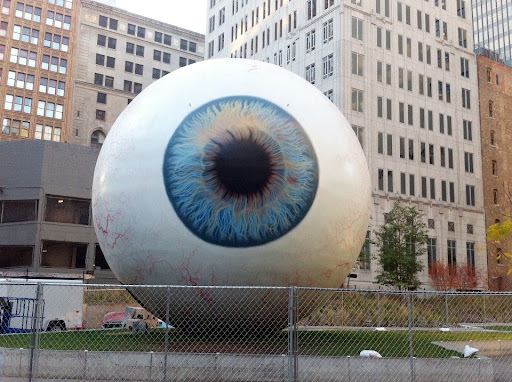
The Eye. I took this on Tuesday, November 9, 2010 and later read that the next day would be the last that the sculpture by Tony Tasset would be on display. But according to this article, it might be back in the spring.

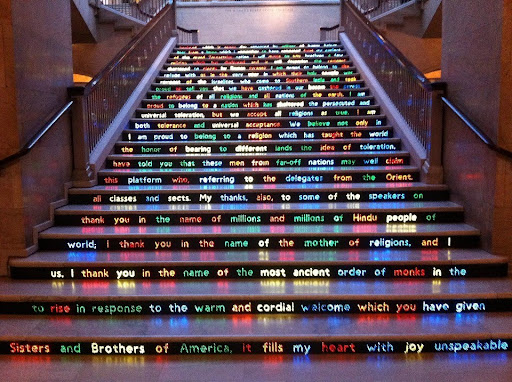
The words on the stairs of the Art Institute are an installation by Indian artist Jitish Kallat. You can read more about it here.

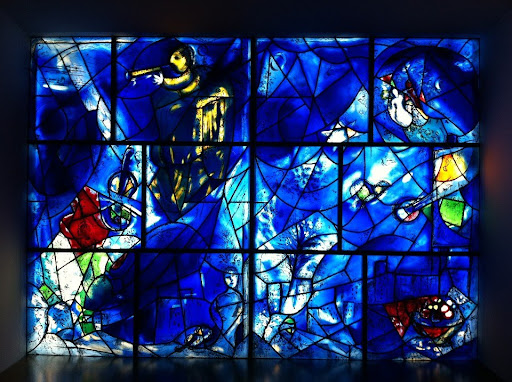
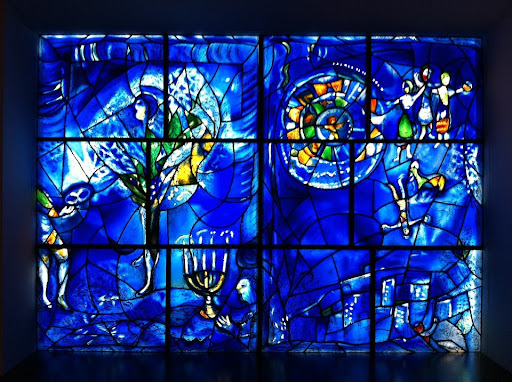
After being stored away while the Modern Wing was being built, Marc Chagall's America Windows are back on display in the Art Institute, although in a different place than before. More info here.


The Art Institute's Modern Wing, which I still find to be a beautiful waste of space. Taken from the bridge crossing into Millennium Park.

Frank Gehry's Pritzker Pavilion at Millennium Park.

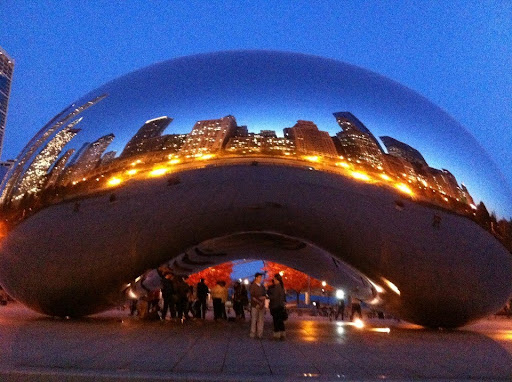
The Bean, or more precisely, Cloud Gate by Anish Kapoor. Although there are always tons of tourists nearby, you can't buy a postcard or sculpture of the Bean due to licensing agreements. You'd think a city in the red might try to work that out.

The Crown Fountain, designed by Jaume Plensa.

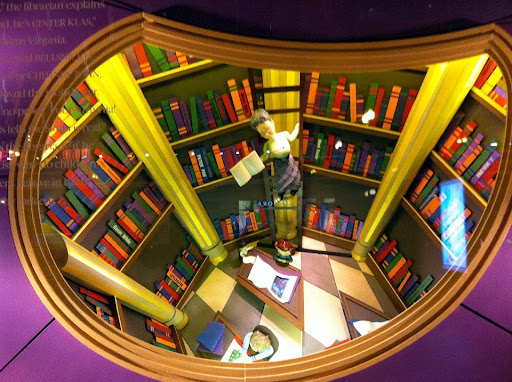
Two holiday window displays at Macy's on State Street.

Wednesday, November 10, 2010

Happy Birthday Mom!

As you might have deduced from the title of this post, today is my Mom's birthday. I won't say how old she is, but she's young for her age.

In her honor, I spent all day putting together a collage video and trying to upload it. Which I've now done, as best as seems to work. The image below is supposed to be the first thing you see, but although it is on my source video, YouTube's conversion somehow has 86'd it. And the ending is clipped a bit too. But otherwise, enjoy. Especially my Mom.


Tuesday, November 09, 2010

Today's Weighty Topic: The Best Cupcakes in Chicago

According to Wikipedia, cupcakes date back to at least 1796. So in one shape or another, I imagine that gourmet cupcake emporiums have been around for ages. But I have only been aware of trendy little cupcake cafés popping up around Chicago for about the last 2-3 years.

For the preservation of my arteries, the relative recency of the cupcake craze is probably a good thing. Because in the category of "Sweet treats that I shouldn't eat but sometimes still do," cupcakes have surpassed Eli's cheesecake, Portillo's chocolate cake, Krispy Kreme donuts (are they still around anymore?), pecan pie from Baker's Square and pretty much everything else as my gluttonous fix of choice.

Unlike the aforementioned sweets, for which I have a very specific favored purveyor (not that I refuse chocolate cake, pecan pie, donuts or cheesecake from most elsewhere), having a cupcake--and where from--is a choice predominantly based on convenience. For although there seem to be several more cupcake joints around town than there were five years ago, most bakeries have just one location and if I am in the neighborhood of any at a time that I can justify--er, rationalize--the cost and calories, I typically find the experience truly scrumptious, whether it's one place or another.

That said, there are three cupcake shops that so far rank as my favorites in the Chicagoland area. This shouldn't be taken as a comprehensive survey, as I haven't been to all that many places and at least one that I liked has already come and gone. But rather than embark on a comprehensive cupcake gorging expedition, let's consider these the best of what I've found so far--of shops visited at least twice, so as to sample a variety of flavors--and I'll be sure to update you if I discover anywhere else that truly "takes the cake."

Before my three medalists, let me give a shout out to three other cupcake bakers. Mrs. A's Cupcakes & Cookies at Old Orchard Mall in Skokie doesn't really create the same type of beautifully-decorated gourmet cupcakes as the top three, but does an excellent job with the basics, including chocolate fudge and red velvet varieties. Foiled Cupcakes is a delivery only cupcake bakery in Naperville, so you can't just stop in, but their creations were provided at a Meetup I attended and the two cupcakes I had were phenomenal. Their delivery reach is pretty extensive and the proprietor does a great job of promotion via Twitter, so keep them in mind for your next event. Although Sweety Pies Bakery is in my hometown of Skokie, I have yet to visit, but they have gotten some good reviews on Yelp and if their home page photo (above) is to be believed, they make the most beautiful decorated cupcakes I've ever seen.

But now that I've whet your appetite, and mine, here are my choices for "The Best Cupcake Places in Chicago," in reverse order (to be clear, I'm ranking establishments, not specific flavors of cupcakes):

#3. Molly's Cupcakes - 2536 N. Clark, Chicago
This popular Lincoln Park café certainly fills the bill in making delicious cupcakes in a variety of flavors. But with nearby parking often hard to find, popping in for a cupcake isn't always all that practical except for those who live in the neighborhood. And compared to my top two choices, Molly's cupcakes are somewhat small and pricey, not particularly original and on at least one visit, not exceptionally moist.

So although it's pretty hard to make a truly bad cupcake and Molly's certainly doesn't, I've had cupcakes just as good at the now-gone Chicago Cupcakes (on Briar Place, near Broadway) and would expect to find similar quality or better at other cupcake bakeries, including Phoebe's (3327 N. Broadway), which I think may be run by the same proprietors as Chicago Cupcakes. What I do really like about Molly's is that it's a comfortable place to sit for awhile and they have sprinkle-shakers with which to adorn your cupcake. And I most recently had a cookie dough cupcake that was pretty awesome.

#2. More Cupcakes - 1 E. Delaware Place, Chicago
Chicago Magazine gave this Gold Coast emporium a couple of citations, including noting their launch of a cupcakemobile, a good idea if I've ever heard one. Helped by a "15 minute loading zone" in front of the shop, which has scant or no seating (I can't recall), I've stopped in a few times now. I would have to say that More takes the cake in terms of originality, combining sleekly designed cupcakes like the red velvet at left, with unique flavors such as "salted caramel" and over-the-top extravaganzas like their version of cookies & cream, one of many varieties that feature a creamy filling.

More is clearly the most gourmet of the cupcake places I've visited, with the industrial design of their single-serve cupcake boxes rivaling the ingenuity of Apple (I've been tempted to tell the clerk, "just throw it in a bag; it'll be gone in about 37 seconds"). But despite the prevailing wisdom that it's impossible to be too rich or too pretty, I've occasionally found both to be somewhat true at More. While beautiful, the red velvet cupcake in particular wasn't quite as heavenly or unique as I was expecting (although it was certainly more than adequate). So while this bakery is excellent and well worth several More visits, at least in my humble opinion, their cupcakes can be topped.

#1. Sensational Bites - 3751 N. Southport, Chicago
Located up the block from the Music Box Theatre, this accurately-named "dessert cafe"--two of my friends rave about their chocolate caramel brownie--has benefited from my relatively newfound affinity for world cinema and I've enjoyed sampling a new cupcake (or sometimes two) on each visit.

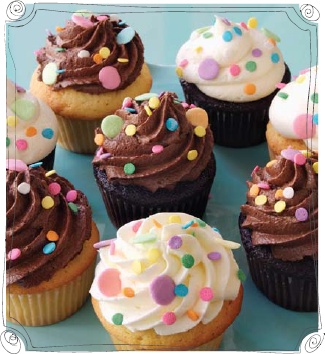
While neither their flavors or designs are as unique or elegant as More's, they have a good assortment of cupcakes both basic and fancy, including a few with fillings. I've had their red velvet, cookies & cream, marble (at left), orange dreamsicle and a couple of others and have never been disappointed. Especially as their cupcake prices range from $2.50-$2.75, about dollar less than anything at More and most choices at Molly's. I've occasionally found their counter help to be a bit gruff, but nothing to keep me from coming back and enjoying Sensational Bites again and again (in moderation, of course).

If there are any places I haven't yet tried (or just didn't include) and should particularly know about, by all means don't keep your favorite cupcakes under wraps. As time and my blood sugar levels will allow, I'll be happy this investigation open. Preferably with a glass of milk.

Monday, November 08, 2010

'Departure Lounge' Never Quite Takes Flight -- Theatre Review

Theatre Review

Departure Lounge
a new musical by Dougal Irvine
Presented by Bailiwick Chicago
at the Royal George Theatre
Through December 12
@@1/2

There is nothing I would like more than to tell you that Departure Lounge is an outstanding new musical, one that demands your timely arrival.

For it is a show that represents much of what I think the theater world could use these days. It is a original story with book, music and lyrics by a young Brit named Dougal Irvine, unlike most modern musicals derived from popular movies or featuring a jukebox of popular songs. Other then playing at a couple of festivals (in Edinburgh and New York), it is a brand new work being introduced to Chicagoans on the heels of its first fully-staged London production. Revolving around four 18-year-old English boys awaiting a long-delayed flight home from a Spanish holiday, it is a show that clearly aims for a younger, somewhat atypical theater audience. Plus, I've long had an affinity for the overtly British--from the Kinks to Blur to Billy Elliot (movie and musical)--so I expected a good bit of cheeky wit. 

It is also a show I chose to see knowing almost nothing about it, not even as much as I put in the above paragraph. Just the other day, I saw a brief mention of Departure Lounge on TheaterMania.com and bought a cheap ticket on HotTix for Opening Night on Sunday, hoping to be among the first to see and review a fantastic new musical.

Although well-intentioned and with hints that the source material may be a bit stronger than showcased in this rendition (at least on opening night), unfortunately, Departure Lounge is not a first-class musical.

It's certainly not dreadful, and I applauded the effort, found a few songs rather engaging, laughed a bit and was glad I took a chance on something new (although I would much rather have been at The Lion King if any tickets were available).

Though I had seen one stellar review of Departure Lounge's London run, others were more middling, so I think I'm safe in my presumption that this is a show that at best is only slightly beyond "okay." And despite impressive scenery (basically a believable departure lounge) in the Royal George's cabaret theater, this production had deficiencies that detracted from what might have been a fun 90-minute show to catch in London.

Intended as a rite-of-passage, coming-of-age comedy about four British friends, the show opened with an enjoyable song called "Brits On Tour." Otherwise, aside from some references throughout, there wasn't much that was overtly British and I was bothered enough by four twenty-something Americans doing a pale imitation of British teens to wonder why they didn't just Americanize the whole thing (as flying in British actors probably wasn't in the budget). I think the essence--how the four friends relate to each other and to girls, including one in particular--would have translated well enough to be preferable to having the acting and accents tarnish much of the tone and believability. I can't effectively explain why, but the four main actors and one actress just didn't feel convincingly British (even the Beatles songs played before and after the performance were cover versions, not the real thing).

All photos and graphic from
BailiwickChicago.com
While I won't single out any of the performances as being particularly bad, none were particularly great either, with the singing merely passable.

Irvine, who was in town for the opening, does provide a few shrewd insights in songs like "Why Do We Say Gay?", "Spanish Hospitality"--which featured the night's best production number by far--and "Do You Know What I Think Of You," a nice duet between two of the friends.

As produced by Bailiwick Chicago, a collective formed after the demise of Bailiwick Repertory Theater and which, if nothing else, created the most inventive theater program (shaped like a boarding pass envelope) I've ever seen, Departure Lounge isn't a complete failure. It just doesn't appear destined to soar above the clouds.

Thus, although it is a work I would very much wish to support, I can't really advise anyone other than those devoutly curious about new musicals to get on board.

Friday, November 05, 2010

Rooftop Fiddlers and Red Machines: Appreciating the Impact of Jerry Bock and Sparky Anderson

Until I learned of their deaths on Wednesday and Thursday, respectively, I certainly wasn't giving Broadway composer Jerry Bock or baseball manager Sparky Anderson much thought. Let alone perceiving that I would ever mention their names in the same sentence.

But not only were Bock and Anderson among the most illustrious practitioners, ever, in their respective realms, their accomplishments had a significant impact upon my own personal penchant for musical theater and baseball, two of my foremost passions.

Anderson, who passed away at 76 yesterday from complications of dementia, became manager of the Cincinnati Reds in 1970 and led them to World Championships in 1975 and 1976. The 1975 World Series, in which the Big Red Machine--including Johnny Bench, Pete Rose, Joe Morgan, Tony Perez, George Foster, Ken Griffey, Dave Conception and my favorite, centerfielder Cesar Geronimo--defeated the Boston Red Sox in seven games, is the first I remember watching. And given that I just now had to look up that Jim Marshall was the Cubs' manager in '75, I would venture to say that Sparky Anderson was the first major league manager of whom I was consciously aware.

Although I have an aunt who had also gone prematurely gray by 1975, I recall being intrigued by the silver-haired Anderson, who wasn't nearly as old as he looked to my 7-year-old self. But in truth when the Reds won it all in '75, Sparky was younger than I am now.

His Reds would sweep the Yankees--managed by the despicable, even more so in comparison, Billy Martin--in 1976 and are considered one of the most dominant teams in baseball history. After 9 years with the Reds, in which they won 5 division titles, 4 pennants and the 2 championships, Sparky Anderson would go on to manage the Detroit Tigers for 18 seasons. In winning the World Series in 1984, Anderson became the first manager ever to "win it all" with teams in both leagues (only Tony LaRussa has since done so).

All told, Anderson won 2,194 games as a major league manager (the 6th most ever), including obviously some very big ones. In reading a number of stories of his death, several of his players--including Rose and Morgan--are calling him their best manager ever and many commentators are validating the class that I always sensed that Sparky represented. And I would imagine that to some significant degree--especially given how bad the Cubs stunk in the '70s--by leading teams that would play the game of baseball about as well as it could be played, he helped make me a fan for life. Not just of the national pastime, but of George "Sparky" Anderson (February 22, 1934 - November 4, 2010).

If numbers and victories don't tell the full story of Anderson, neither do they for Bock, yet they are damn impressive. In tandem with lyricist Sheldon Harnick, composer Jerry Bock--who passed away from heart failure at 81 on Wednesday--created two shows that won the Tony Award for Best Musical (Fiorello and Fiddler on the Roof) and two more that were nominated (She Loves Me! and The Apple Tree).

The original Broadway run of Fiddler on the Roof, which began in 1964, lasted 3,242 performances, setting a new record at the time (since broken repeatedly). The initial production won a total of 10 Tonys (including a special award in 1972), while the groundbreaking show was revived 4 times on Broadway, tours constantly, has been produced all around the world at every conceivable level and was turned into a popular 1971 movie.

I believe the show--in which Bock's score brilliantly merges Judaic music relevant to the story with typical Broadway textures--is one of the very greatest musicals ever created. Nearly every song is a classic, including Tradition, Matchmaker, If I Were A Rich Man, Miracle of Miracles, Sunrise Sunset, Do You Love Me? and Far From the Home I Love.

I won't pretend to recall precisely when I first heard the music or saw the movie--I didn't see a stage version until adulthood--but with my father's love of musicals, Fiddler has certainly been a staple nearly all my life.

And Fiorello, which Bock and Harnick created in 1959 about storied New York mayor Fiorello LaGuardia, is definitely one of the earliest musicals I ever saw, having been taken to a local production (probably at the Candlelight Dinner Playhouse in Summit, IL) in the mid-to-late '70s. Although this is not a show that has ever had a Broadway revival or gets produced much on local stages, I have always held great fondness for it. A version by Chicago's TimeLine Theatre that I saw in 2008 is one of the best local musical productions I have ever seen (and I've seen hundreds). Like Fiddler, Fiorello is full of phenomenal songs, many slyly so, that show Bock's wonderfully deft touch and range.

I also saw a Broadway revival of The Apple Tree in 2007 and enjoyed She Loves Me! some years back at the Circle Theatre (it's currently running at the Writers' Theater in Glencoe, IL).

Sadly, Bock died just 10 days after speaking at the funeral of Joseph Stein, the book writer for Fiddler on the Roof, who passed away at age 98.

Like Anderson, there aren't many people who did what they did any better than Jerry Bock (November 23, 1928 - November 3, 2010). And perhaps more overtly than I ever realized, both men's accomplishments have had tremendous lasting impact on my life.

Sunrise, Sunset indeed.

(If I Were A Rich Man, from Fiddler on the Roof, sung by Zero Mostel)


(Vanilla Ice Cream, from She Loves Me!, sung by Barbara Cook)

Wednesday, November 03, 2010

The Seth Saith "Our World's Gone Amiss" Manifesto, Volume 1: Awaking to the Further Disunited State of Democracy Inaction as Wall Street Continues to Laugh All the Way to the Bank

Volume 1 (the first in a sporadic series)

Election Day 2010 didn't exactly go the way I would have liked--or for the most part, the way I voted, although in Illinois the existing ineffectual Democratic Governor Pat Quinn holds a slight lead over Bill Brady, who may have earned my vote if he wasn't so far right on social issues--but hewed pretty closely to what I expected.

I have long had an intrinsic preference for what the Democrats supposedly stand for (at least comparatively) and a strong distaste for the intolerance often espoused by Republicans and their mouthpieces. I also firmly believe that in large part "the mess we're in" is due to choices made between 2001-2008 and that the "Change" President Obama promised was never likely to manifest itself immediately.

But as someone who has been out of work for most of Obama's time in office and remains so as part of an official unemployment rate of 9.6% and a real unemployment rate--including individuals who have quit looking or are working part-time not as a preference--closer to 20%, I understand the rancor that resulted in the Republicans picking up at least 60 House seats to take control of it, as well as the GOP's considerable gains in the Senate and governorships.

While I remain skeptical of the policies Republicans might wish to enact and their priorities--which seem to begin and end with driving Obama out of office in 2012--in troubled times Americans often vote more to replace the incumbents than as affirmation of their challengers, and I'm sorry to say that I can't take much umbrage. It's a shame that a progressive and daring legislator like Wisconsin's Russ Feingold had to go down (to a first-time candidate nonetheless) and some bit of consolation that Tea Party miscalculations kept the GOP from overthrowing Harry Reid and taking control of the Senate. And whatever the reason or eventual result, it was interesting to see the GOP and its voters become more inclusive, with non-white Republicans winning several key races, including new Florida senator Marco Rubio.

But even with a Democratic majority in the House and Senate, albeit with a fair amount of obstruction from the other side, President Obama--a man I greatly admire and who I still believe has sufficient vision and skill for the task at hand--has not in any readily apparent way made the country, or my life, significantly better. The economy remains in tatters, our foreign policy remains suspect and his major accomplishment, the health care bill, was far too watered down to really suit those of us who want universal coverage, seems to be despised by most of the country and is likely to be repealed or overhauled before it has much effect.

Other than clogging the streets of Skokie--and I'd imagine many other places--with seemingly unnecessary road construction for the past 8 months, I also haven't seen much effect from the stimulus package. And the Wall Street reform bill Obama signed into law in July seemingly has no real teeth, based on the opinions of those who know much more about it than I, including Matt Taibbi of Rolling Stone.


In fact, beyond the likely truth that the new political power structure will cause even more legislative gridlock--and thus, few significant new bills will pass in the next 2 years--it is primarily because of Washington's ongoing bi-partisan kow-towing to Wall Street, despite the calamity it caused through intentional malfeasance, that I am pessimistic about the future for ordinary Americans.

According to the wonderfully insightful movie, Inside Job, written, produced and directed by a multi-millionaire named Charles Ferguson (his company created the website design software FrontPage before being sold to Microsoft), the top 1% of Americans have more net worth than the bottom 95% combined. And not only did the Wall Street banks--Goldman Sachs, Morgan Stanley, Merrill Lynch, Bear Stearns, Lehman Brothers, etc.--and their accomplices, from subprime lenders like Countrywide to the insurance giant AIG, intentionally wreak havoc on the American financial system and cause "the mess we're in," their leaders and many employees continue to get exorbitantly wealthy off the same type of unethical maneuvering.

Like I imagine many of you, when Wall Street melted down in September 2008, required a bailout for its survival, put us in our ongoing recession and eventually cost many of us--including me--their jobs, I assumed that the collective "we" were to blame. Too many of us were buying homes and cars we couldn't afford and getting into debt over our heads.

But while anyone who bought a $500,000 home with household income under $40,000 and loads of bad credit to their name shouldn't absolve themselves of stupidity, the truth is that subprime mortgage lenders--such as Countrywide or New Century--purposely preyed on less affluent people and gave them mortgages they knew would be most likely be defaulted on.

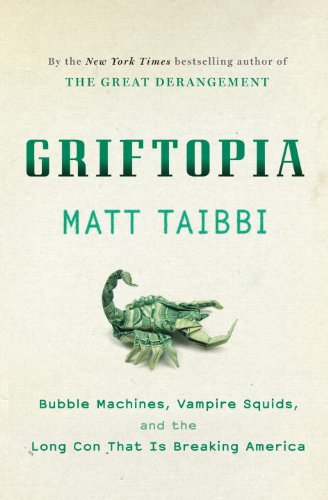
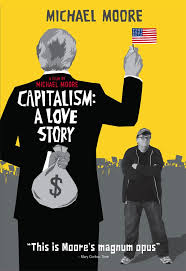
As explained by Ferguson in Inside Job, in greater depth by Michael Lewis in his outstanding book, The Big Short, Rolling Stone's Taibbi in a string of deeply-researched articles such as this one about Goldman Sachs (his piece on how Wall Street made a mockery of the bailout is also essential reading and his new book Griftopia promises to be as well) and the rightfully acerbic Michael Moore in Capitalism: A Love Story...

Mortgage lenders purposely made bad loans because they didn't care if they ever got paid back.

Silly as this sounds, it's because the mortgages were sold to the investment banks (like Goldman Sachs, etc.) and packaged as subprime mortgage bonds, which were piled on top of each other into an investment product called a CDO (collateralized debt obligation), most of which were given AAA ratings by Moody's and S&P through a combination of collusion & stupidity, and sold to pension funds and other investors (or held by the banks themselves). As if this wasn't bad, or confusing enough, the investment banks also sold something called a Credit Default Swap (CDS) to anyone who wanted to put up a 2% bet--i.e. $2 million to get back $100 million--that any given CDO would go bad, which could happen if only 8% of the subprime mortgages defaulted.

As many of these adjustable rate mortgages (often requiring no money down and little or no documentation of income) featured a two-year low interest teaser rate that jumped after that term, you can see why there were so many defaults starting around 2007--and the situation got exponentially worse as home prices began to decrease. According to Wikipedia, subprime mortgages, which were more lucrative to lenders, especially when they didn't take the hit on defaults, rose to 18-21% of all originations between 2004-2006 from less than 10% in 2001-2003. By 2007, there were approximately $1.3 trillion in American subprime mortgages.

The investment banks actively facilitated the expansion of subprime lending in order to more economically comprise CDOs (towers of mortgage bonds) that would be fictitiously sold as AAA-rated investments, thanks to complicit ratings firms. And in casino parlance--which  seems quite apt--AIG started acting as the house on billions of dollars of Credit Default Swaps, including over $20 billion to Goldman Sachs, which, sold CDOs that it knew were crap to investors, while at the same time betting against them (see this video for more info). Bear Stearns, Lehman Brothers, Morgan Stanley and Merrill Lynch took losses in the hundreds of billions on CDOs they owned (and consequently either went under or got sold off) and AIG went under--but was saved by the taxpayers at 100 cents to the dollar--because it couldn't pay off its "losing bets" to Goldman Sachs.

If the last three paragraphs seem impossible to understand, A) that's the way Wall Street wants it and B) if nothing else, you should at least see that the financial collapse involved a great deal of fraud and shenanigans, not just misfortune or consumer excess. 

And if it seems like Credit Default Swaps (CDS, one of the instruments known as "derivatives") are just gambling, so far removed from anything doing any good for society or even investments in companies that might be, well, that's why Ferguson, Taibbi, Moore and others all point to deregulation of the Financial Services industry--which began in 1981 when President Reagan made Donald Regan, the former head of Merrill Lynch, the Secretary of the Treasury--as the root cause of the catastrophic messes caused by the S&L scandals, junk bond era, tech stock boom/crash and subprime mortgage meltdown.

And Washington, even under Obama, is doing nothing to stop Wall Street from (still) running wild...and ruining America (and the rest of the world as well).

As I said above, there was a Wall Street Reform bill signed into law by President Obama in July. Seemingly this fulfills his campaign promise to curb Wall Street. But according to Taibbi and many others (1, 2, 3), after the bill was watered down by members of both parties--which along with key appointees in various administrations, including Larry Summers, Tim Geithner, Robert Rubin and Henry Paulson, all with very direct ties to Wall Street, are both culpable for the country-crippling deregulations--it basically changes nothing in the way Wall Street does business.

In this piece, Ferguson goes even further in blaming Obama for failing to stunt the non-sensical, short-term risks by which Wall Street makes itself rich and for which the rest of us pay the price.

Anyway, for things to really change in America--and don't think this esoteric crap that happens on "Wall Street" doesn't directly impact all of us--something needs to be done. And no matter who's in charge, it doesn't appear that anything soon will be. Especially with 3,000 Wall Street lobbyists at work in Washington and billions of dollars in campaign contributions going to Republican and Democratic candidates.

So I might have preferred one fool, you might have preferred another. But let's not fool ourselves about who's really in power. And no, Rich Whitney, it's not that "Green" party.

Monday, November 01, 2010

Tomb It May Concern: A Halloween Exploration of Chicago's Graceland Cemetery

As an adult, I've never done a whole lot in terms of Halloween. Sure, I ate candy and brought some to the offices where I've worked, but without any kids of my own, I haven't done any trick or treating, and living in apartment & condo buildings, I haven't often had my bell rung.

This year was one of the more active Halloweens I remember, although in actuality it was on Saturday the 30th that I went to a party--for which I wore a costume for the first time since childhood--and followed it up by attending a Fright Night movie at Facets Multimedia. I saw a silent, 66-minute 1928 version of "The Fall of the House of Usher" with the Cursed Bird Ensemble offering a phenomenal live score.

Earlier in the day on Saturday, my Mom, sister and I took our own walking tour of Graceland Cemetery, not far from Wrigley Field in Chicago.

I had toured the cemetery several years ago, but we had recently inherited a detailed book on what is Chicago's most famed burial ground and for anyone who loves Chicago history, architecture and sculpture, Graceland is one of the city's "must see" sites. In fact, other than perhaps Pere Lachaise in Paris, it is the coolest cemetery I have ever visited for site-seeing purposes, although the list isn't that long.

Click here or on the image below to see my photo gallery of many of the famous graves and great monuments, including those designed by Louis Sullivan, sculpted by Lorado Taft and Daniel Chester French and honoring famed Chicagoans of a bygone age such as Potter Palmer, Marshall Field, William Kimball, George Pullman and William Goodman.

With many of the area's most famed architects interred here--including Sullivan, Daniel Burnham, William LeBaron Jenney, Bruce Goff and the recently deceased Bruce Graham--the diversity of styles showcased in the memorials is not only remarkable, but remarkably apt for a city that continually broke new ground in how metropolises were shaped.

[ Click image to see full gallery; all photos by Seth Arkin ]

---

All in all it was a pretty Happy Halloween for me personally, and hopefully for you, but I was quite saddened to read of the tragic accidental death of Megan Duskey while horsing around at the Palmer House, where she was attending a party on Saturday night. With the senseless death of Declan Sullivan at Notre Dame--someone needs to be fired or worse--and the brutal slaying of Toni Keller at my alma matter, NIU, it has been a particularly tragic week in regards to young Chicago area residents who won't be able fulfill their dreams and aspirations. "What a shame" doesn't nearly cover it, but then, hoping that their family and friends can find some semblance of comfort also seems quite trite given the circumstances.