Monday, June 28, 2010

Hopefully This Post Won't Be Disallowed

(the above photo is of a goal that didn't count in the England-Germany World Cup game on Sunday)

I was thinking about writing a blog article about the atrocious refereeing at the World Cup, and how it is greatly threatening to damper the fledgling enthusiasm of newfound soccer fans, but Jack McCallum of Sports Illustrated has written a piece that pretty much sums up my thoughts, undoubtedly much better than I would have expressed them.

I'll just say that while I love the mystique and global confluence of the World Cup, sometimes sitting through entire games is a chore. So when refs blow seemingly obvious calls--invariably disallowing goals that should count or allowing ones that shouldn't--it further diminishes the luster of what are already low scoring, drawn out games.

I understand that refs are human and I doubt there is anything more at play than honest mistakes, but with technology readily available to review disputed goals, why not employ it and add the proper justice to the world's largest sporting event?

Wednesday, June 23, 2010

Leaping Lizards! War With the Newts Presents Quite a Gripping Allegory

Theater Review

War With the Newts: Mr. Povondra's Dream
Next Theatre, presented at Mullady Theatre, Loyola University
Run Ended
@@@@

War With the Newts is based on a 1936 story of the same name by Czech writer Karel Capek. Evanston's Next Theatre Company--which continues to produce stellar work yet was recently plagued by a controversy surrounding Artistic Director Jason Southerland, resulting in his resignation--borrowed Loyola University's Mullady Theatre for their season-closing, World Premiere play version directed by former Next Artistic Director Jason Loewith, who shared writing credit with Artistic Associate Justin D.M. Palmer.

I've never read the story, but from what I've read about it, the play seems to hew pretty closely in telling the prophetic tale of the discovery of an intelligent race of oversized newts, or giant salamanders, who have the ability to do underwater construction as well as communicate with their human counterparts.

At first, man, of various nations, utilizes the newts to further his own agenda, but in an allegory about greed, imperialism and probably much else, at the end of the play, mankind is at "war with the newts" and at great peril of being overrun.

While the play was somewhat dense to take in uninitiated--like artful movies, books, music, etc., I find many plays hard to appreciate fully the first time through but don't have the luxury of a rewind button--the impressive staging, fine acting and understandable theme made it more than sufficiently enjoyable. Although I may not have caught the depth of every line of dialogue, I knew I was watching something of substance and merit that never dragged. Next stalwarts Joseph Wycoff and Steve Pickering gave particularly strong performances among an excellent cast.

I hope Next doesn't suffer much from the issues with Southerland--who has been accused of plagiarism in adding content to their stellar Return To Haifa this past winter--as it has become one of my favorite theaters in the area, with their work often superior to what I'm seeing at Goodman and Steppenwolf. Although War of the Newts has now closed, it certainly served as yet another example and I look forward to what next season brings.

Thursday, June 17, 2010

Fuerza Bruta Doesn't Quite Succeed Through Brute Force

Theater Review

Fuerza Bruta: Look Up
Auditorium Theatre, Chicago
Open Run
@@1/2

A high energy piece of performance art created by the Argentina's De La Guarda company, Fuerza Bruta: Look Up is certainly the most unique show Broadway in Chicago has presented in the 10+ seasons I've been a subscriber.

Not only did the audience stand on stage at the Auditorium Theatre rather than sit in the seats, but the crowd--considerably younger than at most BIC performances--became part of the show, moving around the stage and even dancing & bouncing in accompaniment with the music and performers.

Those who enjoy large, loud nightclubs and/or drug-infused raves probably thought Fuerza Bruta was really cool. But despite much kinetic movement that provided nice eye candy in conjunction with (canned) ear candy, for me, "cool and hip" didn't really equate to "all that entertaining" nor "worth my time."

And especially if I had a bought a non-subscription ticket for $50-80 + fees (I have no clue why there are two price levels, as again, everyone stood on-stage), the hour-long spectacle certainly wouldn't have been worth my money.

For even in the parlance of Cirque du Soleil, Stomp, Blast and other non-narrative, performance art shows, while the performers in Fuerza Bruta were obviously quite spry and talented, nothing was really all that dazzling or mind-blowing.

In fact, although I know the reference is a bit anachronistic, throughout the show I couldn't help imagining Beavis & Butthead watching the show and commenting on what they were seeing.

"Look Butthead, there's a guy walking on a treadmill."

"Uh, yeah, but someone should tell him he's not really getting anywhere."

"But look, now he's running. He's running! Aaaaay, he's been shot. Someone just shot him."

"Cool."

"Yeah, blood rules! But look, he's taking off his bloody shirt and now he's running again."

"Dammit, Beavis. Can't anything stop this guy."

This imagined dialogue made the show a lot better than when taken at face value. Like me, B&B would have enjoyed the part when several lithe women were splashing around in a water-filled plastic tub positioned just above the audience's heads. Sure, it was unique and even somewhat sexy, but was it incredible? No.

Energy without emotion, or at least without stirring emotion in me, always feels kind of empty. And especially while standing on the same stage where I've seen several stellar performances--from Les Miz to Miss Saigon and R.E.M. to Radiohead--to be brutally honest, Fuerza Bruta (which translates to Brute Force) just didn't feel all that forceful.

If you have money to burn and like things that vibrant yet vacuous, Fuerza Bruta can provide an hour of enjoyable but not particularly memorable entertainment. But if you prefer your paid entertainment to also be somewhat enriching, don't Look Up, look elsewhere.

This 2-1/2 minute trailer pretty much shows you everything you'll see onstage. 

Monday, June 14, 2010

My Cup Runneth Overtime

It's been five whole days since the Chicago Blackhawks won the Stanley Cup, so I probably should have written something about it by now. But seeing how it's been 49 years in the making, I don't feel all that delinquent.

On the night they won, Wednesday, June 9, 2010, I was very happy, although like most fans and the Hawks themselves, the uncertainty of Kane's clinching goal stifled the spontaneity of my celebration. And this after the Flyers late tying goal already deflated my impending euphoria.

But though not quite as rapturous as my Pavlovian response system may have liked, the ending was certainly better than a loss that would have brought about Game 7. And for the first time in my lifetime, the Blackhawks are Stanley Cup Champions.

A friend asked me how the Hawks' winning ranks among my sports memories, primarily comprised of now having seen (not in person, except for Game 1 of the Stanley Cup Finals) the Bears, Bulls, White Sox and Hawks win the ultimate prize in their respective sports. I'm still waiting on the Cubs, but then so is everyone not around in 1908.

I couldn't readily answer, and really there is no need for comparison. Watching (almost) all the Chicago teams win--and I am a fan of both the Cubs and Sox--has brought tremendous joy and a wonderful diversion from real life. Though the Sox winning their division in 1983 and the Cubs in 1984 were big deals due to their long playoff droughts, the Bears were the first Chicago team I saw win it all, and coupled with the dominance and personality of the 1985 Bears, made for an experience I'll never forget.

I was a huge Bulls fan ever since they drafted Michael Jordan, so was ecstatic when they won their first championship in 1991, but I was living in Los Angeles at the time and thus the celebration felt a bit distant. The subsequent championships were all fantastic, but obviously lost their unique aspect.

Though I honestly like the Cubs and Sox, the Cubs are ingrained a bit deeper. So while I was thrilled when the Sox won the World Series in 2005, I couldn't clearly claim them to be my team. Their win came just after I was released from a job for the first time, so it was an especially nice excuse to celebrate.

As for the Blackhawks, they've always been the only NHL team I cared about, but for a long time, I wasn't really a hockey fan. I never went to a Hawks game in the old Chicago Stadium and though I've gone to a game or two a season for most of the last 15 years, each was usually the only game(s) I saw in a given season.

So no, I have not been a die-hard season ticket holder since 1977, nor someone who ever played hockey (I still don't clearly understand some of the rules).

But what makes the Blackhawks victory so pleasing to me is my admiration for the rapidity of their rise.

Before the season before this one, the Hawks had missed the playoffs--in a league where 16 of 30 teams get in--9 of the previous 10 seasons. They were seemingly the worst franchise not only in hockey, but all of sports.

In the first half of the last decade, I remember regularly bemoaning the idiocy of their business plan to a Hawk-loving colleague. Year after year, they seemed to not try to sign any good free agents, when it seemed to me that the expense would've been easily offset by selling more tickets to each game, making the playoffs (and thus having tons more ticket and broadcast revenue) and having popular players with jerseys to merchandise.

It just didn't make sense to me that they would stay mired in mediocrity.

But then the owner, Bill Wirtz, died in September 2007. His son, Rocky, took over, hired John McDonagh away from the Cubs to serve as President, had some fortunate draft picks (most notably Kane and Toews), signed big name free agents like Brian Campbell and Marian Hossa, and less than three years later are the best team in hockey.

Everything I imagined came true.

Not only did the Hawks win the crown, they sold every seat during the 2009-10 season and tons of jerseys and merchandise. At the victory parade and rally, which I didn't attend, it was a sea of red.

So while the Hawks' winning wasn't the most emotionally rich championship for me, likely more than any other, it meshed with my sense of logic. Do things right and good things will happen. At least once in a lifetime.

Tuesday, June 08, 2010

Enjoying A Newfound Thrill

Book Review

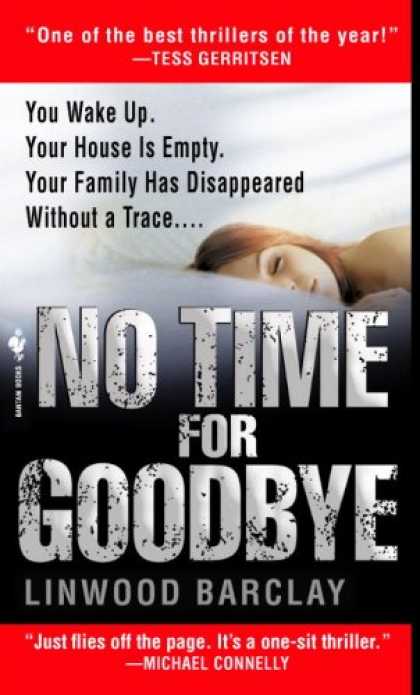
No Time For Goodbye
by Linwood Barclay
@@@@

Linwood Barclay--and particularly his 2008 thriller, No Time For Goodbye--was recommended to me based on my penchant for Harlan Coben, a best-selling writer of thrillers in a similar vein. In fact, Coben's "Caught" was the last book I read & reviewed, and this made for a good follow-up.

It certainly fit the bill of a captivating page-turner, as I got through it in a few days and couldn't readily put it down once I got about 200 pages in. The comparisons to Coben, whose entire oeuvre I've devoured, are certainly apt, as No Time For Goodbye concerns itself with a family crisis akin to many of Coben's stories.

I can't speak too much about Barclay based on one book, but rather than revolving around international espionage or more worldly matters, Coben's thrillers deal much more with individual dramas and things like missing family members. Which matches the plotline Barclay develops here, regarding a woman who is still trying to figure out why her parents and brothers disappeared one night 25 years ago, never to be heard from again nor found dead.

Though it took awhile to really start percolating and wasn't quite as good as much of Coben's best work--Barclay doesn't seem to have the same wit nor Coben's sly knack for beyond-the-story societal insights--No Time For Goodbye involves an intriguing mystery with many twists and once it gets going, it spellbinds like a top-notch thriller should.

I don't yet perceive that Barclay is a writer who I will be inspired to explore in sum, like Coben and Lee Child, but I won't hesitate to check out something else by him next time I'm looking for a cheap thrill. And I fully recommend No Time For Goodbye to anyone looking for a good summer thriller.

---

Speaking of cheap thrills, this weekend I intend to buy a few second-hand page turners at the Little City Used Book Sale, taking place in the parking lot at Old Orchard shopping mall. The sale is there all week, but the last weekend offers the best bargains (albeit with the most depleted selection). A great cause and a chance to pick up some good reads for next to nothing.

Monday, June 07, 2010

'Low Down Dirty Blues' Strikes A Nice Chord, But Is Far From High Drama

Theater Review

Low Down Dirty Blues
Northlight Theatre, Skokie, IL
Thru July 3, 2010
@@@1/2

Low Down Dirty Blues features four excellent performances and none of its 80 minutes are less than enjoyably entertaining.

Certainly there are many stage shows that deliver a whole lot less, but despite keeping with the continual morphing of musical theater into meagerly-scripted concert performances, it feels like the piece--featuring a fine selection of bawdy old blues numbers--owes patrons paying for a night of theater a good bit more.

For while I understand the economics that cause many if not most new musicals to rely on existing songs (rather than being freshly composed) and applaud the broadening of "Broadway music" to include--as visaged by the current crop of Tony nominees for Best Musical--early rock, punk rock, Afrobeat and beyond, I believe that "theater" should still contain a certain amount of storytelling to distinguish it from the dominions of night clubs, cabarets and concert halls.

Most of the predominantly elderly and Caucasian audience at Northlight--perhaps pointedly not apt to frequently attend Chicago blues clubs--seemed to relish the effusiveness with which Felicia P. Fields, Mississippi Charles Bevel, Sandra Reaves-Phillips and Gregory Porter presented a collection of songs simmering with sexual double entendres. But much like the first show of the 2009-10 Northlight season, The Marvelous Wonderettes, the similarly slight-yet-smile-inducing Low Down Dirty Blues is a songbook musical (although no songwriters are credited) with a storyline so scant as to make Mamma Mia seem positively Dickenseque.

This isn't to suggest that LDDB needs some kind of cockamamie scenario; the concept of four singers plus three backing musicians hanging out after-hours at a blues club and entertaining each other with tunes too risque for the tourists is enough of a skeleton to support a show rightly driven by stellar individual performances (though if the songs aren't too salacious for the octogenarians at Northlight, would they really be taboo to sing in front of blues club patrons, especially as the show is seemingly set in the present?).

But given the wealth of Chicago's blues history and its legendary performers from Muddy Waters to Howlin' Wolf to Koko Taylor to Buddy Guy, I would have liked to see the show enlighten a bit more by providing some background information on the city's clubs and players, sharing some after-hours stories to accompany the songs or telling much more about the motivations, passions, disappointments, etc. of each of those showcasing these great songs of lust and longing.

Only a morsel of personal information was provided by each character, and nothing of much substance (nor even a character name in some cases). So rather than knowing who these four people are and why they're singing the blues as thousands have before them, all we're left with are the songs.

Again, they were universally nice to hear, with quite a laugh in several of the lyrics, but with almost nothing in the way of dialogue, exposition, narrative, biography or character information, what makes this theater besides the fact that it was in one?

To wit, each summer I try to see American English, my favorite Beatles tribute band, as they play great renditions of Fab Four songs while dressing as the Early Beatles, Sgt. Pepper Beatles, Abbey Road Beatles, etc. Though never heavy on dialogue, a few jokes get cracked in introducing a few of the tunes, and you're given a small sense of the unique aspects of John, Paul, George and Ringo.

Almost always, I see American English for free or $5 at a local village festival, usually near the 4th of July. I invariably love the performance, but consider it a free tribute concert, not a piece of theater.

So while charging theater ticket prices of up to $54, what should the onus be on Low Down Dirty Blues (and similar shows) to deliver something a bit more theatrical?

Friday, June 04, 2010

In an Imperfect World, Why Not Do the Right Thing?


As you may have heard, on Wednesday night, Detroit Tigers pitcher Armando Galarraga threw what should have been the third perfect game--27 up, 27 down, no hits, walks or errors--of the 2010 season.

As the replay above shows, the 27th batter, Cleveland's Jason Donald, clearly should have been called out on a close play at first, but the umpire Jim Joyce called him safe. Galarraga, without protesting at the time, then retired the next batter. His manager, Jim Leyland, and teammates barraged Joyce after the last out, prompting Joyce to watch a replay immediately after leaving the field.

Upon doing so, Joyce demonstrated great class--and distinction from other umps who maintain a belligerent air of infallibility even when clearly in error--by admitting his mistake. Through tears, he said ""I took a perfect game from that kid."

Galarraga continued his remarkable display of grace, refusing to condemn Joyce and instead offering an ironic summation, "Nobody's perfect." And after learning how devastated the well-respected Joyce was about blowing the call, Leyland went to the umpire's room to console him.

Along with the replay being shown innumerable times, lots of words have been written and spoken about the missed call, and even more so the aftermath, which included Galarraga delivering the Tigers' lineup to Joyce on Thursday, when Joyce was coincidentally the home plate umpire. Detroit News columnist Lynn Henning had a nice summation of what had happened, which was not only unprecedented in many ways, but likely considerably even more newsworthy than what would've been the first perfect game in Tigers history and only the 21st ever in baseball, yet strangely the third within 2 months of the 2010 season.

Also on Thursday, it was reported that Major League Baseball, and particularly Commissioner Bud Selig, was considering giving Galarraga official credit for pitching a perfect game. But although the notoriously spineless Selig released a statement saying that "there is no dispute that last night's game should have ended differently" and that he would review both the umpiring system and the expanded use of instant replay in baseball, Selig refused to overturn the call and award Galarraga a perfect game.

While Selig didn't explain his rationale, several professional commentators and a few baseball-loving friends have supported Selig's decision, seemingly on the grounds that 1) Human error, including umpiring mistakes, has long been part of baseball and MLB has consciously decided not to implement instant replay for calls such as Joyce's. Thus, the logic goes, Selig shouldn't change an on-the-field decision & result based on evidence seen in a replay; and 2) In the annals of history, and even on any given day, there are many botched calls--some with much greater consequence in terms of the outcome of games--and no others have been changed after the fact.

I respect both these reasons, and the possible Pandora's Box a controversial decision by Selig might open, in terms of what he might be asked to review in the future. And perhaps contradictorily, while I do not categorically disapprove of greater use of instant replay, I am somewhat concerned about how seamlessly it can be implemented in baseball and am not yet a proponent.

But while it might seem a somewhat "head in the sand" approach, I say damn the torpedoes, don't worry the inconsistencies and ramifications, and officially award Galarraga perfect game. One that will forever be officially considered as such by the Baseball Hall of Fame, Baseball-Reference.com, Wikipedia and all other keepers of such records.

There is no question that Galarraga pitched what should have resulted in a perfect game. This is an unprecedented circumstance, and no one, from the Indians to Jason Donald would be harmed or could seemingly object. And we're talking about baseball, not a war tribunal or a dispute over territorial boundaries.

Especially given the grace shown by Galarraga, the honesty & sorrow displayed by Joyce and the forgiveness offered by Leyland, Selig shouldn't just "do the popular thing," but nonetheless heed the opinion of over 75% voters in multiple polls on the matter and issue a simple statement saying:

"Armando Galarraga deserves to be credited for pitching a perfect game on June 2, 2010 and I am using the power of my office to see that he is."

Over. Done. Turn off the pundit debates on ESPN. Ignore all questions. Do the right thing and move forward. The world will keep spinning. Life will continue. Justice will be done. And a class act like Armando Galarraga will take his rightful place in the annals of baseball records that celebrate scum like Barry Bonds and Roger Clemens.

Thursday, June 03, 2010

'Vin'tage Voice Continues to Announce Its Virtuosity, Play-by-Play

As anyone who has paid attention to this blog, even sporadically, over the past 6 months, should realize, I have a great appreciation for people who are masters of their craft--in a wide variety of genres.

From Sonny Rollins to Stephen Sondheim, Raphael to Frank Lloyd Wright and Buddy Guy to Bono, I tried to share my passion for people I consider among my creative heroes.

Today I would like to use a few words to celebrate someone who remains better than anyone else at what he does, even after 60 years of doing it.

At 82, Vin Scully is still the best baseball announcer I've ever heard. And while I obviously haven't heard everybody who's ever called a ballgame, it is with tremendous admiration for late legends like Ernie Harwell, Jack Buck, Harry Caray, Harry Kalas and Curt Gowdy that I would presume Scully to be the best announcer who's ever lived.

Although he's called over 10,000 baseball games and other sporting events, I haven't really heard him all that often, as he's the voice of the Los Angeles Dodgers (and even during my three years in LA in the early '90s, I didn't watch or listen to many Dodger games).

But this past Monday, during Game 2 of the Stanley Cup Final, when I was channel surfing during breaks in the hockey game, I came across a Dodgers-Diamondbacks game being carried on the MLB Network. Vin Scully was doing the play-by-play, and as seems to be his custom, was not accompanied by a color analyst. He was amazing to listen to, even for just a few minutes as he called a mundane middle inning.

Then yesterday, when I had already decided to write a tribute, I discovered the MLB Network was carrying another Dodgers-Dbacks game. I started watching in the 5th inning and, although I could really care less about the game's outcome, I watched until the scoreless tie was won by the Dodgers in the bottom of the 14th inning.

Listening to Scully was like listening to a symphony. He is just that good; always keeping you informed of the action on the field, while subtly yet meticulously painting the picture that surrounds it. And again, at age 82, he's calling 14 inning games with no partner and no breaks.

I can't find video that I can repost here, but here is a link to his call of yesterday's game-ending play. What happens isn't even all that dramatic, but there is just such an elegance to Scully's call. Similarly, here's his call of a walk-off homer from the night before.

According to his Wikipedia entry, Scully started calling baseball games in 1950--following Harwell into the Brooklyn Dodgers' radio booth, after Harwell left to work handle NY Giants games--and also spent 10 years broadcasting NFL games. (Scully gave this warm remembrance of Harwell after Ernie passed away on May 4).

Anyway, I don't have much to say about Vin Scully that he couldn't say much more remarkably. But after having the pleasure of hearing him a couple times this week, it seemed right that I say something. If you have a chance to catch him doing play-by-play, stop and listen. You'll never hear anyone do it any better.

Monday, May 31, 2010

Perhaps Not Life Changing, But Still A Net Gain


I've been to a lot of cool events in my life, but until Saturday night, never to a final round game in any sport.

Playoff games, yes. Cubs, Bulls, Bears and Blackhawks. Even the 2003 MLB All-Star Game. But never a World Series, NBA Championship, Super Bowl or Stanley Cup.

So I was pretty psyched when I was able to purchase a ticket to Game 1 of the Stanley Cup Finals through Ticketmaster back when the Blackhawks were still in the second round of the playoffs. And even more psyched when the Hawks actually made it to the Finals.

Although I had a party planned for Saturday night (unrelated to the Hawks), I switched it to Sunday night, and geared up (in my Kane 88 jersey) for a nice, low-scoring Stanley Cup Final game.

And wound up attending a game that was tied 5-5 after two periods, had the Hawks go ahead 6-5 on a Tomas Kopecky goal 8:25 into the 3rd Period and then hold on for the victory.

Certainly it was pretty exciting, but I really can't say "the electricity in the air" before and throughout the game was any more palpable than during a sold-out regular season game. I'm not sure what I was expecting, and any Hawks game is a pretty raucous affair, so I'm not saying that there was an energy shortage in the United Center.

But somehow it just seemed like a great game to be at, but not necessarily all that transcendent. 

As with all Hawks games, there was a pre-game video montage that runs much, much too long. It's about 10 minutes or so. Long enough to get you to the edge of your seat, and back down, edge of your seat again, and back down again. Not ideal for sustaining a true fervor. 

And while the National Anthem with the fans roaring throughout was quite loud, and gave me goose chills, it didn't seem any louder than for less pivotal games. And perhaps it was because the Hawks kept giving up goals, even after scoring to take the lead at various points, that the crowd boisterousness didn't fully sustain itself until after Kopecky's goal and through the end.

Don't get me wrong. I'm very glad I went and had a great time. And I'm thrilled the Hawks won and hope they can take the Cup. But it definitely wasn't like what a Cubs World Series game feels like in my imagination. And I'm not buying a seat on Stub Hub for today's game, or even wishing I could. TV will be just fine.


Here's a video I shot of the National Anthem:


Some photos from the night:

Michael Jordan statue with a Jonathan Toews jersey and ice skakes


Stan Mikita signing autographs before the game; I was too late to get one.


The Opening Face-Off


Savard, Esposito, Mikita and Hull in the house (and on the scoreboard)


Near the end of the 2nd Period


Video of the Celebration of Kopecky's goal, which proved to be the game winner (featuring Chelsea Dagger by The Fratellis)


The Final Score


The Hawks Leave the Ice, Victorious

Friday, May 28, 2010

There's More Than A Slight Hitch in 'The 39 Steps'

Theater Review

The 39 Steps
Bank of America Theatre
Thru May 30, 2010
@@@@

I'm not really sure how to define the stage version of Alfred Hitchcock's The 39 Steps.

It's not a musical, but also doesn't fit most expectations of a traditional play. It's fairly faithful to the old suspense flick, but is more a comedy than a drama. It has a number of slapstick elements, but isn't a farce. It has clear reverence for Hitchcock, but substitutes laughs for any of his trademark tension.

But whatever it is, the show that uses only 4 performers to act out over a dozen roles, works. And it does so surprisingly well on multiple levels.

At times it is laugh-out-loud funny. While intentionally depleted of much Hitchcockian suspense, it does qualify as a sufficient mystery, particularly for those unfamiliar with the film. The three actors and one actress all do yeoman's work. The sparse staging is actually used as a benefit, not a weakness. And for fans of Alfred, The 39 Steps also cheekily references--albeit anachronistically--Vertigo, Rear Window, Psycho, North By Northwest, The Man Who Knew Too Much, The Lady Vanishes and perhaps a few other Hitchcock films that I missed or forgot.

Although I liked it very much, I'm sure my appreciation would've been even greater in a smaller venue, rather in trying to discern the variety of British and Scottish accents from the balcony of the Bank of America (nee Shubert) Theater. And numerous latecomers, people chattering next to me and at least one ringing cell phone didn't help either.

While I wouldn't call it enlightening, enriching or likely even extremely memorable--and therefore probably not  a "must-see,"--in terms of an entertaining night at the theater, The 39 Steps was definitely far more up than down.

This is a clip of a memorable scene, from the Broadway version.

Thursday, May 27, 2010

You Can't Judge A Book By Its Lover

Book Reviews

The Man From Beijing
by Henning Mankell
@@1/2

Although Henning Mankell has been writing best-selling crime novels for nearly 15 years, I hadn't heard of him until this past February, when Entertainment Weekly gave his new book--The Man From Beijing--a short but glowing review, in which the reviewer states, "This is hands down the best thriller I've read in five years."

So I put it on reserve with the Skokie Public Library, and when my turn came, I was very excited to read it.

But as it turns out, it wasn't even the best thriller I've read this month.

Despite the title, the book mostly takes place in Mankell's native Sweden, where a brutal massacre has wiped out a small village.

Over the past year, I've read and enjoyed all three books in the Millennium series (The Girl With the Dragon Tattoo, etc.), by the late Stieg Larsson, another Swedish crime fiction writer whose works weave throughout his homeland. This was another reason I was optimistic about the new book by Mankell, who in the past has centered his novel around an inspector named Kurt Wallander, but wrote The Man From Beijing as a stand-alone novel.

But whereas Larsson's books constantly made me want to read the next page, discover the conclusion and tackle another of his thrillers, 50 pages into The Man From Beijing, I realized I was reading only to reach the end, not because I was anxious to learn what would happen next. The small-village massacre becomes linked to happenings in the American West from over 130 years prior, leads to dozens of non-thrilling pages about modern China and is ultimately relegated to the background of a story that meanders a whole lot.

And while it seems that Mankell was aiming for a book with considerably more consequence than your average page-turner, it didn't ever approach great literature or enlighten like a non-fiction take on some of the same matters might have. So basically I was left with a thriller that didn't thrill.

Though Mankell appears to be a well-regarded author, the Amazon reader reviews more closely approximate my take on The Man From Beijing than Entertainment Weekly's. Almost a third of the Amazon reviews give it 1 or 2 stars out of 5, so perhaps my @@1/2 is a bit generous if anything.

I'm sorry I wasted a full two weeks getting through it, especially because a few days in, the Skokie Public Library let me know that another thriller I had on reserve was ready for me. Fortunately, after finishing The Man From Beijing, I was able to read the book below in just 4 days, and liked it much better.

---
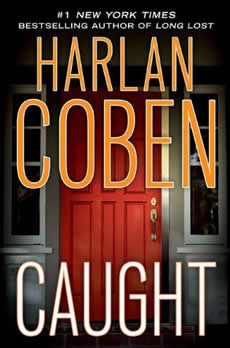
Caught
by Harlan Coben
@@@@

I have now read all 17 of Coben's books currently in print (his first two novels no longer are) and each has taken me about a week or less to finish.

While his books--split between his Myron Bolitar mysteries and stand-alone thrillers--are not works of high art, they are stay-up-all-night page turners, filled with more than a bit of humor and shrewd societal insight.

His latest hardcover, Caught, is no exception. While probably not his best book, not quite meriting the 5 stars that 96 of 151 reviewers on Amazon have bestowed and without nearly the complexity of The Man From Beijing, it is a whiz-bang thriller that is extremely enjoyable to read.

Far more so than the Mankell book.

Although I had pegged some of the surprises in Caught before I got to them, I won't reveal much here. But it starts with a man getting caught, as part of a TV show sting, in the home of a teenage girl he had contacted over the internet. Not all is as it seems and the newswoman from the show becomes the central character in a proverbial roller coaster ride across all 388 fast-moving pages.

Although Caught is a stand-alone novel, not a caper involving the Myron Bolitar character, Coben does utilize characters from past books, which adds to the fun for those of us who know his North Jersey oeuvre.

But even as your first foray into Coben, you should find Caught quite satisfying, although you also wouldn't go wrong starting with his earlier stand-alones like Tell No One and Gone For Good.

Along with Lee Child, whose works all revolve around a character named Jack Reacher, Coben is my favorite thriller writer, and I've yet to be disappointed.

If you likewise love a good page-turner, perhaps it's about time you 'Caught' on.

The Final Countdown: Time Runs Out on '24'

While there seemed to be much more hoopla and press regarding the last episode of 'Lost' on Sunday night, Monday night brought an end to the television series that was my favorite of the past decade: 24.

The around-the-clock adventures of Jack Bauer, played by Kiefer Sutherland, may have been better during some of 24's eight seasons than others, and the last two seemed somewhat spotty, but even at its worst, 24 never made me not want to watch.

And that's saying a whole lot.

There have been a total of 193 episodes, including a 2-hour television movie prior to Season 7, and I have seen every one, almost always either on the night it aired or within a day or two.

Sometimes 24 had plot lines, or characters, that pushed credulity.  Sometimes Jack blurred the line between "doing what needs to be done" and outright criminality, either in torturing suspects to reveal needed information or in shooting those who got in his way, even if they were just following orders at times when he was disobeying them. Occasionally things became a bit formulaic and you kind of knew what was going to happen. And in several season, there were subplots that just wasted time without really going anywhere (most vivid in my mind is this past season's strain about Dana Walsh's past).

But 24 was never boring.

And while there were often clear delineations between good and bad characters, others, including most notably Jack Bauer himself, provided interesting character studies in the midst of crisis.

In fact, while it was probably a necessity of the show, rather than a weakness, that most supporting characters came or went within a season or two, and none except Chloe O'Brian (played by Mary Lynn Rajskub) lasted all eight seasons, some of the secondary roles were so well-characterized that I wished they didn't disappear.

But at the end of the day, Jack really was a lone wolf, and to complicate the show or his life with too much baggage probably wouldn't have worked.

While I'll miss seeing Jack saving the world 24 Mondays a year, and will assuredly see the 24 movie that is said to be in the works despite being unsure of its necessity, I have to say that ending now seems right. I think 24 had run its course, to the point that it sometimes felt like a parody of itself.

Yet beyond being a visceral thrill, I think the show did add something to the art form of television by working in real time (even if people often changed settings with unrealistic expediency) and heightening the idea that "every moment counts."

Of course, 24 will live on forever in reruns, on Hulu.com and on DVD. And with the film slated for 2012 (according to IMDB), Jack will be back.

But for now he's heading out of the country, hopefully for a well-deserved rest. I wish him well.

Time's up, but it's been quite a ride.

Monday, May 24, 2010

Still in the Dark About 'Too Much Light'

Theater Review

Too Much Light Makes the Baby Go Blind
The Neo-Futurarium
Chicago
Open-Run
@@

What do I know?

I mean who am I to say that Too Much Light Makes the Baby Go Blind: 30 Plays in 60 Minutes doesn't seem like anything special? After all, it is the longest running "play" in Chicago, dating all the way back to 1988. And there is also a long-running New York production.

In Chicago, people start lining up an hour before the 11:30pm weekend shows just to make sure they get in to the 150-seat theater. And from my newbie attendance on Saturday, after participating in the Neo-Futurists prime-time show (Crisis: A Musical Game Show), it was apparent that many in the audience were hardcore devotees, as they knew precisely when to shout out numbers that decided the order that 30 pre-written mini-plays would be performed within an hour.

So I won't tell you that TMLMTBGB was bad, while noting that it supposedly changes substantially week-to-week and is totally different every couple months. So maybe the material I saw isn't indicative of how good it usually is.

And I won't tell you not to see it; that's up to you.

But I will tell you that I didn't like it.

Perhaps it's one of those things, like Reality TV and Nickelback, that millions of people love, but I just don't get. Or maybe it's the format; I'm doubtful that Shakespeare, Miller or Mamet could regularly write 3-minute plays that I would find compelling, insightful and/or hilarious.

But whatever the reason, and sure, maybe it's just me, but in the 60 minutes I was there--though on my watch it sure seemed like 67 minutes--I almost never laughed, was made to think or ever really cared. I guess I must've missed something, but it seemed like a concept better served by improv, not pre-scripted pieces. While watching it, The Emperor's New Clothes fable kept running through my head.

The performers were energetic and likely quite talented, but the whole thing really did nothing for me. So next time I have an hour to waste, I think I'd be better off avoiding 'Too Much Light.'

Sunday, May 23, 2010

A Star is Born in 'Crisis'

Theater Review

Crisis: A Musical Game Show
Neo-Futurarium
Chicago
Through June 12
@@@

As incongruous as it sounds, last night I was on-stage--albeit without an actual stage--at one of Chicago's most famous theaters.

And even more shockingly--especially as I even did a bit of public singing--the audience gave me a nice hand when I was finished.

But alas, I still went home a loser.

You see, I went to see the Neo-Futurists current prime-time production, Crisis: A Musical Game Show (and also stuck around to see their longstanding late-night show Too Much Light Makes The Baby Go Blind, which I'll review separately when time permits).

Before every performance of Crisis, a 25-question, Scantron-scored trivia test is given to all audience members. Out of about 80 people, I was one of the 8 top scorers and was selected to be in the game show, and thus on-stage.

Taking place amidst original musical numbers and some cheeky "ads," the first-round of game-playing was basically a take-off on Family Feud. As part of a team of four, I led off the game by beating my opponent to the punch in naming one of the "Things People Fear Most,"--public speaking was my answer--and then proceeded to help my team crush the other in all three rounds of the initial game.

After that, it was every man and woman for him or herself, and the second round wasn't knowledge-based, but more about thinking and moving quickly on your feet. This included musical chairs, having to vote out one of our teammates, watching a short movie, answering questions about it and then writing & singing a jingle about it. The silly movie was ostensibly about a Nigerian dictator who loved McDonalds, the Atlanta Braves and Woody Allen, and who needed to sell off his belongings. So my written-on-the-spot song went:

I love Woody Allen/But he lost Mia Farrow/So won't you buy my items/And you can be my hero

Although the actors and audience laughed, I was voted out and sent back to the audience, dubbed "The Losers' Lounge." My shot at stardom, and the $300 the winner eventually earned, was over. But after seeing the next round, which involved running around the stage, I'm glad my participation ended when it did.

I had fun, but as I was either on-stage or backstage for about half the show, it was hard to truly gauge its merits as a performance, especially to those only in the audience. But @@@ seems about right, as Crisis was enjoyable, and even a bit insightful in satirizing game shows and commenting on the economic meltdown, but the musical numbers were slight and the humor was fleeting.

I wasn't quite the best thing about Crisis, but in my mind, it wouldn't have been quite as good without me in it. Although to be fair, the winner--a Chicago-actor-turned-lawyer named John--was a good guy, the high scorer on the test and much better than I would've been on-stage in the last two rounds. He deserved the $300.

Anyway, if you go, I'd suggest trying to be in Crisis rather than simply seeing it.

Monday, May 17, 2010

In Dramatizing the Fight for Equality, 'The Good Negro' is Only Fair

Theater Review

The Good Negro
a play by Tracey Scott Wilson
Goodman Theatre, Chicago
Thru June 6, 2010
@@@

As a fictionalization of the civil rights movement, centered in Birmingham, Alabama in 1962, Tracey Scott Wilson's The Good Negro should've been a highly-charged powder keg of a play.

But with what felt like too many scenes over the course of 2-1/2 hours, the recent work directed at Goodman by Chuck Smith never really crackled. Though not quite a dud, it just didn't feel especially compelling, insightful or even all that dramatic.

The central three characters were fictional civil rights leaders who despite their noble cause were flawed men who battled not only Southern bigotry but also each other. The play might have felt more urgent if it kept its focus on the trio, but six other characters and an unseen child shared plot time and made the show more talky and didactic than razor sharp throughout.

Not every play can be fantastic and in spite of a worthy subject matter and solid performances throughout, The Good Negro was only fair.

Maddeningly, as the show was within 5 minutes of its conclusion, a cell phone with an incredibly annoying ringtone rang. And rang and rang and rang. 

I felt bad for the actors, who assuredly could hear it onstage. While the play wasn't as good as I hoped, the performers and audience certainly deserved better than to have some idiot forget (or choose not to) turn off his or her phone, and then fail to hear it as it continued to ring.

Talk about a really disappointing ending.

Sunday, May 16, 2010

An Up & Down Evening as CSO Plays With Yo-Yo

Classical Concert Review

Chicago Symphony Orchestra
with guest artist Yo-Yo Ma, Cello
May 13, 2010
@@@

Yo-Yo Ma has the distinction of being the only concert cellist, living or dead, that I can name. And though his name itself is quite memorable, I figure his renown--and numerous Grammy Awards--must be well-earned.

Having never seen him perform live before, and in sum only through a few short televised performances (including one at President Obama's inauguration), I purchased a ticket awhile back to see him Thursday night with the acclaimed Chicago Symphony (the same program was repeated Friday and Saturday).

Although far from a classical music aficionado or expert, I try to get to 1-2 CSO performances each season. Thus it wasn't a surprise nor cause for outrage that Yo-Yo Ma--as with other famed guest soloists whose names are promoted to prompt neophytes to buy tickets--was only onstage for 1 of 3 pieces played, or about 30 of 100 minutes of music.

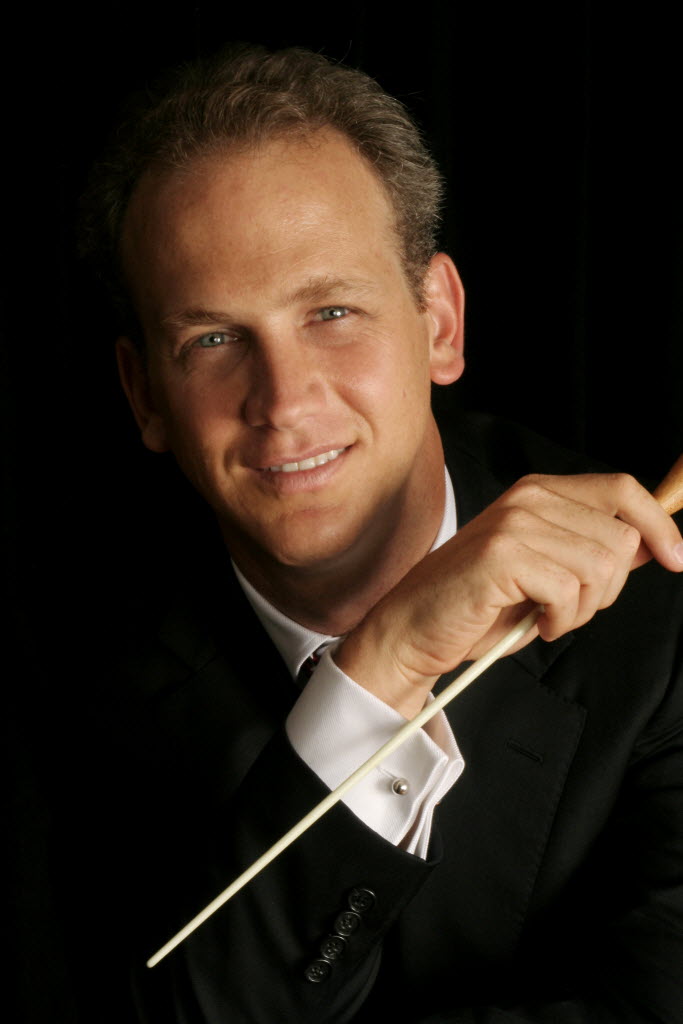
As such, my "review," which especially in a classical music realm, should only be seen as a gauge of my personal enjoyment and not confused for a learned critique, covers the entire evening's performance and not merely the cello concerto on which Yo-Yo Ma performed in conjunction with the orchestra. A total of three pieces were played, all conducted by guest conductor Carlos Miguel Prieto (right).

While my evening at the symphony, was--as almost always--a worthwhile exploration beyond my natural entertainment habitats, I didn't acutely enjoy what I heard all that much, even compared to past CSO performances.

The first piece played, sans Yo-Yo Ma, was a suite from the score of the film Redes, composed by  Silvestre Revueltas in 1934-35. In simplistic terms, it didn't do much for me as it was somewhat dour and lacked the ravishing flourishes I like best in live symphonic music.

I felt similarly about the CSO's take on Shostakovich's Symphony No. 6, Op. 54, which concluded the evening. The last five minutes of the piece provided a scintillating crescendo, but the first 40 minutes or so seemed rather somnambulant, to the point that during the first half of it, one of the musicians (who wasn't playing during that section) seemed to be sleeping onstage.

As for the Cello Concerto, which the CSO commissioned from Dmitri Yanov-Yanovsky specifically for the Yo-Yo Ma engagement, the world premiere rendition was pleasant enough, though often musically dissonant, and rarely managed to enthrall.

While Ma's playing was beautiful, he didn't provide me with any "oh wow" moments that I've enjoyed from other acclaimed virtuosos, even in atypical realms (for me), such as Itzhak Perlman, Evgeny Kissin, Savion Glover, McCoy Tyner and numerous opera singers. Perhaps it is the muted nature of the cello or the parameters of the piece, but I couldn't really perceive that Ma was doing anything far beyond the presumed capabilities of the other 10 cellists onstage. Although I was watching his hands through binoculars nearly the whole time, nothing really made me sit up and take special notice.

I am certainly not knocking Yo-Yo Ma, of whom Tribune classical music critic John von Rhein suggests, "it's hard to imagine any soloist playing this music with greater mastery," but if I pay good money to see a performer who's name is printed on the ticket, I hope to come away understanding what makes him or her so singular. In this case I didn't.

(If you want a more professional take on the cello concerto and entire evening, read von Rhein's review, though you may be hard pressed to discern whether he liked it or not.)

The video below doesn't have much to do with the performance I saw, but a few years ago, Yo-Yo Ma put out an album where he played compositions by Ennio Morricone, who wrote some of the all-time great movie scores. This is one of them.

Wednesday, May 12, 2010

A Beautiful Day (Late) For U2 Celebrate As The Icon Formerly Known As Paul Hewson Turns 50

Bono, born Paul David Hewson in Dublin, Ireland, on May 10, 1960, is undeniably one of my favorite rock stars.

Yet there are times when I can't stand the guy.

I think he has been, and largely remains, an outstanding front man, excellent singer, occasionally brilliant songwriter and great humanitarian. But I also think he often comes off as a pompous, pretentious and even smug egomaniac.

I have been a huge U2 fan since about 1983, own every album and live DVD they have released and have seen them live 13 times dating back to 1986 (and will again on July 6 at Soldier Field). Their albums include some of my all-time favorites and others I find to be nearly complete duds. And while most concerts have been thrilling, I have found others to be quite disappointing, largely due to Bono's self-aggrandizing overreach.

I think it's unquestionable that Bono has done more to help--or at least bring attention to--poor and oppressed people around the world than almost anyone,  and for that he deserves a healthy dose of appreciation and admiration. Which of course, would only feed his admitted God-complex--What's the difference between God and the lead singer? God knows he's not the lead singer--and I also think while saving the world Bono's songwriting has suffered and he has become, at times, increasingly insufferable.

But despite a love/hate observatory relationship, at the end of the day--in this case the one following his 50th birthday--it's clear that Bono has provided me with much more enjoyment than he has taken away.

And thus I celebrate Bono at 50 with a collection of videos that correlate to how he and U2 have intertwined with my life for more than half of each of ours.

Happy Birthday Paul (after all, you weren't born Bono). From me to U2.

(Video Compilation begins below)

Saturday, May 08, 2010

All Hail the Mighty Castro


Oh, Starlin! Sure, being anointed the savior of a baseball team that hasn't won the World Series for 102 years can be daunting to anyone, let alone a 20-year-old, but based on your debut, it seems you may acclimate well.

In case you haven't heard, Starlin Castro, a shortstop from the Dominican Republic who the Cubs just brought up from Double A on Friday, made history in his first big league game while wearing lucky number 13.

I myself was oblivious to history until about 1:30 this morning, but found out about Castro's exploits in a most fortuitous fashion.

You see, I was at the White Sox game last night, invited by my friend Dave to share his great seats. It was a pretty good game that the White Sox wound up losing 7-4 in 12 innings. The Blackhawks, who were on my mind from their 8:30 start time, wound up winning by the same score in a game that ended just as I got home. After listening to the Hawks on the radio on my drive, I instantly turned on the postgame highlights show on Comcast Sports Net after getting in bed. The Hawks are now up 3-1 and heading home in their second round series with Vancouver.

After seeing all of the Hawks' goals, and hearing Canuck goalie Roberto Luongo give a sorry bemoaning of his team's play--not once mentioning his--I watched the NBC season debut of my favorite show, Friday Night Lights, which I had DVR'd from earlier in the evening. It was, as I expected, really good. I then watched a month-old episode of House that I also had in my DVR queue.

I think it was about 1:37am when I was done with my viewing for the night, but in getting out of  DVR-mode, the TV was still on CSN and a replay of the Cubs game was on (I don't even know what CSN or WGN-Radio did when both the Hawks and Cubs were on simultaneously).

And, I swear to you, Starling Castro was up to bat (in replay) at that exact moment; his first major league AB after hitting .376 this spring in AA. I think I may have seen one pitch before he hit the next one over the right field wall for a 3-run homer in his first big league plate appearance. It was pretty amazing timing, as although I was aware from the White Sox scoreboard that the Cubs had won 14-7 and I knew they were bringing Castro up, I was ignorant to what he had done.

Ready for sleep, I checked the web on my iPhone and learned that Castro also hit a 3-run triple, giving him 6 RBI, the most anyone has ever had in their first major league game.

A wondrous beginning to what should be a long and prodigious reign of Castro in Chicago. At least until he winds up a Dodger, Yankee or Met. A Starlin is Born, indeed.

Friday, May 07, 2010

Worth A Close Look

As I commonly bemoan the lack of living, museum-quality fine artists (like I did here), I feel compelled to highlight someone I consider an exception.

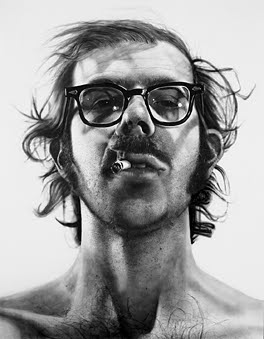
Chuck Close, who spoke last night at a lecture at the Art Institute of Chicago which I didn't attend because it was sold out from the time I heard about it, has been creating museum-showcased paintings since the late-'60s. And two month shy of his 70th birthday, he still is, all the more incredible for the fact that he has been severely paralyzed and wheelchair-bound since 1988.


Almost exclusively a portraitist, Close initially created super-realistic paintings of people--including himself, at right in 1967-68--that casual observers likely assume are photographs.

After a catastrophic spinal artery collapse left him paralyzed from the neck down in December 1988 (Wikipedia), Close has continued to paint on with a brush strapped onto his wrist with tape, creating large portraits in low-resolution grid squares. With the individual grid designs resulting in detailed portraits when viewed from a distance, he was forced to take his art in an exciting new, yet clearly connective, direction. (And in my mind, he presaged Photomosaics, which Robert Silvers popularized years later).

Close himself has seemingly become his favorite subject matter, and his works are still in demand by museums and high-end collectors. I'll include a few below; you can find more through here and here, and can see a number of clips about Chuck Close and his work on YouTube.

John, 1971-72


Leslie, 1973


Keith, 1970


Bob, 1970

Lucas, 1987
(If this date is right, perhaps the grid-style predated Close's paralysis)


Alex, 1991


John, 1998


Close-up of Right Eye from painting at top of article


Close at work


Self-Portrait, 2007

Beckett's Endgame Baffles from the Beginning

Theater Review

Endgame
a play by Samuel Beckett
Steppenwolf Theatre, Chicago
Thru June 6, 2010
@@@1/2

I realize that some of the most ultimately enriching works of art can initially be among the most challenging and confusing.

Artistry at its most innovative and imaginative often requires an eschewal of linearity or normality that can be more than a trifle off-putting to a newcomer.

As such, in seeing Samuel Beckett's absurdist one-act Endgame for the first time last night at Steppenwolf, I can't say that I "got" or particularly liked it. But especially with the help of a good post-show discussion, I can appreciate that there might be much worth re-exploring and quality that exceeded my firsthand enjoyment.

I imagine devout Beckettophiles should love it, as there is undeniable talent involved with this production.

William Petersen, who has returned to Chicago stage acting after getting rich and more famous on TV's CSI, stars as Hamm, a blind, unable to stand man (king? tyrant? definitely a son, perhaps a father) coming to terms, obtusely, with his own mortality.

Now a Steppenwolf ensemble member, Petersen is joined onstage by three other Steppenwolf stalwarts and directed by a fourth. Ian Barford plays Clov, Hamm's servant, Martha Lavey and Francis Guinan play Hamm's dead, dying and/or otherwise decaying parents, who are relegated to living in ashcans, and Frank Galati helms the mainstage production. 

The performances alone probably made the 75-minute show worth seeing, even if I never do warm up to what was really going on or why I should care, but I would strongly suggest availing yourself of Steppenwolf's ticket discounts, which enable you to buy day-of-show seats for $20 over-the-phone at 11am (this is what I did) or at half-price in person within an hour of showtime. Based on last night's considerably less-than-full house--I guess the novelty of Petersen back on the local boards has worn off--cheap seats should be commonly available.

Endgame was just my second foray into Beckett, but recently seeing Krapp's Last Tape at Goodman was an even more befuddling and displeasing experience. Perhaps I'm not smart enough--or even in the moment alert enough--to appreciate the consequence of his absurdity, no matter how artful. I probably should look deeper and revisit Endgame at some point, but perhaps for now it's best if I keep Waiting for Godot.