Thursday, March 22, 2012

Extra! Extra! Read a Rather Conflicted and Convoluted Piece, Of Journalism

It's not like I had much say in the matter of when I was born, but excepting, perhaps, the physiological desirability of youth, I'm glad I grew up on the far side of the digital divide.

This isn't to say I have a disdain for modern technology. Quite to the contrary, I readily embrace the expediency, inter-connectivity and environmental benefits provided by the internet, e-mail, cell phones, text messaging, Facebook, blogging, mp3's, Netflix streaming, Google, online maps, YouTube, e-books, iPods, iPads, iPhones, Kindles, digital cameras and other ubiquitous technologies that have largely arisen in the last 10-20 years.

But while it might seem rather arbitrary to the younger folks, I feel fortunate to be old enough to recall when the primary means of acquiring music was the vinyl record, as the cover art (and even the sequencing of album sides) was as much a part of the artistry as the music itself. And shopping for records--at Record City on Oakton Street--was one of the cooler experiences of my youth.

I also can see genuine benefits to growing up when the cost of making a long-distance phone call was still something that had to be considered. When I was away at college or subsequently lived in L.A., I couldn't share my every thought, instantly, with everyone. Thus I looked forward to more substantive, periodic telephone conversations with family and friends. Hard for even me to believe, but I actually wrote people letters. (Couldn't help but think of this pertinent song, "We Used To Wait," by Arcade Fire; nowadays waiting to express yourself, even in a darkened theater, seems quite foreign to many.)

Believe me, I'm aware that every generation can shake its head at how much easier, or just different, new technologies have made things for younger generations. When I see old paintings--such as the one at right by Canaletto of Venice in the 18th century, where the buildings look as they do today but the people are dressed in wigs and tailcoats--sometimes I wonder how people back then filled their days, with no television, no phones, no computers, no cars (not that the latter have much need even today in Venice), etc.

But while realizing I may sound like a fossil, I genuinely believe there are detrimental effects that accompany the benefits provided by the advancements of the digital age. One of these is the erosion of cursory or associative learning due to the simplified processes of finding the specific information one is seeking.

Recently, one of my nephews told me he had to do a school report on Johann Sebastian Bach for his junior high class. This seemed pretty cool, as each student was to do a research report on a different creative genius, something I fully endorse in the name of cultural literacy (although I would have advocated the reports being read out loud, so each kid could learn something about 30 innovators, not just one, but this wasn't the case).

There still appears to be an academic snobbery about Wikipedia--oft shown to be just as reliable, if sometimes flawed, as other reference sources--but I was told the kids could use WorldBook.com and another online source. In today's times, I can't really argue with this methodology. But when I was a kid--oy vey!--to do a report on Bach would involve riding my bike a few miles though the streets of Skokie to the library (perhaps stopping at Record City or elsewhere) and then walking past numerous stacks (where maybe some books or magazines might catch my eye) to the reference section at the back of the second floor.

And then even in pinpointing the World Book "B" volume, I might notice articles on baseball or ballet or The Beatles or beetles or Barcelona or backgammon or James Baldwin or birds or bees or blues or bebop or something else that might distract me from learning about Bach, but also conceivably teach me much else in the process. (I was surprised to learn that World Book is still printed, but given Encyclopedia Britannica recently ending its print edition, who knows how much longer actual World Books will exist.)

Now certainly, all the topics I just mentioned can be readily found online, likely covered in much more depth than they were in World Book circa 1980. With Google Earth, one can take a virtual tour of Barcelona and see all its Gaudi splendors in 3D. Anyone interested in backgammon can go to Pogo.com or other game sites and play beginners to masters from around the globe. And any kid with access to Spotify can hear any song the Beatles ever recorded in a matter of seconds.

But accessibility is one thing; the prompting of curiosity is another. And that's the bridge that may not be as readily crossed, if my suspicions hold a grain of salt. Undoubtedly, a child's parents, teachers, friends and siblings play a major part in expanding the sphere of awareness--as they always have--but my guess is that most current high schoolers don't know all or even several of the following names:

Humphrey Bogart, Buddy Holly, Vincent Van Gogh, Shirley Temple, Alfred Hitchcock, Roberto Clemente, Janis Joplin, Scott Joplin, Abbott & Costello, Ginger Rogers, Joe Louis, James Dean

This isn't shocking, nor even particularly distressing, but I'm pretty certain I--and most of my contemporaries--knew all of the above by my mid-teens, despite their fame (and often full life-span) coming prior to my birth or conscious awareness.

So although there are--unequivocally--many advantages borne from modern technology, there are also a number of consequences, some less obvious or acutely related than others. I talked to a few people to gather some insights for this post and no sooner had one friend--Laurence Mesirow, who writes in depth about related topics on his Techno Turmoil blog--shared his opinion that "People aren't living in the world, they're living in their screen," another--Paolo Palazzi-Xirinachs--posted this on Facebook:


To me, there is a definite connection, although it's not as if meanness and thoughtless have only developed in the past 20 years. But I do perceive--at the risk of sounding like a "Get off my lawn!" grump--that...
Our electronic hallucinogens, interconnected isolation and (anti-)social networking-inspired delusions of self-importance have served to not only erode cultural literacy, but public decorum & decency as well.
Now I realize that the three of you who might still be reading this--abbreviated attention spans are yet another consequence of the digital age, along with the aforementioned delusions of self-importance--may be saying at this point, "Wait, I thought this was going to be a piece about journalism."

It is, albeit in my convoluted, roundabout way. And while I'm certain that my college journalism professors would have given this piece an "F" for so circuitously introducing the topic, I believe all of the above helps to explain why I continue to subscribe to a daily newspaper. Although the impetus for writing this piece was recently considering canceling my subscription to the Chicago Tribune.

As evidenced by getting some daily editions where the sections combine to be less than a centimeter thick, the Tribune is a shadow of what it used to be. And for the 4-day a week subscription I was getting since returning to live in Skokie in 2007, with a slated price jump I would soon be paying about 4 times what I did when I started.

Especially for someone still looking for my next employment opportunity, it was getting hard to justify paying so much for something that, to a certain extent, is replicated for free online. Certainly, there is no shortage of ways to get "news" these days.

But excepting the three days/week gap since fall 2007, I have never not gotten a daily newspaper. Growing up at my folks' house, also in Skokie, there was a Chicago Tribune every morning. When I went to college at NIU in DeKalb, I always subscribed to the Trib and when I moved to Los Angeles from 1990-1992, I subscribed to the Los Angeles Times. Since being back in the Chicago area since 1993, including the 12 years I lived in Glen Ellyn, I've always subscribed to the Tribune.

This is due to more than inertia. I have always loved journalism--I was on my high school newspaper, minored in Journalism at NIU, have written numerous professional press releases over the years and consider this blog a form of personal journalism--and have found reading a newspaper to be an essential part of my everyday life.

Though I never made my living directly from the news media, I very much did so indirectly as for many years I was a copywriter specializing in recruitment advertising. I can honestly say that my words have been published in every major newspaper in the country and many smaller ones as well.

One of my favorite newspaper
recruitment ads that I wrote
I certainly can see how the reduction in the size of the Tribune, the slow death march of newspapers in general--longstanding papers like the Rocky Mountain News and the Seattle Post-Intelligencer have either entirely ceased to exist or ended print production--and my own career struggles are interrelated.

When the internet became the primarily vehicle for help wanted ads (on CareerBuilder, Monster and elsewhere), as well as general classified ads (on Craigslist) and automotive advertising, newspapers had no choice but to shrink. And with the lower cost of internet recruitment advertising combined with drastically reduced hiring caused by the recession, those of us gifted in creatively promoting job openings through newspaper display ads, well, we're sitting here writing overwrought blog pieces about the decline of newspapers.

According to Clay Shirky, a Professor of New Media at NYU quoted in the recent documentary, Page One: Inside the New York Times:
"Reduction in ad revenue couple with competition for attention, both at the same time, had turned this [the decline of newspapers and rise of online news outlets] from a transition to a revolution."
But just as I've always believed, economics aside, that newspaper Help Wanted sections are a more commanding (and importantly visceral) venue for advertisers to place and job seekers to peruse job ads--similar to my encyclopedia example above, in a printed classified section you see a spectrum of ads, some of which may catch your eye due to how they're designed and/or worded, rather than simple listings of search results--I believe the news sections of print publications continue to offer something of vital importance.

Yes, reflecting the somewhat superfluous tastes of the public these days, the Tribune seems to include a surplus of celebrity news or fluff pieces, and they no longer employ any news or sports columnists that I care to read on a regular basis. But on any given day, in looking through the news, local, business, sports and arts sections, I find interesting articles to read that I never would have noticed online.

For example, in today's Chicago Tribune--which, ironically, I had to read at my mom's house since my paper was missing--I read the piece on front page (shown above) about the lag in Chicago tourism and also the one on how the FTC is cracking down on online ads designed to look like legitimate news stories.

Although I've never been a big reader of the editorial pages, I enjoyed the Commentary piece at left by syndicated columnist Leonard Pitts about Bruce Springsteen--"the new Bruce Springsteen album, "Wrecking Ball," captures more raw emotional truth about the state of the American dream than any politician ever could"--and in the Business section, I noted a small sidebar piece about how there will be new paperwork required for people collecting unemployment benefits.

As always, I took a look at the obituary stories--not the death notices, but the articles about notable people (usually non-celebs) who have passed. These are often great sources of interesting tidbits you don't readily find on the internet.

Whereas the Sports section was always the one I grabbed first in my younger days, now I don't spend much time with it, as the news here is the most readily duplicative of what can be easily seen on the net.

Whether on a weekday or a Sunday, the A&E section is often where I spend the most time; I like the Tribune's theater critic Chris Jones and movie critic Michael Phillips, and though some of the feature pieces can be rather fluffy, there's usually something worthwhile.

Today I liked reading Patrick Goldstein's piece about recent movie & TV flops (John Carter, Luck, Terra Nova) created by notable directors and a story about a longtime Chicago music event programmer, Michael Orlove, who is taking a position with the NEA in Washington.

My favorite piece today, though far from the most newsworthy, was the one shown at right. It's about how the Parents Television Council has its knickers in a bunch over the marked increase in the utterance of "penis" and "vagina" on broadcast television.

In the piece by T.L. Stanley, Tim Winter, President of the PTC, says, "It's a broader reflection of the progression of raunch." But Marty Kaplan, a USC entertainment and media professor, suggests, "Words that you can hear in any 10th grade biology class are probably the most benign end of the spectrum. I don't think there's a danger of growing up culturally malformed by hearing those words."

This last article was actually written for the L.A. Times, which is also owned by the Tribune Company. Online it is on LATimes.com, but not ChicagoTribune.com, so this is a case of something only readers of the print Tribune would come across.

All told, I spent less than 30 minutes reading everything I cared to in today's Chicago Tribune; that's about average for a daily edition. I find a bit more to read on Sunday, though there is also an increase of fluff. I acutely miss the old Chicago Tribune magazine that would have in-depth articles about a given cover subject. I also miss, though they've been gone for many years, Calvin & Hobbes and The Far Side; there are no comic strips I read anymore, though I know many value print papers for the daily dose of Doonesbury, Dick Tracy, Blondie, etc., as well as the crossword puzzle, Sudoku and Jumble.

It's been said--I believe in Page One--that newspapers are printed at a loss to the publishers. Even with higher subscription rates and news stand prices, it costs more in ink, paper, delivery services and personnel than publishers recoup from newspaper sales. The real revenues have always come from advertising, and although every newspaper has an online edition for which advertising is sold, according to the just published Pew Center State of the News Media study:
"In 2011, losses in print advertising dollars outpaced gains in digital revenue by a factor of roughly 10 to 1."
Consider this information found on the Newspaper Association of America website: In 2005, newspaper ad revenues across the United States, including both print and digital, were $49.4 billion, with only $1.5 billion coming from online advertising. By 2011, online advertising on newspaper sites had doubled, but still only amounted to $3.2 billion total. Print revenue has shrunk to less than half of what it was just 6 years prior, with $20.6 billion bringing total print + online newspaper advertising revenues to $23.9 billion, or roughly 52% less than 2005.
See full chart here
Understanding that newspaper publishing is a business despite news reporting often seeming like something of a civic service, with numbers like the above and circulation figures that show the Tribune selling about 42% fewer print copies than it did 20 years ago--that it still averages 425,000 in daily circulation is actually a bit surprising--it isn't hard to grasp the economic realities that have affected the quality of the product.

As a newspaper junkie, I like the Newseum in Washington, DC and regularly
check their online gallery of Today's Front Pages (The New York tabloids are
always fun.) Kiosko.net is a similar site and also offers a great iPhone app.
Like businesses in many sectors, news rooms across the world have experienced rampant layoffs. The Tribune Company is still under bankruptcy protection, somewhat due to financial choices beyond my comprehension, but undoubtedly caused in part due to the drop in advertising and circulation. In turn, the Chicago Tribune employs fewer columnists, foreign correspondents, reporters and photographers, and its quality is indisputably diluted.

So when, following periodic price increases over the years, they were going to charge me $208/yr. for the 4-day/wk. service I began at $52/yr., I was--despite very much wanting to support newspapers just on principal--intending to cancel my subscription. Though I understand why they had to charge more for an inferior product just to stay in business, I couldn't justify the increased expense.

But the Chicago Tribune made the mistake of messing with my mom first.

As a daily subscriber for at least the 45 years she has lived in Skokie, my mom noticed a recent doubling of her Tribune subscription rate. Resigned to canceling her subscription if the new rate was enforced, she Googled "Chicago Tribune Subscription Offers," entered her zip code and found--direct from the Tribune--an offer amounting to half of what she had been paying and a quarter of the new rate she'd been billed. So she called up the Tribune (1-800-TRIBUNE), they honored the rate shown online and thus, she cut her expenditure in half rather than seeing it doubled.

No wonder the company went bankrupt.

When I was on the verge of canceling, I did the same thing--over the phone, for me, they wouldn't honor the rate posted online, so I just signed up as a new customer and canceled my existing rollover--and am now back to getting the Chicago Tribune delivered to my door 7 days a week for less than I was paying for 4 days. (I could've saved even more with the 4-day price shown online, but I like getting the paper every day and to the extent I can, I like supporting the existence of print newspapers.)

Historic newspapers adorn the walls of the Magazine Museum,
4906 W. Oakton St. in Skokie, IL
As Bob Katzman, who used to run news stands in Chicago and now owns a back-issue magazine emporium in Skokie--I wrote about it here--says:

"I think it's sad that the generation of people who would tuck a newspaper under their arm and go read under a tree is nearing extinction.
"When I look at things on paper, things pass easier into my consciousness than when looking at a screen."
This is echoed by my friend Paolo Palazzi-Xirinachs, for whom a physical newspaper has been a lifelong constant and was once an editor for The Harvard Crimson:
"Newspapers foster a sense of community that electronic mediums don’t."
Although like me, Paolo predominantly gets his breaking news online these days, he also notes that "newspaper reporting is generally much more in depth and it backfills certain information gaps in other reporting."

So while we all want maximum value for our dollar, especially me especially now, and it's unlikely that print newspapers will ever again be what they once were, it's also unlikely that online news dissemination will ever sufficiently replace what I get from the daily paper.

And thus I--even if a bit conflicted about it--continue to get it. While hoping I can for years to come.

Monday, March 19, 2012

Gnashville, Tennessee: Williams' 'Camino Real' a Surreal Grind -- Theater Review

Theater Review

Camino Real
a play by Tennessee Williams
New version by Calixto Bieito and Marc Rosich
Goodman Theatre, Chicago
Thru April 8
@

I tried.

I really tried to prepare myself to appreciate the Goodman Theatre's staging of Tennessee Williams' 1953 play, Camino Real, which its own Playbill describes as "a fiendishly difficult piece."

I read much of the Goodman's typically stellar supporting material--about the play, Williams' motivations in giving audiences "my own sense of something wild and unrestricted like water in the mountains, or clouds changing shape in a gale," and about Artistic Director Robert Falls' reasoning in bringing Calixto Bieito (a "bad boy of Europe") to Chicago to direct this rarely produced piece.

I read press previews and reviews, including a rather positive one by the Chicago Tribune's Chris Jones, which the paper somewhat strangely billboarded on the front page by saying "3-1/2 stars for 'Camino Real,' but some audience members are leaving early." [Note: The Tribune rating scale is out of 4]

I tried to tell myself that stories of patrons exiting mid-show and very poor word-of-mouth, including an aunt's recommendation to waste the ticket and not bother going, could perhaps be chalked up to their missing something that I might enjoy.

I attended an informative pre-show discussion at the Goodman conducted by the show's casting director, Adam Belcuore, and asked his advice for best approaching a challenging piece of theater perhaps further jigsawed by a daring director. I appreciated Adam's advice to not worry if things seemed strange and obtuse at the beginning; just to go with the flow and let the weirdness wash over me.

I also liked the suggestion that coming after the successes of The Glass Menagerie and A Streetcar Named Desire, Williams was eager to try something different, and perhaps was inspired by other non-linear artistic trends of the early 1950s--bebop, Beat poetry, abstract expressionism, surrealism, etc.

I tried to remind myself how much I've liked not only the two aforementioned masterpieces by Tennessee Williams, but also Cat on a Hot Tin Roof, Sweet Bird of Youth and Night of the Iguana.

As I checked the Playbill and noticed a few familiar names--Matt DeCaro, Barbara Robertson, David Darlow--I tried to settle into my seat and focus on enjoying a unique work by a great writer interpreted by an inventive director and starring first-rate actors.

I tried.

And I failed.

I failed to see almost any artistic merits in a 110-minute haphazard "dream play" that felt more like a nightmare.

If I tried to convey what Camino Real is about, I would fail. I have absolutely no idea what was going on on-stage, nor what I was supposed to derive from it. I know there was an ex-boxer named Kilroy, a guy named Gutman (after the Sidney Greenstreet character in The Maltese Falcon, but I had read about this), and history-derived characters such as Lord Byron, Casanova, Don Quixote and Esmerelda.

All I can really say, and I apologize for being so non-specific, was that I didn't like anything about it. I believe this is the lowest rating I've ever given any performance, and if I didn't feel somewhat obliged to stick it out before sharing my opinion, I would have joined the other 18 people that left the balcony early last night (I counted, and am sure that if there had been an intermission many more would have ducked out, including quite possibly me).

Funny thing is, from reading about the play and the Catalonian Bieito in pieces by Robert Falls and the Tribune's Chris Jones, the implication was that some patrons may be offended, disturbed and/or disgusted by the happenings on-stage.

I'm not offended by much of an artistic nature, and unfortunately wasn't here. Offended, disturbed and disgusted would have been an improvement. Instead I was just confused, bewildered and bored.

I'm always willing to consider the possibility that I missed something, or failed to try hard enough, but if the metaphorical Emperor really was wearing clothes in this case, it clearly wasn't apparent through my binoculars from the ever-emptying balcony.

Perhaps what I needed to try, in order to derive any enjoyment from Camino Real, was taking acid. Or at least Ambien.

(The audience politely applauded at the play's end and it's possible some of the remaining patrons may have liked it, but all I heard were negative comments. Especially after two excellent, crowd-pleasing plays--Red and Race--as part of my subscription series, I won't revile Falls for scheduling something a bit daring (even if I am considering not re-upping next season). But in nearly 10 seasons as a subscriber, this is the first Williams play Goodman has served up. Would it have been so hard to slate a stellar rendition of Streetcar instead? Though I am glad to see they will be doing Sweet Bird of Youth, directed by David Cromer, in the fall.)

Saturday, March 17, 2012

Reveling in the Madness Despite Not Really Giving a Hoop

Photo Credit: Chuck Burton, AP
I love the NCAA Tourney.

But I don't care who wins. Not just the whole thing, but any given game.

And though the men's college basketball tournament is one of my favorite sporting events to watch, and long has been, I don't need to see any of most games nor most of any game.

Especially this year, when no Illinois-based schools made the field of 68, providing even less of a modicum of a rooting interest than normal, all I really relish seeing is the last five minutes of any closely contested game.

Particularly the ones that come down to the last few shots.

There is really nothing in sports quite like the drama--even, and probably especially, in the tournament's early rounds--of a team, any team, having the ball down 1 or 2 points with about 10 seconds left in the game. Make the shot and go on, miss it and go home.

Appreciating that both the eventual winners, and losers, in this situation are 18-22 year old kids playing in front of thousands of spectators and millions of viewers--many of whose "bracket pool" or even more substantive wagers ride on the outcome--these final possession thrillers are absolutely tantalizing, even intoxicating.

Photo Credit: Nati Harnik, AP
And when shocking upsets happen--like yesterday, when two #15 seeds (in their tournament regions) knocked off a pair of #2 seeds, which had only happened four times previously--it's even better.

Not that I really have any reason to care more or less about the players for Lehigh or Norfolk State than the kids who play for Duke or Missouri, but who doesn't love a David vs. Goliath underdog outcome?

-- As I write this, Gonzaga, the #7 seed in the East region is down 52-47 to Ohio State, the #2 seed and a clear powerhouse all season. There are about 12 minutes left, but if it stays close with under 5:00 to play, I'll really start to pay attention.

I first became hooked on the NCAA Tournament in 1979 when Coach Ray Meyer and star Mark Aguirre led the Chicago-based DePaul Blue Demons to the Final Four with a victory over perennial powerhouse UCLA. Keep in mind that as a Chicago-area resident born in 1968, this was, excepting a couple middling Bears and Bulls playoff teams, my first experience following a local team with real championship potential. And that it came in one of the tournament's most storied editions--after reaching the Final Four, DePaul had Larry Bird's undefeated Indiana State on the ropes before losing 76-74; ISU then lost to Magic Johnson's Michigan State squad in the finals--made it that much more memorable.

DePaul was a big deal for the next three years, ending the regular season ranked #1 or #2 in the country, only to be shocked out of the tourney in Round 1 or 2. The Demons remained worth following for awhile longer, but have made the tournament only three times in the last 20 years, most recently in 2004.

-- Gonzaga has cut it to a 2 point deficit with 5:48 to play. This is getting good. 

-- Tie game! 

See what I mean? Now I'm hooked; wild horses couldn't drag me away--it's a commercial--although I honestly couldn't care less if Ohio State or Gonzaga moves on to the next round. I also don't care that the last 2 minutes of the game will take about 15 in real time. That's part of the fun.

-- 1:43 left, Ohio State misses a free throw, but is up 3
-- Gonzaga misses a 3-pointer that could've tied it
-- 1:00 left, OSU goes up 5
-- :40 left, Gonzaga player misses two free throws; can't help but feel bad for him
-- :33, Ohio State makes two free throws, up 7. Gonzaga has missed their last five shots. Same player for the Zags now makes both free throws. But it looks like Ohio State will win this.
-- :11, Gonzaga hits a wild 3, cutting it to 70-66, but it may be too late. Another time out. 

-- Ohio State wins 73-66 and moves onto the Sweet 16. That was fun, but not even the best example of what makes the NCAA Tournament so awesome.

Not to get too psychological, but it might seem that my being so enamored by something providing only transient enjoyment is somewhat antithetical to my general proclivities.

I don't care much for casual party conversations with people I'll never see again. I tend to have a problem with bands these days that get popular for a song, never to be heard from again. And I typically never watch professional sporting events in which I have no rooting interest, other than during the playoffs.

But it absolutely doesn't bother me to say that I love the NCAA Tourney but honestly didn't recall that UConn won it last year. The last five minutes of any close game is all I need--and will rapturously enjoy--even if I'll forget about it almost instantly. Yes, I'll probably watch the final game, but won't care any more about it than a first-rounder with a dramatic finish.

In the '80s, I went to college at Northern Illinois University; they never made the tourney during my time there and only twice since, getting bounced in Round 1 in '91 and '96. So it's not like I have an alma mater to root for, and though I have some innate home state affinity for the University of Illinois--and was delighted to follow their nearly undefeated run to the NCAA Championship game in 2005--it's not like I really care about the Illini.

Likewise, I might have slightly more than zero interest the next time DePaul, Loyola, UIC, Northwestern, Bradley, Illinois State or another Illinois college gets an NCAA bid, particularly if they have a real contender.

But right now it's early in a game between Murray State and Marquette. Given how often I visit Milwaukee, you might think I'd be rooting for Marquette. But as Murray State was 30-1, got only a #6 seed and sounds like they were named for an old Jewish man, I think I prefer they win.

Though I don't really care.

I'm really just rooting for it go down to the wire.

(Heck, until I just looked for a DePaul 1979 photo, I forgot I had written this piece last year, about my Most Memorable NCAA Moments. The site I had written it for reformatted, so each photo title is missing, but hoops fans should still be able to identify the moments.)

Friday, March 16, 2012

Tramping Onward: My Exploration of Charlie Chaplin, The Sequel

Last month, I wrote this piece about Charlie Chaplin's 1936 film Modern Times after watching--and tremendously enjoying and admiring--it for the first time.

Excepting a possible high school or college film class screening I've long since forgotten, it was also my first serious exposure to Chaplin as an artist.

For while I've always known of Chaplin--or perhaps more specifically, his immortal Little Tramp character--as an icon from the early days of cinema and always found brief snippets of his slapstick humor amusing, until this year I was largely oblivious to his true expanse as an actor, comedian, writer, director, producer, editor, composer and, beyond knowing he was once considered "the most famous man in the world," as a person.

So since viewing Modern Times, I made Chaplin the subject of one of my "creativity benders" in which I vociferously ingest vast quantities of artistry and information by, or about, a given musician, band, composer, painter, sculptor, filmmaker, writer, actor, architect, photographer, comedian, genre, etc.

Few of these creativity benders have ever been as eye-opening and gratifying as the one that educated me about Sir Charles Spencer Chaplin, born April 16, 1889 in London. And not just due to his numerous exceptional movies.

Along with some basic internet research--Chaplin's Wikipedia bio and filmographies on IMDB, All Movie and Wikipedia--I read some articles (1, 2, 3) about the time he spent in Chicago in the winter of 1914-15 after signing with Essanay Studios, following his initial batch of films with Mack Sennett's Keystone Studios.

I watched the first movie he made with Essanay, aptly titled His New Job, which was the only one Chaplin created in Chicago, for he would soon decide he'd rather film in California than at the 1343-45 Argyle Street buildings that now house St. Augustine College.

On the same day that I would take a tour of the old Chess Records studio, where Chuck Berry, Muddy Waters, Etta James and many others recorded songs seminal to the rise of popular music, I also stopped by the old Essanay Studios to experience a bit of pioneering cinematic ether.

Although the original entrance remains intact (as seen at right), not surprisingly considering Essanay closed its doors in 1918, the studios have long since been re-purposed to serve the needs of various tenants, currently St. Augustine.

But one of Essanay's old sound stages--conceivably but not assuredly one where His New Job was filmed--is now dubbed the Charlie Chaplin Auditorium. Though various college and community events are held there, it wasn't open when I stopped by, but a building worker kindly unlocked it and let me take a peek and a few pictures.

As shown at left, an image from Chaplin's 1921 classic, The Kid, is prominently painted in the auditorium, although that film had nothing directly to do with Essanay (it was filmed in Los Angeles for Chaplin's own First National production company).

And out back of the old studio buildings,
Charlie can still be seen hanging around. 

I also walked around the corner from Essanay to see these houses Chaplin supposedly had built (according to this article, which is more about another film icon, Gloria Swanson, who Chaplin cast in a bit role in His New Job). But given that--from what I can gather--Chaplin spent little over a month in Chicago during his time with Essanay, I can't see how there was time for the mirrored homes to be constructed, let alone for the star to live in one.

Yet while his direct ties to Chicago were rather brief,
according to this article, His New Job--released on February 1, 1915--is the movie that catapulted Chaplin to true mega-stardom, so his Chicago connection is more than trivial.

I also watched another Essanay silent, called The Tramp, which though not the debut of Chaplin's trademark character, is largely seen as the de facto formation of the "the most universally recognized fictional human figure in history" (according to a featurette on the Modern Times DVD).

Chaplin moved from Essanay, for whom he made 15 films in less than 18 months, to Mutual and I enjoyed his 1917 classic from this studio, called The Immigrant.

Though the above films were two-reelers (about a half-hour long), the rest of Chaplin's films that I recently watched are what we would call "feature length," at least an hour or a good bit longer. These include:

- The Kid (1921)
- The Gold Rush (1925)
- City Lights (1931)
- Modern Times (1936)
- The Great Dictator (1940)
- Monsieur Verdoux (1947)
- Limelight (1952)

The first four films listed above are silent films, which means that Chaplin consciously made the decision to make City Lights and Modern Times against the tide of "talkies," which were otherwise standard by 1930. His reasoning was that The Tramp should never talk on film and given that both movies are pure genius and rather successful in their day, he clearly made the right--albeit gutsy--choice.

Even--or perhaps especially--in silence, The Tramp of The Kid, Gold Rush, City Lights, Modern Times and the earlier short films went far beyond the cheeky imp I used to perceive. He was an everyman (readily understood in every language), a philosopher, a romantic and a forever resilient champion for the underdog.

Although the first three above are astonishingly inventive works of art, with much to say about life and society, I like Modern Times and The Great Dictator best as Chaplin put his globally-beloved persona on the line by bringing his social stridency to the fore. Having spotlighted Modern Times in my previous post, I wanted to touch a bit on what a daring and brilliant work The Great Dictator is.

In addition to writing, directing, producing, editing and composing the score--as he did for almost all his feature films--in his first non-Tramp feature Chaplin played both a Jewish barber (albeit resembling the Little Tramp) and Adenoid Hynkel, the buffoonish dictator of Tomania, who was quite openly and obviously intended to lampoon Hitler.

Keep in mind that as conveyed in the documentary, The Tramp and the Dictator, which accompanies the Chaplin Collection DVD of the film--all of these sets, which I got at the Skokie Public Library, contain excellent bonus material--when Chaplin began writing the story in 1938, the U.S. was still far from entering World War II and most of Europe was in a state of appeasement when it came to Hitler. Upon Chaplin's announcement about making the film, the British said that they would ban it.

Much of Hollywood, including Jewish producers who feared it would infuriate Hitler, tried to dissuade Chaplin from making the film. But through an intermediary, President Roosevelt encouraged Chaplin to go ahead, and he did, financing the entire project himself.

The film itself is wickedly funny--particularly scenes where Hynkel is joined by a character spoofing Mussolini--tremendous poignant and quite powerful. Though some have criticized Chaplin's closing speech, where he largely drops out of character as either the barber or Hynkel, as being out of tone with the rest of the film, I think what he does here is remarkably moving, with the message holding much resonance over 70 years later.


Certainly, even the tremendously well-read and worldly Chaplin--who was born the same week as Hitler and didn't miss the similarity of the Führer's mustache to the Tramp's--didn't grasp the true extent of Hitler's depravity or Nazi atrocities. In retrospect, Chaplin said he wouldn't have made The Great Dictator if he had. 

But according to Stanley Kauffmann, a film critic featured in the documentary along with luminaries like Sidney Lumet, Budd Schulberg and Ray Bradbury, upon the film's release "every one of my friends, many of whom were Jewish, like myself, felt that a David had arisen, a comic David, to fight Goliath, and we could only be happy.
"Here this man had come out against Hitler. It was as if the greatest angel in the calendar of saints and angels had suddenly taken a stand." 
According to The Tramp and the Dictator documentary, it is believed that Hitler watched The Great Dictator, at least twice. But while he may have been a fan of Chaplin's movies, and mustache, Hitler included Charlie in a book comprising a Nazi hit list of prominent Jews, even though Chaplin wasn't Jewish. Baptised in the Church of England, Chaplin was primarily agnostic, but always refused to challenge or refute claims that he was Jewish, saying that to do so would always "play directly into the hands of anti-Semites."

Per film historian Kevin Brownlow, who co-directed The Tramp and the Dictator, Chaplin made The Great Dictator in response to seeing himself on the Nazi hit list. "The Nazis mistakenly thought he was Jewish because Chaplin never denied it," Brownlow said. "He was sent a copy of this book and it is widely believed that this led to him to make the film The Great Dictator as an act of defiance."

No wonder David Robinson wrote in his 1985 biography, Chaplin: His Life and Art:

"Quite apart from any particular merits of the film, The Great Dictator remains an unparalled phenomenon, an epic incident in the history of mankind. The greatest clown and best-loved personality of his age directly challenged the man who had instigated more evil and human misery than any other in modern history."
Now, having read portions of Robinson's biography, watched the 1992 Chaplin biopic (not lousy but not great, though Robert Downey, Jr. is excellent) and seen Unknown Chaplin--a 3-part documentary focusing primarily on Chaplin directorial techniques--plus numerous extras on the various DVDs, it is clear that Chaplin was far from flawless.

As a director, he was at best a maddening perfectionist, at worst a capricious jerk. (Interestingly, his early silents were shot without scripts, resulting in numerous takes of each scene before Chaplin could "mold the clay.") Due partly to his deliberateness, from 1925 on--or the last 52 years of his 88-year life--his filmography consists of a relatively paltry nine works. And considerably more troubling was his lifelong penchant for much younger--e.g. teenage--women; I'm not sure what was considered "underage" at the time, but his first two wives were just 16 when he married them, after having impregnated them. He met his fourth and final wife--Oona O'Neill, daughter of playwright Eugene, who disowned her over the relationship--when she was 17 and married her at 18, when he was 54. Unlike his other short-lived marriages, he and Oona were together for 34 years until his death in 1977.

Chaplin also took heat from the British press for not enlisting in their Army during World War I, while instead making a fortune in America. But according to Wikipedia, he had in fact presented himself for service, but was denied for being too small at 5'5" and underweight. In the U.S., he joined Liberty Bond drives that raised millions of dollars and his 1918 movie Shoulder Arms, per Robinson, "metamorphosed the real-life horrors of war into a cause for laughter" bringing huge appreciation from troops themselves. It was one of his greatest successes.

Chaplin films raised morale more than any other during WWI (per The Tramp and the Dictator), he made the wondrous The Gold Rush and City Lights, which like many of his films can be seen as testaments to human dignity and perseverance, he took on the industrial establishment with Modern Times and he took on Hitler--largely before anyone else did--with The Great Dictator.

And for his efforts, Charlie Chaplin got kicked out of America in 1952. 

Click image to see stories in full
I won't make this too much longer going into details largely beyond my familiarity, but somewhere relatively early, Chaplin put himself in the crosshairs of J. Edgar Hoover. In the mid-40's, he was embroiled in a paternity suit with a (clinically) crazy ex-lover, in which tests proved the baby wasn't his, yet he still somehow was ordered to pay to support it. He also was a target of Joseph McCarthy, who accused Chaplin (and much of Hollywood) of Communist activities.

After making Monsieur Verdoux in 1947, where he clearly left the Tramp behind and played a murderer, largely to make a statement about war--"One murder makes a villain, millions a hero. Numbers sanctify."--he then wrote (originally as a 100,000-word novel draft), directed, produced, composed and starred in the touchingly self-reflective Limelight in 1952. Here he played an old clown, once hugely famous but now down and out, but still maintaining heart and dignity. Chaplin even gave his old silent-era rival, Buster Keaton, a small part; this was the only time the two legends were on-screen together. (By the way, to give myself a point of comparison, I also watched Keaton's The General as well as F.W. Murnau's silent classic, Sunrise. Both of these are great, but in no way lessened my regard for what Chaplin was doing around the same time.)

Both Monsieur Verdoux and Limelight, though not quite on par with The Gold Rush, City Lights, Modern Lights and The Great Dictator--which may still reign as cinema's greatest Grand Slam--are quite interesting movies and very worthwhile.

Upon attending the world premiere of Limelight in London in 1952, Chaplin and his family were denied re-entry under a Justice Department code which permitted the barring of aliens on grounds of "morals, health or insanity, or for advocating Communism or associating with Communist or pro-Communist organizations." (Robinson, p572)

At least per what I was able to learn about Chaplin through this rather fulfilling, if expedient, exploration, this seemed like a disgraceful way to treat one the America's greatest entertainers & ambassadors who also served as one of the world's greatest proponents of peace & social justice.

In fact, though at the beginning of 2012 I had vague regard but little true knowledge of Chaplin's life and art, I now believe he deserves to be seen as one of the 20th Century's very greatest artistic forces, along with The Beatles and Picasso.

After being exiled in 1952, Charlie Chaplin wasn't allowed to return to the U.S. until 1972--when not incidentally Hoover was trying to get another genius and force for good, John Lennon, deported--as he came to Hollywood to accept an honorary Oscar. In doing so, he received a 12-minute standing ovation, the longest ever--still--in Academy Award history. (This video captures only part of it.)

As the great French film director Claude Chabrol explains in a brief documentary accompanying Monsieur Verdoux on DVD:
"Chaplin equals survival. The central question in all his films is 'How do you survive?'"
Given my new found enlightenment, when it comes to Chaplin I'd answer "With quite a lot of grace, humor and humanity."

35 years after his death, which came on Christmas Day 1977--I also went to the library and read the obituaries in Chicago Tribune and New York Times on microfilm, quite a revelatory exploration in itself--we can still learn a whole lot from a Little Tramp.

Monday, March 12, 2012

Willie Dixon's Blues Heaven Allows Pivotal 'Chess' Piece of Music History to Keep Moving Forward

Attraction Review

Willie Dixon's Blues Heaven
Former Chess Records Studio and Headquarters
2120 S. Michigan Ave., Chicago
Website: BluesHeaven.com
@@@@

Arriving at 2120 South Michigan Avenue shortly after noon on Saturday, my friend Dave and I found the door locked. Upon ringing the doorbell and being let in, the only other visitors in the former home of Chess Records were a pair of college-age girls and a woman with a child of perhaps 6 or 7.

But also accompanying our visit were Muddy Waters and Howlin' Wolf and Etta James and Chuck Berry and Buddy Guy and John Lee Hooker and Bo Diddley and Koko Taylor and Maurice White and The Rolling Stones and, playing the upright bass, Willie Dixon, whose descendants now own the building in which they operate the educational foundation dubbed Willie Dixon's Blues Heaven.

Although the no-longer-operational studio is largely devoid of original recording equipment & musical instruments and rather light on actual exhibits, as tends to be the case at other historic studios turned tourist attractions--such as Sun Studio in Memphis, Motown Records in Detroit and RCA Studio B in Nashville--the appeal for me was much more ethereal than tangible. And that was just fine.

Sure there were display cases featuring a dress hat and sport coat worn by Dixon--plus some hand-written lyrics, as he not only was a staff musician at Chess but the composer of hundreds of songs--as well as a tour jacket worn by Muddy Waters and a couple of guitars signed by Buddy Guy (these three immortals are seen in the photo at right, which adorns a studio wall).

But even if the piano on hand were the actual one Johnnie Johnson had used on numerous classic Chuck Berry singles or Dixon's bass--presumably one he used in accompanying nearly every Chess recording--wasn't locked away in storage until more robust security can ensure its safety, it's not as if these instruments would today be making the groundbreaking sounds that prompted Dave and I to stop by for a visit.

Rather, the luster of standing in the studio at 2120 S. Michigan derives from one mentally filling in the blanks of musical history and considering how instrumental this exact spot--which was Chess' home from 1957-67--was in the development of electric (i.e. Chicago) blues and the complementary evolution of rock 'n' roll.

It was here that Chuck Berry recorded "Johnny B. Goode." It was here that Etta James recorded "At Last." It was here (presumably) that Muddy Waters recorded a Willie Dixon-written tune called "You Need Love," later to be ripped off by Led Zeppelin as "Whole Lotta Love" (and even before that by The Small Faces).

Zeppelin would also cop--and only years later pay proper credit and royalties for--Dixon's "Bring It On Home" and turn Howlin' Wolf's "Killing Floor" (also recorded here and later covered by Jimi Hendrix and many others) into "The Lemon Song."

Bo Diddley would also record at Chess, with "Road Runner" being just one of his songs covered by British Invasion bands like The Beatles, Stones, Animals, Who and Zombies. Starting as a teenager, Maurice White was a Chess session drummer, backing among others The Impressions (with Curtis Mayfield and Jerry Butler) before going on form Earth, Wind and Fire.

Under the seminal leadership of label owners and producers Phil and Leonard Chess, Polish immigrants who came to Chicago in 1928, John Lee Hooker, Sonny Boy Williamson, Little Walter, Koko Taylor and Buddy Guy are just of the few other blues legends who climbed the rear staircase that led up to the second floor studio, rehearsal room and control room.

And famously, the Rolling Stones--who took their name from a Muddy Waters song recorded for Chess before this studio was utilized--would come here on their first U.S. Tour in 1964, when in addition to meeting Waters and other musical influences, they would write and record the instrumental "2120 South Michigan Avenue."

It's not hard to see how the Chess Records story, as portrayed in the 2008 film Cadillac Records, is one from which the progression of blues, rock, soul, funk, R&B and much popular music is very directly written.

Sharing A Kinship with the Blues

Although in visiting an old recording studio, much enjoyment is fueled by one's own musical memories and appreciation, a great tour guide offering insightful stories can serve to make the experience more fully interactive than a hi-tech science museum.

Fortunately, we had one, and besides being very friendly and knowledgeable --excepting his being a Chicago-based Yankees fan--it turns out he was rather intimately related to the musical history Blues Heaven celebrates.

Keith Dixon, shown above in the former office of Phil Chess--Leonard's was right next door--is the grandson of Willie Dixon.

Though he is also a college student and part-time harmonica player, Keith is at Blues Heaven most days--it is open for tours Monday-Friday 11am-4pm and Saturday Noon-3pm--and it was fun to hear him tell stories about his grandpa, such as the time he was so urgently inspired about a new song, he wrote the lyrics on the walls of his home bathroom. As Keith relayed it, his grandma was none too pleased and ensured Willie always had note pads nearby from that point on.

Providing nice insights and anecdotes about the memorabilia displayed, Keith explained that a Rolling Stones platinum award for their 1995 live album Stripped--which closes with a cover of Willie Dixon's "Little Baby"--was there because the band had donated some of their publishing rights to his grandfather's publishing company, Hoochie Coochie Music. He also reflected on the time Stones guitarist Ron Wood stopped by the studio during one of Blues Heaven's music education classes--not coincidentally four pieces of artwork created by Wood are prominently displayed--and noted with affection how the recently passed Etta James could be a bit gruff over the phone.

Keith also adroitly fielded my barrage of questions, about Led Zeppelin (he didn't exactly absolve them of outright plagiarism), Cadillac Records (he said the movie was largely accurate) and his favorite songs among his grandfather's vast songwriting output ("Hoochie Coochie Man," "Back Door Man," "29 Ways" and "If It Don't Make Sense, You Can't Make Peace" were four he cited among "many favorites").

When I asked him to address the importance of the preservation of the Chess studios and continuing to promote awareness of Willie Dixon and the Chess brothers, Keith Dixon provided this dead-on analysis:
"This is a big part of American history; blues and jazz music are the only two types of music that actually started in America, and the home of blues music is Chicago. My grandfather and a lot of the other blues artists helped start up rock 'n' roll. Rock 'n' roll evolved into rap music and all different forms of music. If you eliminate blues, you're eliminating all the other main sources of music today. As my grandfather said, 'The blues are the roots and everything else are the fruits.'"
Getting to converse with someone so closely rooted in his grandfather's music and Chess Records' storied past helped make an enjoyable visit--which started with an informative video about the blues, although it ran a bit long--considerably more so.

Willie Dixon's quote that ends Keith's comment above stands atop the Blues Heaven website, which informs that the building was purchased by Willie's widow Marie in 1993. I believe it re-opened to the public under the auspices of Willie Dixon's Blues Heaven Foundation sometime in 1997 and along what was once Chicago's Automobile Row, a pretty garden sits next door and is used for summer concerts.

I don't know what took me so long to get there, but I'm glad I was finally moved to check out the home of Chess, one of Chicago's greatest landmarks to the rich musical legacy it has engendered.

Thursday, March 08, 2012

Skilled Creators, Spirited Effort Fail To Spell S-U-C-C-E-S-S For Cheerful 'Bring It On' -- Theater Review

Theater Review

Bring It On: The Musical
Cadillac Palace Theatre, Chicago
Thru March 25
@@1/2

When I first heard about Bring It On: The Musical upon it being included in my Broadway in Chicago subscription series--prior to having run on Broadway or even officially being slated to--my initial instinct was not one of great, pyramid-topping expectations.

Though the cinematic cheerleading opus from 2000 had a fair amount of cheesy charm, Bring It On never struck me as begging for a stage version. Even if it played well to the youth crowd in the vein of High School Musical--and I applaud shows that aim to indoctrinate new audiences, but want them to entertain me too--I was skeptical of the mass appeal such a show might offer.

But Hairspray, Billy Elliot, Legally Blonde, A Christmas Story, Dirty Rotten Scoundrels, The Wedding Singer and Shrek are just a few recent examples of movies that, perhaps unsuspectingly, were transitioned into soundly enjoyable or even terrific musicals with sufficient cross-generational appeal.

Heck, if I were told in 1966--forgetting that I had yet to be conceived--that there was a new musical based on Fellini's Nights of Cabiria, would I have anticipated a sublime song and dance sensation? But Cy Coleman, Dorothy Fields, Neil Simon, Bob Fosse and Gwen Verdon deliciously morphed it into Sweet Charity.

And several of the creatives behind Bring It On: The Musical--Jeff Whitty, Tom Kitt, Lin-Manuel Miranda and Andy Blankenbuehler--were (separately) responsible for three of the very best, and most distinctive, musicals of the past decade: Avenue Q, In the Heights and Next To Normal. Though it's notable that these were all rare recent stage works not based on a movie or existing property.

So although I didn't head into the Cadillac Palace on Wednesday doing backflips (as if), especially as Chris Jones' Tribune preview cited poor reviews of the tour in Los Angeles & San Francisco and considerable pre-Chicago retooling, I looked forward to seeing what the talented crew had molded and evolved.

Unfortunately, Bring It On still feels very much like a work in progress. There were a few nice numbers and lots of impressive acrobatics by the attractive young cast, but the narrative felt rather schizophrenic and the whole thing just failed to congeal properly.

I don't know if this was the plan all along--though per the California reviews the basic storyline has seemingly stayed constant since the tour began last fall--but the musical deviates almost completely from what happened in the movie. This doesn't matter, as it's not like the movie was The Producers and should be held sacred, nor did I fully recall what happened in the film until reviewing the plot summary on Wikipedia.

So I won't bother to detail the digressions, but will give a brief synopsis in trying to explain, in part, what didn't work for me. (SPOILER ALERT, I guess)

Rather than Kirsten Dunst's Torrance, the lead character here is named Campbell (played by Taylor Louderman). She is the popular head cheerleader at whitebread Truman High, but has a heart and, albeit ineffectually, rebukes her stereotypically bitchy squadmate, Skylar (Kate Rockwell). But partway through Act I, Campbell is"redistricted" to the multicultural Jackson High. The song that accompanies this transition is among the best in the show--there is no song list in the program so I don't know the title--and it was interesting seeing how Campbell copes with being ostracized, now even less popular than the heavyset Bridget (Ryann Redmond), who also transferred schools. But amidst Campbell dealing with her new surroundings rather gracefully while growing as a person, the show introduces an All About Eve scenario involving a Machiavellian Truman High sophomore named Eva (Elle McLemore). Almost out of nowhere, Campbell instantly becomes more snarky, soulless and vengeful than she was to begin with.

I realize a narrative twist was needed to set up the final competition in Act II--and as you might suspect, our heroine eventually sees the superficial light--but it seemed to me Skylar was a more ready-made and natural rival.

Yes, I feel a bit silly delving this deep into analyzing the storyline of Bring It On: The Musical--which I should point out was given a standing ovation by the mostly youngish crowd in the balcony, so I'm not here to dissuade those who expect to like it--but although there was genuinely a good amount of "spirited" effort, I was never really engrossed nor wowed.

There were a few enjoyable songs, especially those that tapped the hip-hop tableau employed so masterfully by Lin-Manuel Miranda in "In The Heights." Though it was a bit saccharine, the "cheer up" ballad sung by Campbell's rather sporadic love interest, Randall (Jason Gotay)--I believe it may be called "Enjoy The Trip"--had just enough inspired lyrics and good intentions to work.

But with the caveat that, unlike most musicals I see, I was completely unfamiliar with the score heading in, very few of the songs felt particularly distinctive or special, and I can't say I recall any of the melodies a day later.

The cheerleading routines were well done, but seemingly not infused with the same degree of street vitality as those in the movie, even though Adrienne Warren is demonstrably good as Danielle, the Jackson High leader who battles and befriends the transplanted Campbell.

As one might expect given its subject matter, Bring It On: The Musical has a nice "can-do" vibe and perhaps with enough tinkering, those involved can still spell H-I-T by the time the show winds up somersaulting along The Great White Way. (An obvious fix-up may not really be a pre-requisite as Ghost: The Musical, a stinker in London, is soon to bow on Broadway).

But while I was happy to see the ovation others bestowed upon it--and even joined in out of respect--at this point I cannot figuratively stand and cheer for Bring It On, nor if I had any, wave my pom poms. And I didn't even mention the dancing Leprechaun number, which though more oddball than awful, spurred me to think, "Toto, I don't think we're in South Pacific anymore."

Tuesday, March 06, 2012

With Powerfully Targeted 'Wrecking Ball,' The Boss Employs Constructive Force -- Album Review: Bruce Springsteen

Album Review

Bruce Springsteen
Wrecking Ball
@@@@1/2

Even without considering the plethora of rock critics--and those of us that like to pretend--who will weigh in on Bruce Springsteen's new album, Wrecking Ball, most through outlets with viewership that dwarfs mine, I realize the inconsequence of my writing this review.

39 years after the release of his debut, Greetings from Asbury Park, N.J., "The Boss" isn't exactly an unknown entity. He's one of the most legendary of living rock stars, and into his 60s, remains one of the most active.

Wrecking Ball stands as his 6th album of new material to be released in the past 10 years, which has also brought multiple tours, live albums & DVDs, celebrated reissues of his two best albums--Born to Run and Darkness on the Edge of Town--and considerable unearthing of previously unreleased material, including The Promise, which hit stores in 2010 but was originally slated to come between BTR and Darkness.

So if you wanted to explore Springsteen's oeuvre, old or new, or even better, his legendary live shows with the E Street Band, it's not like you haven't had ample opportunity. And if you've chosen to consciously avoid him, you're not likely to suddenly see the light this far down the road.

Thus, as Wrecking Ball comes out today after considerable hype and ample opportunities to have already heard all the songs online--you can even stream the whole album at BruceSpringsteen.net through day's end--I am guessing most people fall into one of four camps.
1) Faithful Springsteen fanatics, of which there are still many, who will buy the album regardless what anyone else thinks and explore its songs until their merits are readily apparent

2) Casual Springsteen fans who will likely ignore or dismiss the album because there is nothing--except possibly "We Take Care of Our Own"--that clearly echoes the classic sounds of "Born to Run," "Badlands," "Cadillac Ranch" or "Born in the USA." This camp might also include some who like Bruce but disdain him railing against the devastating malfeasance of greedy bankers.

3) Those who avowedly dislike Bruce and have already decided the new album must suck.

4) Anyone oblivious to Springsteen and his music. 
Admittedly part of the first camp, I think Wrecking Ball is really good but can't envision anything I say will motivate anyone not already so inclined to buy it. Even though I wouldn't call it a radical departure, with traces to past songs that a diehard will discern, it doesn't really sound, in full, like any previous Springsteen album. This is, perhaps a bit deceptively, one of Bruce's great strengths; rather than try to recreate past glories, he consistently ventures in new directions. 

Other than "We Take Care of Our Own," there are probably no songs here that I would include in a comprehensive 25-track Springsteen compilation playlist, and even my 2000-2012 Boss playlist would be heavier with songs from The Rising and Magic. Which is to say that even if rock music still spawned radio hits, Wrecking Ball isn't chock full of obvious singles. And yet...
There is nothing on it that I don't like, much that I do, and I appreciate the statement Bruce is trying to make.
After four decades of mining his considerable talent and delighting huge crowds around the world, Bruce himself is obviously part of the 1%. He is aware of this and at a recent press conference, when asked about the burdens of the economic crisis, he knowingly joked, "I’m terribly burdened, and at night when I’m sleeping in my big house, it’s killing me."

But unlike some detractors--such as former Chicago Sun-Times rock critic Jim DeRogatis, who penned this harsh review--I don't feel that Springsteen's wealth or not-inconsequential ticket prices (though I'd argue they are consistently lower than comparable acts) disqualifies him from earnestly offering commentary such as:
Gambling man rolls the dice, workingman pays the bill
It’s still fat and easy up on banker’s hill
Up on banker’s hill, the party’s going strong
Down here below we’re shackled and drawn
In fact, I think Springsteen's success and stature only add to the power of his venom. The uber-wealthy can dismiss the Occupy protesters as jealous whiners, but when Warren Buffett says the rich are undertaxed, the resonance is harder to ignore. Say what you want about his potency, but Bruce is rallying against his own financial interests, rendering his social commentary--in my eyes at least--legitimate and laudable.

Though there has always been a workingman, Main Street bent to his work, in becoming demonstrably anti-Bush, pro-Obama in the past decade, Bruce has clearly cost himself some fans. So I see this album as a continuation of his empathetic, liberal tendencies and neither crassly opportunist nor disingenuous. And given my constant whining about the dearth of socially commentative artistry, even at risk of seeming a sycophant to some, I'm going to cheer when--perhaps not coincidentally--my hero swings his mighty axe at Wall Street transgressors and empathizes with the "Jack of All Trades" who must constantly adapt just to survive.

No, this isn't a punk album with withering musicality to match the message, but not so unlike The Clash's London Calling--without scaling quite the same heights--Wrecking Ball appeals as a album to be heard in full, elevated as a whole by the stylistic diversity yet thematic kinship of the songs.

"We Take Care of Our Own" sounds a bit reminiscent of "Badlands," but actually reminds more of "Born in the U.S.A." as its anthemic chorus is actually a tease, inverted by the angry verses that take America very much to task.

"Easy Money," "Shackled and Drawn" and "Death to My Hometown" are folky stomps likely derived from Springsteen's Seeger Sessions forays, but though the latter seemingly alludes to "My Hometown" of Born in the U.S.A., musically "Jack of All Trades" is much more similar, with guest guitarist and fellow megastar-cum-rebel Tom Morello raging in a more low-key fashion than typical.

On "Death to My Hometown," of which I'll include a clip at bottom, Bruce is at his most lyrically strident, slyly suggesting an insurgency against those who wreaked havoc on the world. 
Sing it hard and sing it well
Send the robber barons straight to hell
The greedy thieves who came around
And ate the flesh of everything they found
Whose crimes have gone unpunished now
Who walk the streets as free men now

They brought death to our hometown...
Nicely juxtaposed amidst the tales of social injustice, "You've Got It" is a charmingly simple love song while "This Depression" openly expresses the need for emotional sustenance amidst tough times. And though Bruce and the band have been playing "Land of Hope and Dreams" live since 1999, the initial studio version fits in well here and provides a great opportunity to hear the late Clarence Clemons wailing away on his saxophone for the last time.

For those of us who listen to our Boss rather intently, it's also interesting to note how album closer "We Are Alive" answers the question "Is there anybody alive out there?"--posed in "Radio Nowhere," which opened 2007's Magic, and exhorted by Bruce in almost every concert since--with an emphatic, if a tad wearisome, "Yes."

Although the rest of the E Street Band only shows up sporadically on the album--whose liner notes are highlighted by a touching tribute from Bruce to Clarence, taken from his eulogy and ending with "Clarence doesn't leave the E Street Band when he dies. He leaves when we die."--several of the songs should transition well to the concert stage. Though I won't say at this point that I would rather hear any of these tunes than "Backstreets," "Jungleland" or "Rosalita," I would also be disappointed if several of them aren't sprinkled into the setlists, and wouldn't mind the inclusion of any of Wrecking Ball's 11 songs.

So take this review for what it's worth; I'm such a Springsteen fan that I am uncertain of my own objectivity. But whereas I felt his last album, Working on a Dream, was subpar (though not awful) and several of his recent releases have been overrated by Rolling Stone--including probably this one, which they gave 5 stars--this is a quality work by a great artist. I was wavering between awarding @@@@ and @@@@1/2, but this feels like an album that should only grow with time.

As I end with a clip of a performance of "Death to My Hometown" by Bruce and the E Street Band--joined by Morello--on Late Night with Jimmy Fallon, I thought I would throw out that few rock artists have ever been as prolific and productive as Springsteen past age 50. It seems one could only argue Bob Dylan, Neil Young, Paul McCartney and Leonard Cohen as having anywhere near Bruce's output this late in their careers. Wrecking Ball only adds to his legacy--he was inducted in the Rock 'n' Roll Hall of Fame in 1999--and though you probably made your mind up long ago one way or the other, I really think you will enjoy it.


Monday, March 05, 2012

Documentary Depicts Myriad Momentous Ways Ruth Gruber Was 'Ahead of Time'

The other day I wrote this post about Harry Belafonte, in which I listed some of the remarkable things the singer, actor and activist has done.

My impetus was his 85th birthday but my interest was largely sparked by a documentary I had seen just days before. Though I've known Belafonte's name almost my whole life, largely as a singer whose heyday was before my time, Sing Your Song--which remains available on HBO On Demand--really opened my eyes to Harry's Herculean humanitarian efforts.

Read my post below or, better yet, watch the movie, but this is a man who was a close confidant of JFK, RFK, MLK and Nelson Mandela, among others, was central to the civil rights movement and many of its major events, and helped to organize numerous African relief efforts, including the "We Are The World" single.

Although I've been watching many documentaries of late, inspired in part by them being the topic of the next Chicago Film Discussion Meetup Lunch, and am intending to soon write a post listing several documentary films that I recommend--I'd also love to hear your suggestions--I wasn't planning on following my Harry Belafonte post with another documentary subject.

But after watching a documentary called Ahead of Time, about Ruth Gruber, it just seemed right to complement the Belafonte piece with one drawing attention to a Jewish-American woman whose fame never rivaled Harry's but whose actions and accomplishments were similarly remarkable and altruistic. (The movie is available on Showtime on Demand, with scheduled airings as well.)

It isn't Ruth's birthday today--she turned 100 last September 30--nor is the documentary, which I've been heretofore oblivious to since its 2010 release, my first exposure to her rather storied life.

No, I first became aware of this woman--who at 20 became the youngest person to earn a Ph.D., embarked on a career as a pioneering female foreign correspondent and photojournalist, befriended Virginia Woolf, explored Alaska as a Special Assistant to the U.S. Secretary of the Interior, helped publicize the plight of Jewish refugees aboard blockaded ships after the Holocaust and wrote numerous books--when she was just 99.

That was last August, when on the last day of a 4-day trip to New York City, at the tail end of a visit to the International Center for Photography--whose primary exhibit was an excellent one about Elliot Erwitt--shortly before having to head to a theater matinee, I saw a small exhibit on Ruth Gruber. What she had done, which went leaps & bounds beyond photography, was fascinating.

It's strange sometimes, how we learn what we do. If it hadn't been for that brief exposure last August, I almost certainly wouldn't have been prompted to watch the documentary when I noticed it among Showtime's offerings--even that's a fluke, as I'm just days from the end of my 3-month free trial--and would have remained clueless about not only Ruth Gruber, but the 1947 voyage and blockade of the refugee ship Exodus, whose passengers wound up on another ship, where they painted a swatstika on the Union Jack, which Gruber exclusively photographed, which contributed to bringing about the formation of the State of Israel.

It's cool that Mrs. Gruber is still with us after a full century of doing phenomenal things and I hope she's doing well. Though I'd imagine her books are quite worthwhile--there was also a 2001 TV Mini-series about her--if you have access to Showtime (or are willing to buy the DVD--it's not listed on Netflix--or attend/arrange a special screening), I assure you Ahead of Time will be well worth sparing 73 minutes of yours.

---
Here's a trailer for the film:


Ahead Of Time Trailer from Bob Richman & Zeva Oelbaum on Vimeo.

Thursday, March 01, 2012

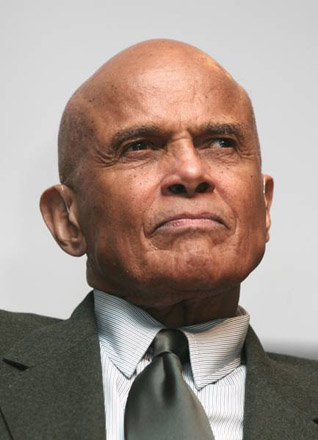
Happy Birthday-O to the Remarkable Harry Belafonte as the Singer, Actor and Activist Turns 85

It's a bit ironic that the 85th birthday of Harry Belafonte comes the day after Black History Month, for in living a life worth celebrating 366 days a year, his biography could serve as a textbook on civil rights, social justice, human dignity and trailblazing artistic achievement in music, film, theater and television, among much else.

I can't remember a time when I didn't know Belafonte's name, but I long associated his fame primarily with the "Banana Boat Song" (a.k.a. Day-O). I knew he was once a very popular singer, also noted for his great looks, and in 2009 I learned a bit more about his pioneering film work when I saw a screening of Odds Against Tomorrow at Chicago's Music Box Theatre, at which Harry spoke.

I had the privilege of shaking his hand, having him sign my ticket stub and snapping some subpar photos on my phone camera, but at that point I had scant knowledge of all that the man has done and stood for.

Within the past month, absurdly belatedly but perhaps otherwise appropriately, I have had my eyes opened to Harry Belafonte's huge effect on history.

While I don't suggest that a 100-minute documentary, complimented by Wikipedia, YouTube and Spotify, makes me genuinely much more informed about a man who has traveled thousands of miles, literally and figuratively, in his first 31,046 days on Earth, I highly recommend you watch Sing Your Song if you can catch it on HBO On-Demand, DVD (upon release) or at a special screening near you.

As I said to a friend, I found it to be a very good documentary that illuminated me greatly about a truly exceptional man. 

It won't take you very long to explore Belafonte's life to the extent I have, and I assure you you will be better off for it, but for those who want the Cliff Notes version of the Cliff Notes version, here is a list of just a few of the impressive things Harry has done:

  • After high school, Harry joined the Navy and served in the munitions corps during World War II
  • In the late 1940s, he took an acting class in which Marlon Brando, Walter Matthau and Tony Curtis were classmates
  • He also joined the American Negro Theatre, where he met Sidney Poitier
  • The first time he sang in public, Harry was backed by the Charlie Parker band, which included Parker, Max Roach and Miles Davis 
  • In 1953, he was cast in John Murray Anderson’s Almanac, a Broadway revue, for which he won a Tony Award
  • He toured America in a 1950s traveling variety show hosted by Gower & Marge Champion despite being subjected to many racial indignities, particularly in the South
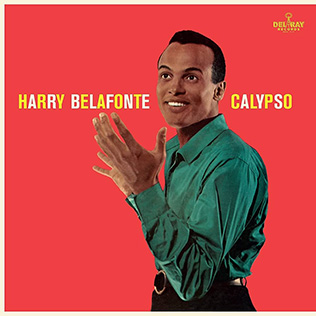
  • His 1956 album, Calypso, spent 31 weeks at #1 and was the first album by any artist to sell 1 million copies in the U.S., as well as in the U.K
  • The "Banana Boat Song" was also an early million seller
  • Harry Belafonte befriended Martin Luther King Jr. in the 1950s and became one of his key confidants; according to Coretta Scott King, "Harry motivated Martin."
  • His 1957 film Island in the Sun controversially explored an interracial romance between Belafonte and Joan Fontaine and his 1959 classic, Odds Against Tomorrow--created under Harry’s HarBel Production company--was the first film noir movie to feature a black protagonist.

  • Harry starred in a campaign commercial for John F. Kennedy in 1960, after having advised JFK to pay attention to the Civil Rights Movement, and sang at his Inaugural Ball. Kennedy later named Belafonte cultural advisor to the Peace Corps.
  • Belafonte was the first African American to win an Emmy, for his first solo TV special Tonight with Belafonte in 1959.
  • Though he hosted other TV specials and often guest hosted the Tonight Show—where guests included RFK and MLK—he walked away from greater TV success when networks insisted against on-screen integration in his variety shows
  • His 1962 album, Midnight Special, features Bob Dylan’s first appearance on record
  • He was an early foe of apartheid in South Africa and recorded an album in the 1960s with South African singer Miriam Makeba
  • Harry aided many African countries in their fight for independence and also—along with Jackie Robinson and others—brought many Kenyan students to America, including Barack Obama, Sr.
  • He helped organize the March on Washington in 1963, encouraging Marlon Brando, Charlton Heston, Paul Newman and other celebrities to (in Harry’s words) “lend a peaceful presence” to soothe JFK's concerns
  • At MLK’s behest, he organized a concert celebrating the march to Montgomery in 1964, featuring Tony Bennett, Nina Simone, Peter Paul & Mary and others
  • Also in 1964, he bankrolled the Student Non-Violent Coordinating Committee in Mississippi and  personally delivered money to Greenwood, despite being chased by the Klan
  • He was prominently involved in anti-war protests during the Vietnam and Iraq Wars
  • He helped organize the “We Are the World” charity single and visited Ethiopia to deliver food
  • He coordinated Nelson Mandela’s first visit to America and served as his host
  • He demonstrated/organized for/publicly supported many other causes, including Native American rights, Haiti relief, curbing gang violence and creating better conditions for children
  • Belafonte received the Kennedy Center Honors in 1989, was awarded the National Medal of Arts in 1994 and won a Grammy Lifetime Achievement Award in 2000.
  • When asked during a protest if he remained optimistic, he answered,
    “I live in a perpetual state of optimism. If you don’t have optimism then you can’t nourish hope.”
     
  • He guest starred on one of the most famous and unique Muppets episodes—said to be Jim Henson's favorite—as seen below: